Chung Man-Kyo, Park Jennifer, Asgar Jamila, Ro Jin Y
Department of Neural and Pain Sciences, Center to Advance Chronic Pain Research, University of Maryland Dental School, Baltimore, MD, USA
Department of Neural and Pain Sciences, Center to Advance Chronic Pain Research, University of Maryland Dental School, Baltimore, MD, USA.
Mol Pain. 2016 Oct 4;12. doi: 10.1177/1744806916668526. Print 2016.
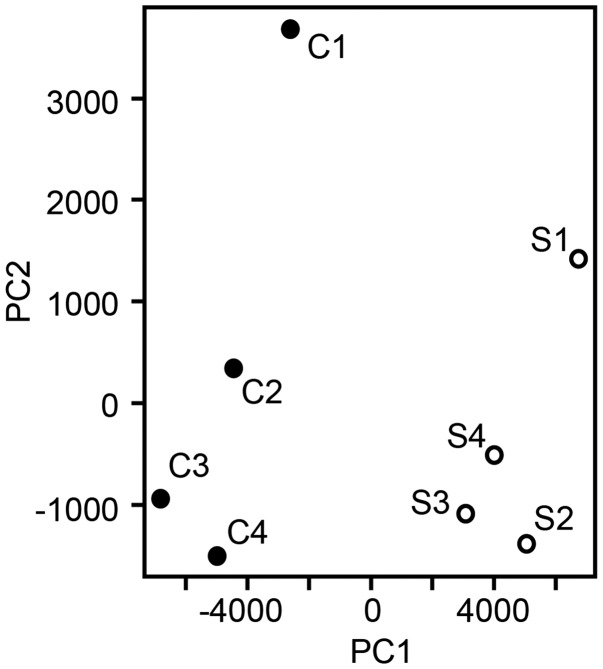
Chronic pain in masticatory muscles is a major medical problem. Although mechanisms underlying persistent pain in masticatory muscles are not fully understood, sensitization of nociceptive primary afferents following muscle inflammation or injury contributes to muscle hyperalgesia. It is well known that craniofacial muscle injury or inflammation induces regulation of multiple genes in trigeminal ganglia, which is associated with muscle hyperalgesia. However, overall transcriptional profiles within trigeminal ganglia following masseter inflammation have not yet been determined. In the present study, we performed RNA sequencing assay in rat trigeminal ganglia to identify transcriptome profiles of genes relevant to hyperalgesia following inflammation of the rat masseter muscle.
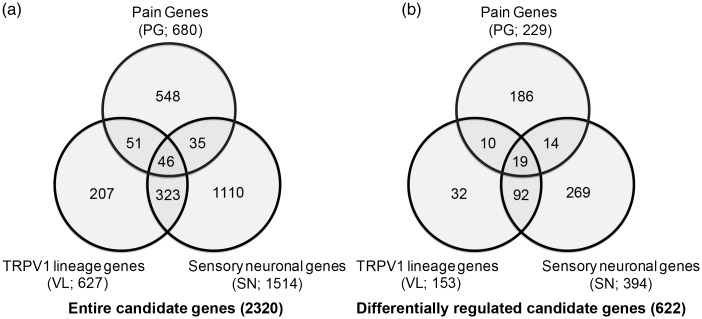
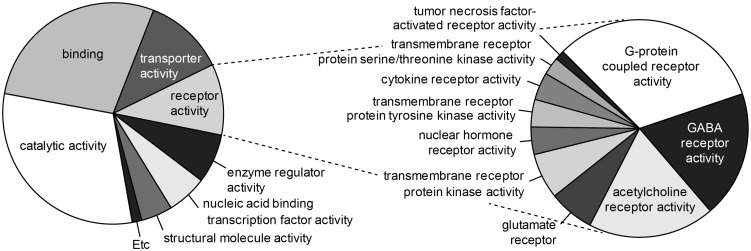
Masseter inflammation differentially regulated >3500 genes in trigeminal ganglia. Predominant biological pathways were predicted to be related with activation of resident non-neuronal cells within trigeminal ganglia or recruitment of immune cells. To focus our analysis on the genes more relevant to nociceptors, we selected genes implicated in pain mechanisms, genes enriched in small- to medium-sized sensory neurons, and genes enriched in TRPV1-lineage nociceptors. Among the 2320 candidate genes, 622 genes showed differential expression following masseter inflammation. When the analysis was limited to these candidate genes, pathways related with G protein-coupled signaling and synaptic plasticity were predicted to be enriched. Inspection of individual gene expression changes confirmed the transcriptional changes of multiple nociceptor genes associated with masseter hyperalgesia (e.g., Trpv1, Trpa1, P2rx3, Tac1, and Bdnf) and also suggested a number of novel probable contributors (e.g., Piezo2, Tmem100, and Hdac9).
These findings should further advance our understanding of peripheral mechanisms involved in persistent craniofacial muscle pain conditions and provide a rational basis for identifying novel genes or sets of genes that can be potentially targeted for treating such conditions.
咀嚼肌慢性疼痛是一个主要的医学问题。尽管咀嚼肌持续性疼痛的潜在机制尚未完全明确,但肌肉炎症或损伤后伤害性初级传入神经的敏化会导致肌肉痛觉过敏。众所周知,颅面部肌肉损伤或炎症会诱导三叉神经节中多个基因的调控,这与肌肉痛觉过敏相关。然而,咬肌炎症后三叉神经节内的整体转录谱尚未确定。在本研究中,我们对大鼠三叉神经节进行了RNA测序分析,以鉴定大鼠咬肌炎症后与痛觉过敏相关的基因转录组谱。
咬肌炎症在三叉神经节中差异调节了超过3500个基因。预测主要的生物学途径与三叉神经节内常驻非神经元细胞的激活或免疫细胞的募集有关。为了将分析重点放在与伤害感受器更相关的基因上,我们选择了涉及疼痛机制的基因、在中小型感觉神经元中富集的基因以及在TRPV1谱系伤害感受器中富集的基因。在这2320个候选基因中,有622个基因在咬肌炎症后表现出差异表达。当分析仅限于这些候选基因时,预测与G蛋白偶联信号传导和突触可塑性相关的途径会被富集。对单个基因表达变化的检查证实了与咬肌痛觉过敏相关的多个伤害感受器基因的转录变化(例如Trpv1、Trpa1、P2rx3、Tac1和Bdnf),并且还提示了一些新的可能的促成因素(例如Piezo2、Tmem100和Hdac9)。
这些发现应能进一步增进我们对持续性颅面部肌肉疼痛状况所涉及的外周机制的理解,并为识别可潜在用于治疗此类状况的新基因或基因集提供合理依据。