Fang Xin, Wang Xin, Yang Shaoguo, Meng Fanjing, Wang Xiaolei, Wei Hua, Chen Tingtao
Department of Neurology, The First Affiliated Hospital of Nanchang University Nanchang, China.
Institute of Translational Medicine, Nanchang University Nanchang, China.
Front Microbiol. 2016 Sep 20;7:1479. doi: 10.3389/fmicb.2016.01479. eCollection 2016.
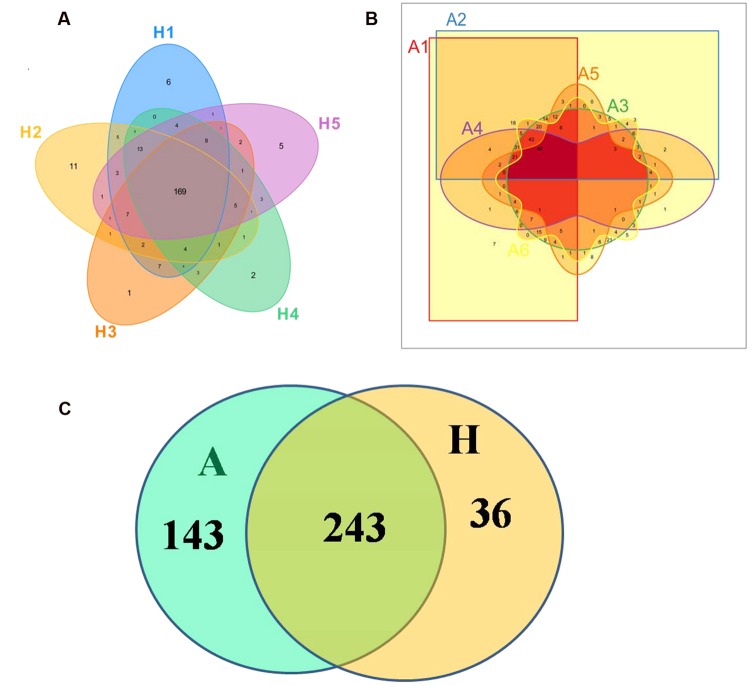
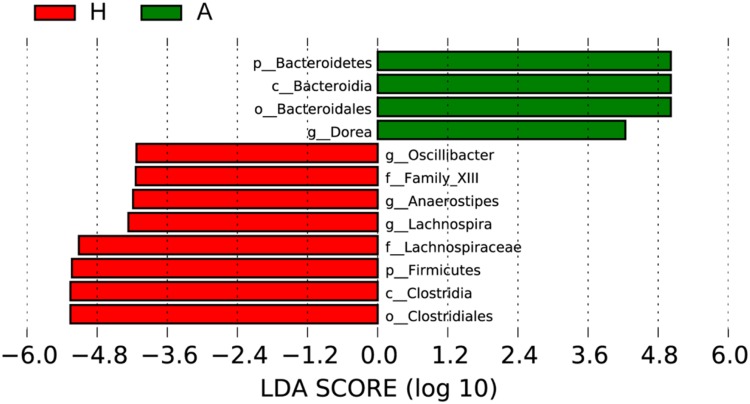
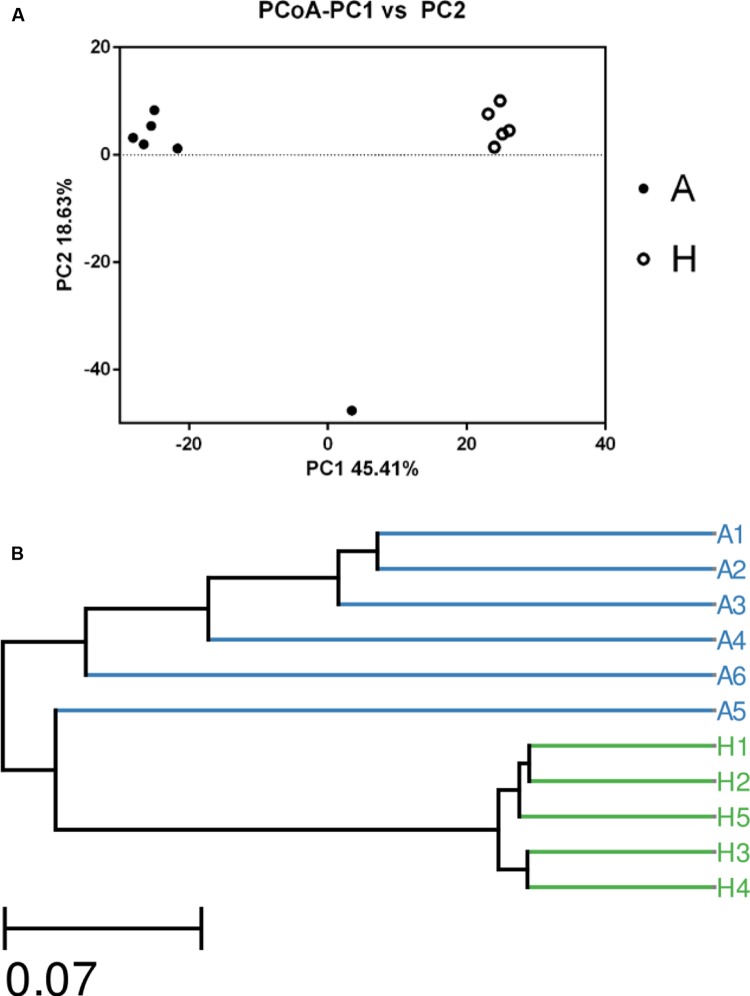
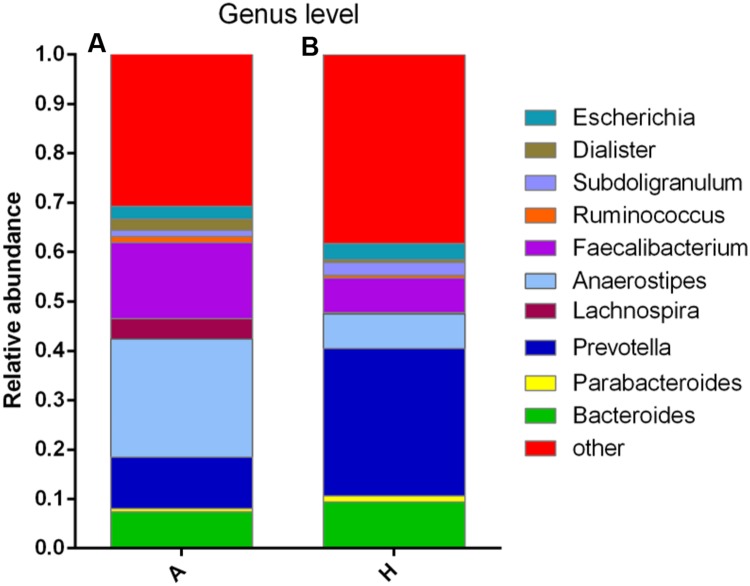
More and more evidences indicate that diseases of the central nervous system have been seriously affected by fecal microbes. However, little work is done to explore interaction between amyotrophic lateral sclerosis (ALS) and fecal microbes. In the present study, high-throughput sequencing method was used to compare the intestinal microbial diversity of healthy people and ALS patients. The principal coordinate analysis, Venn and unweighted pair-group method using arithmetic averages (UPGMA) showed an obvious microbial changes between healthy people (group H) and ALS patients (group A), and the average ratios of , , , , , and at genus level between ALS patients and healthy people were 0.78, 2.18, 3.41, 0.35, 0.79, and 13.07. Furthermore, the decreased Firmicutes/Bacteroidetes ratio at phylum level using LEfSE (LDA > 4.0), together with the significant increased genus (harmful microorganisms) and significant reduced genus , , (beneficial microorganisms) in ALS patients, indicated that the imbalance in intestinal microflora constitution had a strong association with the pathogenesis of ALS.
越来越多的证据表明,中枢神经系统疾病已受到粪便微生物的严重影响。然而,关于肌萎缩侧索硬化症(ALS)与粪便微生物之间相互作用的研究却很少。在本研究中,采用高通量测序方法比较健康人和ALS患者的肠道微生物多样性。主坐标分析、Venn图和算术平均法(UPGMA)的非加权配对组法显示,健康人(H组)和ALS患者(A组)之间存在明显的微生物变化,ALS患者与健康人在属水平上的平均比值分别为0.78、2.18、3.41、0.35、0.79和13.07。此外,使用线性判别分析效应大小(LEfSE,LDA>4.0)发现,ALS患者门水平上的厚壁菌门/拟杆菌门比值降低,同时有害微生物属显著增加,有益微生物属显著减少,这表明肠道微生物群组成的失衡与ALS的发病机制密切相关。