Accorsi-Mendonça Daniela, da Silva Melina P, Souza George M P R, Lima-Silveira Ludmila, Karlen-Amarante Marlusa, Amorim Mateus R, Almado Carlos E L, Moraes Davi J A, Machado Benedito H
Department of Physiology, School of Medicine of Ribeirão Preto, University of São Paulo São Paulo, Brazil.
Front Physiol. 2016 Sep 22;7:424. doi: 10.3389/fphys.2016.00424. eCollection 2016.
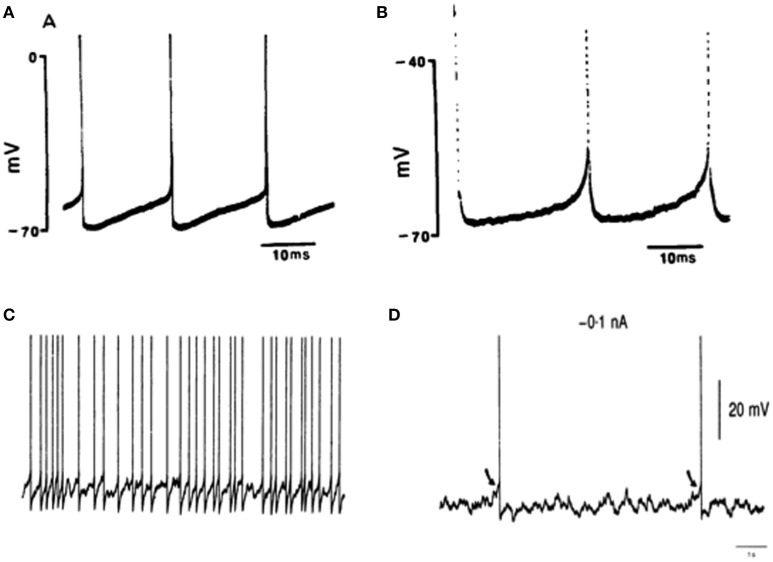
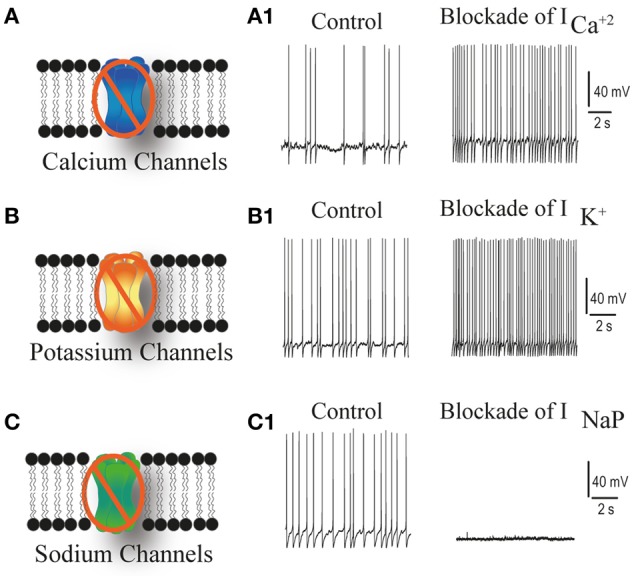
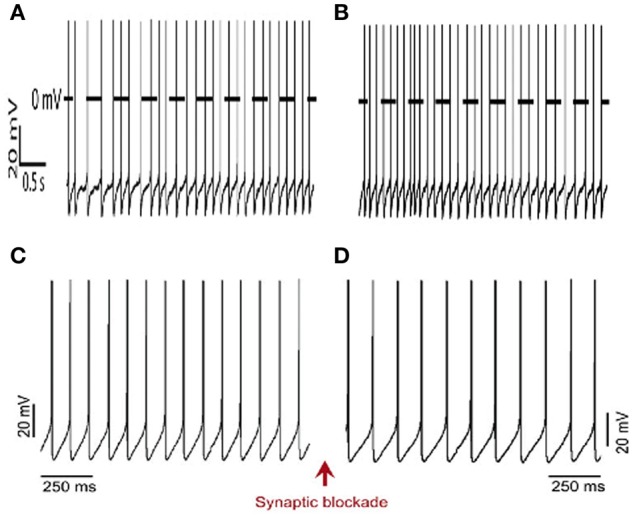
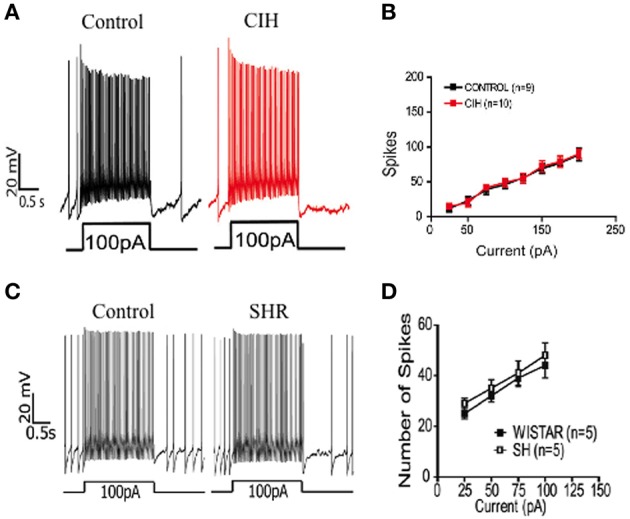
Despite several studies describing the electrophysiological properties of RVLM presympathetic neurons, there is no consensus in the literature about their pacemaking property, mainly due to different experimental approaches used for recordings of neuronal intrinsic properties. In this review we are presenting a historical retrospective about the pioneering studies and their controversies on the intrinsic electrophysiological property of auto-depolarization of these cells in conjunction with recent studies from our laboratory documenting that RVLM presympathetic neurons present pacemaking capacity. We also discuss whether increased sympathetic activity observed in animal models of neurogenic hypertension (CIH and SHR) are dependent on changes in the intrinsic electrophysiological properties of these cells or due to changes in modulatory inputs from neurons of the respiratory network. We also highlight the key role of I as the major current contributing to the pacemaking property of RVLM presympathetic neurons.
尽管有多项研究描述了延髓头端腹外侧区(RVLM)交感节前神经元的电生理特性,但文献中对于它们的起搏特性尚无共识,这主要是由于记录神经元内在特性所采用的实验方法不同。在这篇综述中,我们将对关于这些细胞自发放电内在电生理特性的开创性研究及其争议进行历史回顾,并结合我们实验室最近的研究,这些研究表明RVLM交感节前神经元具有起搏能力。我们还将讨论在神经源性高血压动物模型(慢性间歇性缺氧和自发性高血压大鼠)中观察到的交感神经活动增加是取决于这些细胞内在电生理特性的变化,还是由于呼吸网络神经元调节性输入的变化。我们还强调了I电流作为促成RVLM交感节前神经元起搏特性的主要电流的关键作用。