• 文献检索
  • 文档翻译
  • 深度研究
  • 学术资讯
  • Suppr Zotero 插件Zotero 插件
  • 邀请有礼
  • 套餐&价格
  • 历史记录
应用&插件
Suppr Zotero 插件Zotero 插件浏览器插件Mac 客户端Windows 客户端微信小程序
定价
高级版会员购买积分包购买API积分包
服务
文献检索文档翻译深度研究API 文档MCP 服务
关于我们
关于 Suppr公司介绍联系我们用户协议隐私条款
关注我们

Suppr 超能文献

核心技术专利:CN118964589B侵权必究
粤ICP备2023148730 号-1Suppr @ 2026

文献检索

告别复杂PubMed语法,用中文像聊天一样搜索,搜遍4000万医学文献。AI智能推荐,让科研检索更轻松。

立即免费搜索

文件翻译

保留排版,准确专业,支持PDF/Word/PPT等文件格式,支持 12+语言互译。

免费翻译文档

深度研究

AI帮你快速写综述,25分钟生成高质量综述,智能提取关键信息,辅助科研写作。

立即免费体验

肯尼亚西部人类和牛群中伯氏考克斯氏体的血清流行病学:一项横断面研究的证据

The Sero-epidemiology of Coxiella burnetii in Humans and Cattle, Western Kenya: Evidence from a Cross-Sectional Study.

作者信息

Wardrop Nicola A, Thomas Lian F, Cook Elizabeth A J, de Glanville William A, Atkinson Peter M, Wamae Claire N, Fèvre Eric M

机构信息

Geography and Environment, University of Southampton, Southampton, United Kingdom.

Centre for Immunity, Infection and Evolution, University of Edinburgh, Edinburgh, United Kingdom.

出版信息

PLoS Negl Trop Dis. 2016 Oct 7;10(10):e0005032. doi: 10.1371/journal.pntd.0005032. eCollection 2016 Oct.

DOI:10.1371/journal.pntd.0005032
PMID:27716804
原文链接:https://pmc.ncbi.nlm.nih.gov/articles/PMC5055308/
Abstract

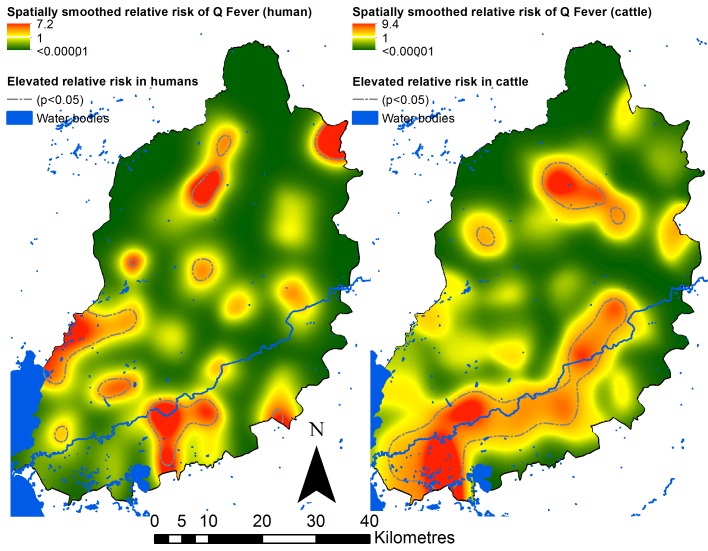
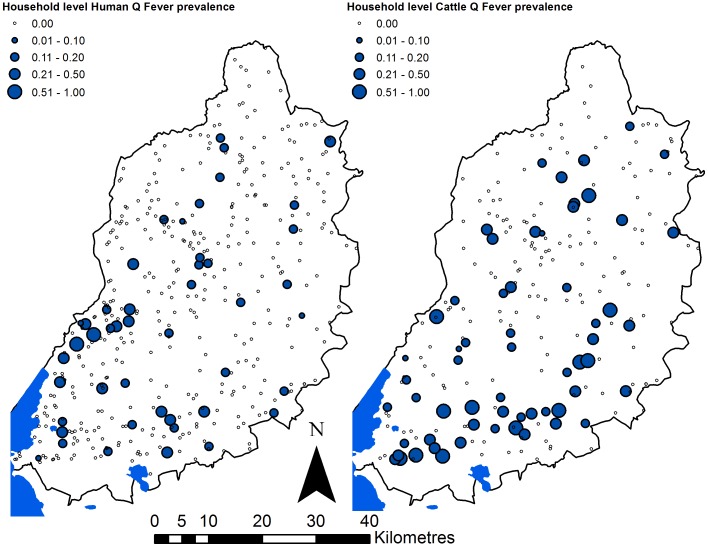
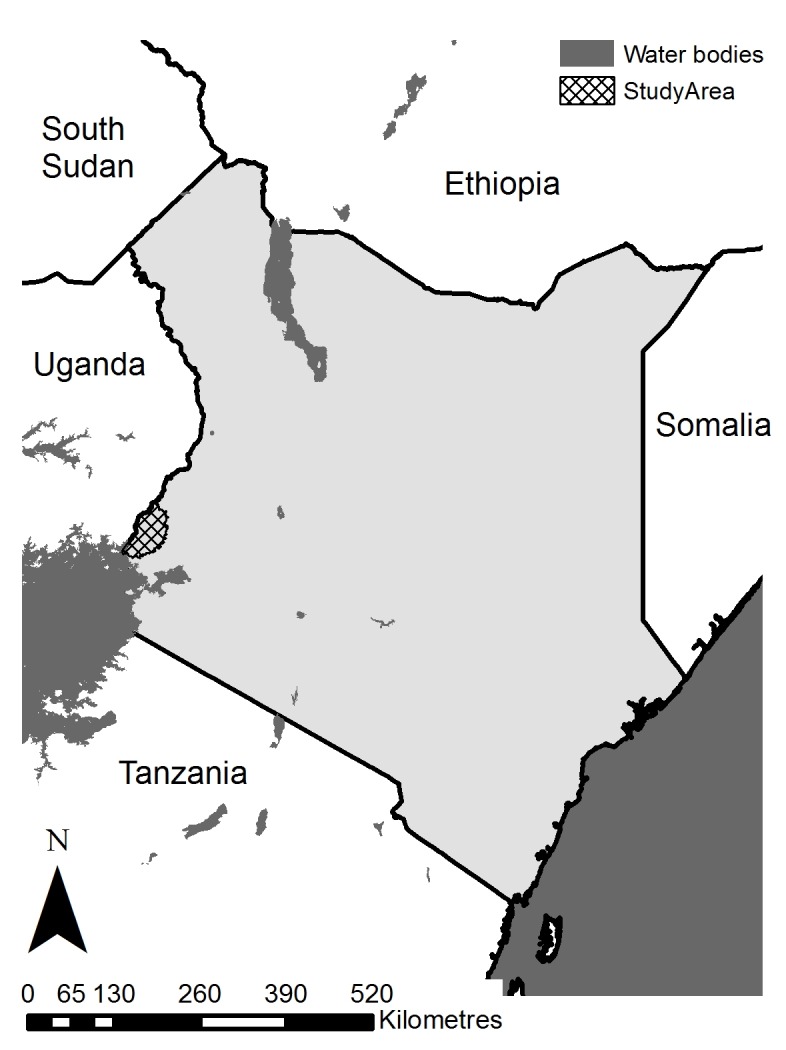
Evidence suggests that the intracellular bacterial pathogen Coxiella burnetii (which causes Q fever) is widespread, with a near global distribution. While there has been increasing attention to Q fever epidemiology in high-income settings, a recent systematic review highlighted significant gaps in our understanding of the prevalence, spatial distribution and risk factors for Q fever infection across Africa. This research aimed to provide a One Health assessment of Q fever epidemiology in parts of Western and Nyanza Provinces, Western Kenya, in cattle and humans. A cross-sectional survey was conducted: serum samples from 2049 humans and 955 cattle in 416 homesteads were analysed for C. burnetii antibodies. Questionnaires covering demographic, socio-economic and husbandry information were also administered. These data were linked to environmental datasets based on geographical locations (e.g., land cover). Correlation and spatial-cross correlation analyses were applied to assess the potential link between cattle and human seroprevalence. Multilevel regression analysis was used to assess the relationships between a range of socio-economic, demographic and environmental factors and sero-positivity in both humans and animals. The overall sero-prevalence of C. burnetii was 2.5% in humans and 10.5% in cattle, but we found no evidence of correlation between cattle and human seroprevalence either within households, or when incorporating spatial proximity to other households in the survey. Multilevel modelling indicated the importance of several factors for exposure to the organism. Cattle obtained from market (as opposed to those bred in their homestead) and those residing in areas with lower precipitation levels had the highest sero-prevalence. For humans, the youngest age group had the highest odds of seropositivity, variations were observed between ethnic groups, and frequent livestock contact (specifically grazing and dealing with abortion material) was also a risk factor. These results illustrate endemicity of C. burnetii in western Kenya, although prevalence is relatively low. The analysis indicates that while environmental factors may play a role in cattle exposure patterns, human exposure patterns are likely to be driven more strongly by livestock contacts. The implication of livestock markets in cattle exposure risks suggests these may be a suitable target for interventions.

摘要

有证据表明,细胞内细菌病原体伯氏考克斯体(可引起Q热)分布广泛,几乎遍布全球。虽然高收入地区对Q热流行病学的关注日益增加,但最近的一项系统综述强调,我们对非洲Q热感染的患病率、空间分布和风险因素的了解存在重大差距。本研究旨在对肯尼亚西部的西省和尼扬扎省部分地区的牛和人类的Q热流行病学进行“同一健康”评估。开展了一项横断面调查:对416个家庭中2049名人类和955头牛的血清样本进行了伯氏考克斯体抗体分析。还发放了涵盖人口、社会经济和养殖信息的问卷。这些数据与基于地理位置(如土地覆盖)的环境数据集相关联。应用相关性和空间交叉相关性分析来评估牛和人类血清阳性率之间的潜在联系。采用多水平回归分析来评估一系列社会经济、人口和环境因素与人类和动物血清阳性之间的关系。伯氏考克斯体的总体血清阳性率在人类中为2.5%,在牛中为10.5%,但我们没有发现家庭内部或在调查中纳入与其他家庭的空间接近度时,牛和人类血清阳性率之间存在相关性的证据。多水平建模表明了几个因素对接触该病原体的重要性。从市场购买的牛(与在自家养殖的牛相对)以及生活在降水量较低地区的牛血清阳性率最高。对于人类,最年轻的年龄组血清阳性几率最高,不同种族之间存在差异,频繁接触牲畜(特别是放牧和处理流产材料)也是一个风险因素。这些结果表明伯氏考克斯体在肯尼亚西部呈地方性流行,尽管患病率相对较低。分析表明,虽然环境因素可能在牛的接触模式中起作用,但人类的接触模式可能更多地受到与牲畜接触的驱动。牲畜市场在牛的接触风险中的影响表明,这些可能是合适的干预目标。
https://cdn.ncbi.nlm.nih.gov/pmc/blobs/2b05/5055308/5a9880f79766/pntd.0005032.g003.jpg
https://cdn.ncbi.nlm.nih.gov/pmc/blobs/2b05/5055308/de4e8007f60c/pntd.0005032.g001.jpg
https://cdn.ncbi.nlm.nih.gov/pmc/blobs/2b05/5055308/16de6b8dac63/pntd.0005032.g002.jpg
https://cdn.ncbi.nlm.nih.gov/pmc/blobs/2b05/5055308/5a9880f79766/pntd.0005032.g003.jpg
https://cdn.ncbi.nlm.nih.gov/pmc/blobs/2b05/5055308/de4e8007f60c/pntd.0005032.g001.jpg
https://cdn.ncbi.nlm.nih.gov/pmc/blobs/2b05/5055308/16de6b8dac63/pntd.0005032.g002.jpg
https://cdn.ncbi.nlm.nih.gov/pmc/blobs/2b05/5055308/5a9880f79766/pntd.0005032.g003.jpg

相似文献

1
The Sero-epidemiology of Coxiella burnetii in Humans and Cattle, Western Kenya: Evidence from a Cross-Sectional Study.肯尼亚西部人类和牛群中伯氏考克斯氏体的血清流行病学:一项横断面研究的证据
PLoS Negl Trop Dis. 2016 Oct 7;10(10):e0005032. doi: 10.1371/journal.pntd.0005032. eCollection 2016 Oct.
2
National serosurvey and risk mapping reveal widespread distribution of Coxiella burnetii in Kenya.全国血清学调查和风险地图绘制显示肯尼亚广泛存在伯氏考克斯体。
Sci Rep. 2025 Mar 21;15(1):9706. doi: 10.1038/s41598-025-94154-3.
3
A sero-epidemiological analysis of Coxiella burnetii infection and its risk factors in livestock from Addis Ababa, Adama, and Modjo abattoirs and pastoral areas of Oromia, Ethiopia.埃塞俄比亚奥罗米亚地区亚的斯亚贝巴、阿达玛和莫焦屠宰场及牧区牲畜感染柯克斯体及其危险因素的血清流行病学分析。
PLoS Negl Trop Dis. 2024 Jul 16;18(7):e0012287. doi: 10.1371/journal.pntd.0012287. eCollection 2024 Jul.
4
Sero-epidemiological survey of Coxiella burnetii in livestock and humans in Tana River and Garissa counties in Kenya.肯尼亚塔纳河和加里萨县家畜和人类中贝氏柯克斯体的血清流行病学调查。
PLoS Negl Trop Dis. 2022 Mar 3;16(3):e0010214. doi: 10.1371/journal.pntd.0010214. eCollection 2022 Mar.
5
Febrile patients admitted to remote hospitals in Northeastern Kenya: seroprevalence, risk factors and a clinical prediction tool for Q-Fever.肯尼亚东北部偏远地区医院收治的发热患者:Q热的血清阳性率、危险因素及临床预测工具
BMC Infect Dis. 2016 Jun 3;16:244. doi: 10.1186/s12879-016-1569-0.
6
High seroprevalence of Coxiella burnetii in dairy cattle in China.中国奶牛中伯氏考克斯氏体血清阳性率高。
Trop Anim Health Prod. 2016 Feb;48(2):423-6. doi: 10.1007/s11250-015-0968-3. Epub 2015 Dec 15.
7
Epidemiology of brucellosis, Q Fever and Rift Valley Fever at the human and livestock interface in northern Côte d'Ivoire.科特迪瓦北部人畜共患布鲁氏菌病、Q热和裂谷热的流行病学研究
Acta Trop. 2017 Jan;165:66-75. doi: 10.1016/j.actatropica.2016.02.012. Epub 2016 Feb 17.
8
Prevalence of Antibodies Against Coxiella burnetii in Korean Native Cattle, Dairy Cattle, and Dogs in South Korea.韩国本土牛、奶牛和犬中抗伯氏考克斯氏体抗体的流行情况
Vector Borne Zoonotic Dis. 2017 Mar;17(3):213-216. doi: 10.1089/vbz.2016.1977. Epub 2017 Jan 9.
9
Serological evidence of Coxiella burnetii infection in beef cattle in Queensland.昆士兰肉牛感染伯氏考克斯氏体的血清学证据
Aust Vet J. 2011 Jul;89(7):260-4. doi: 10.1111/j.1751-0813.2011.00794.x.
10
Risk factor analysis for antibodies to Brucella, Leptospira and C. burnetii among cattle in the Adamawa Region of Cameroon: a cross-sectional study.喀麦隆阿达马瓦地区牛群中布鲁氏菌、钩端螺旋体和伯氏考克斯氏体抗体的危险因素分析:一项横断面研究。
Trop Anim Health Prod. 2013 Feb;45(2):617-23. doi: 10.1007/s11250-012-0268-0. Epub 2012 Nov 3.

引用本文的文献

1
National serosurvey and risk mapping reveal widespread distribution of Coxiella burnetii in Kenya.全国血清学调查和风险地图绘制显示肯尼亚广泛存在伯氏考克斯体。
Sci Rep. 2025 Mar 21;15(1):9706. doi: 10.1038/s41598-025-94154-3.
2
Coxiellosis in Dogs-A Hitherto Masked Zoonosis in India: An Insight From Seromolecular Investigation and Risk Factor Analysis.犬类柯克斯体病——印度一种迄今被掩盖的人畜共患病:血清分子学调查与风险因素分析的见解
Can J Infect Dis Med Microbiol. 2025 Jan 20;2025:8642619. doi: 10.1155/cjid/8642619. eCollection 2025.
3
Seroepidemiology of in Domestic and Wild Ruminant Species in Southern Spain.

本文引用的文献

1
Q Fever, Scrub Typhus, and Rickettsial Diseases in Children, Kenya, 2011-2012.2011 - 2012年肯尼亚儿童的Q热、恙虫病和立克次体病
Emerg Infect Dis. 2016 May;22(5):883-6. doi: 10.3201/eid2205.150953.
2
Q fever is an old and neglected zoonotic disease in Kenya: a systematic review.Q热是肯尼亚一种古老且被忽视的人畜共患病:一项系统综述。
BMC Public Health. 2016 Apr 5;16:297. doi: 10.1186/s12889-016-2929-9.
3
The Influence of Socio-economic, Behavioural and Environmental Factors on Taenia spp. Transmission in Western Kenya: Evidence from a Cross-Sectional Survey in Humans and Pigs.
西班牙南部家养和野生反刍动物物种的血清流行病学。
Animals (Basel). 2024 Oct 24;14(21):3072. doi: 10.3390/ani14213072.
4
Acute Q fever in individuals with acute febrile illness & exposure to farm animals: Clinical manifestations & diagnostic approaches.急性 Q 热在急性发热疾病个体中与接触农场动物有关:临床表现和诊断方法。
Indian J Med Res. 2024 Jun;159(6):681-688. doi: 10.25259/IJMR_1549_23.
5
Aetiologies of bacterial tick-borne febrile illnesses in humans in Africa: diagnostic limitations and the need for improvement.非洲人类细菌性蜱传发热疾病的病因:诊断局限性与改进需求。
Front Med (Lausanne). 2024 Sep 16;11:1419575. doi: 10.3389/fmed.2024.1419575. eCollection 2024.
6
Review of the Current Status on Ruminant Abortigenic Pathogen Surveillance in Africa and Asia.非洲和亚洲反刍动物流产病原体监测现状综述
Vet Sci. 2024 Sep 12;11(9):425. doi: 10.3390/vetsci11090425.
7
Seroprevalence of and potential tick vectors infesting domestic ruminants and community perception of the disease in pastoral areas of south Omo zone, southern Ethiopia.埃塞俄比亚南部奥莫南区牧区家栖反刍动物的血清阳性率、潜在蜱虫媒介以及社区对该疾病的认知情况
Parasite Epidemiol Control. 2024 Jul 15;26:e00369. doi: 10.1016/j.parepi.2024.e00369. eCollection 2024 Aug.
8
Comparison of test performance of a conventional PCR and two field-friendly tests to detect DNA in ticks using Bayesian latent class analysis.使用贝叶斯潜在类别分析比较传统聚合酶链反应(PCR)和两种便于现场操作的检测方法在蜱虫中检测DNA的检测性能。
Front Vet Sci. 2024 Jun 19;11:1396714. doi: 10.3389/fvets.2024.1396714. eCollection 2024.
9
Prevalence and risk factors for Q fever, spotted fever group rickettsioses, and typhus group rickettsioses in a pastoralist community of northern Tanzania, 2016-2017.2016-2017 年坦桑尼亚北部牧民社区中 Q 热、斑点热群立克次体和斑疹伤寒群立克次体的流行情况和危险因素。
Trop Med Int Health. 2024 May;29(5):365-376. doi: 10.1111/tmi.13980. Epub 2024 Mar 13.
10
Molecular detection of Coxiella burnetii in tick and blood samples from small ruminants in northwest of Iran.伊朗西北部蜱和小反刍动物血液样本中贝氏柯克斯体的分子检测。
Exp Appl Acarol. 2024 Apr;92(3):529-546. doi: 10.1007/s10493-023-00888-y. Epub 2024 Feb 26.
社会经济、行为和环境因素对肯尼亚西部带绦虫属传播的影响:来自人类和猪的横断面调查证据
PLoS Negl Trop Dis. 2015 Dec 7;9(12):e0004223. doi: 10.1371/journal.pntd.0004223. eCollection 2015 Dec.
4
Endemic zoonoses in the tropics: a public health problem hiding in plain sight.热带地区的地方性人畜共患病:一个显而易见却被忽视的公共卫生问题。
Vet Rec. 2015 Feb 28;176(9):220-5. doi: 10.1136/vr.h798.
5
Surveys on Coxiella burnetii infections in Swedish cattle, sheep, goats and moose.瑞典牛、羊、山羊和驼鹿中伯氏考克斯氏体感染情况的调查。
Acta Vet Scand. 2014 Jul 9;56(1):39. doi: 10.1186/1751-0147-56-39.
6
Epidemiology of Coxiella burnetii infection in Africa: a OneHealth systematic review.非洲贝氏柯克斯体感染的流行病学:一项 OneHealth 系统综述。
PLoS Negl Trop Dis. 2014 Apr 10;8(4):e2787. doi: 10.1371/journal.pntd.0002787. eCollection 2014 Apr.
7
Q fever risk across a dynamic, heterogeneous landscape in Laikipia County, Kenya.肯尼亚莱基皮亚县动态、多样化环境中的Q热风险
Ecohealth. 2014 Sep;11(3):429-33. doi: 10.1007/s10393-014-0924-0. Epub 2014 Mar 7.
8
Epidemiology of brucellosis and q Fever in linked human and animal populations in northern togo.多哥北部相关人类和动物群体中布氏杆菌病和 Q 热的流行病学。
PLoS One. 2013 Aug 12;8(8):e71501. doi: 10.1371/journal.pone.0071501. eCollection 2013.
9
Spatial relationships in the Q fever outbreaks 2007-2010 in the Netherlands.2007-2010 年荷兰 Q 热疫情的空间关系。
Int J Environ Health Res. 2014 Apr;24(2):137-57. doi: 10.1080/09603123.2013.800963. Epub 2013 Jun 26.
10
Specific risk factors for contracting Q fever: lessons from the outbreak Jena.感染 Q 热的特定风险因素:耶拿暴发事件的教训。
Int J Hyg Environ Health. 2014 Jan;217(1):110-5. doi: 10.1016/j.ijheh.2013.04.004. Epub 2013 Apr 26.