Instituto de Fisiología Celular, Universidad Nacional Autónoma de México, Circuito exterior s/n, Coyoacan 04510, Mexico.
Department of Neurobiology, Duke University, 327C Bryan Research Building, Durham, North Carolina 27710, USA.
Nat Commun. 2016 Oct 10;7:13092. doi: 10.1038/ncomms13092.
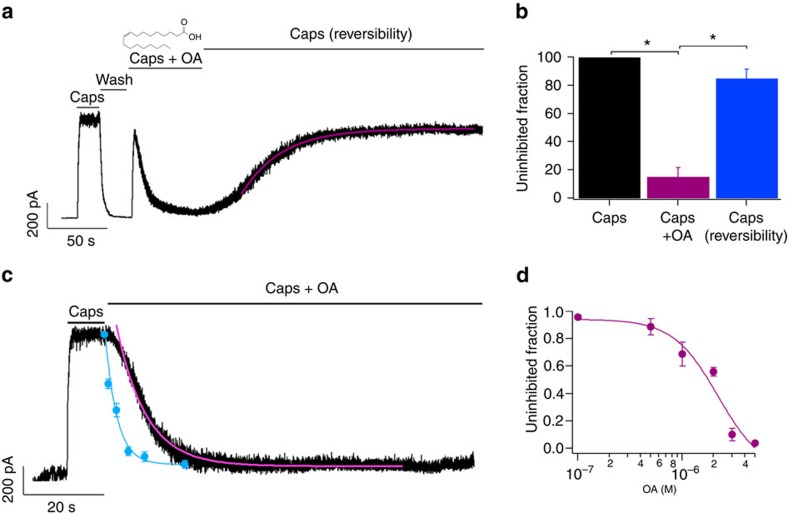
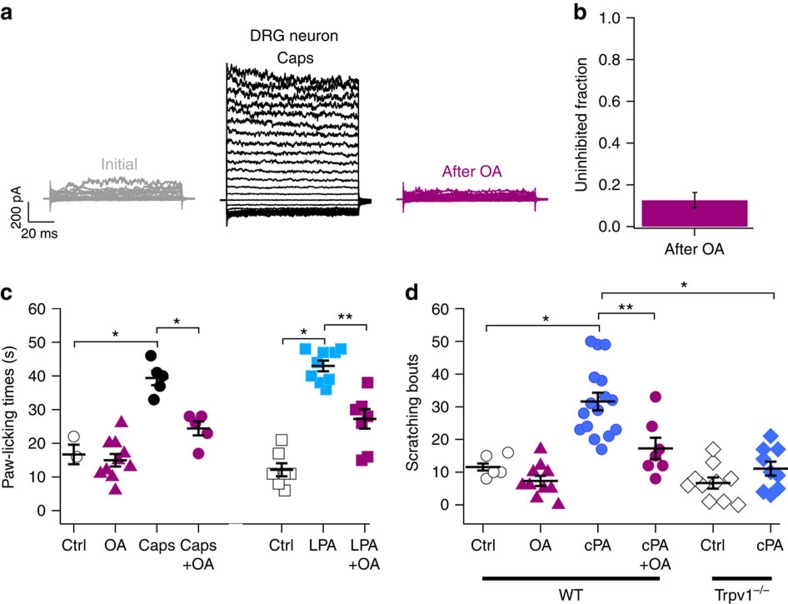
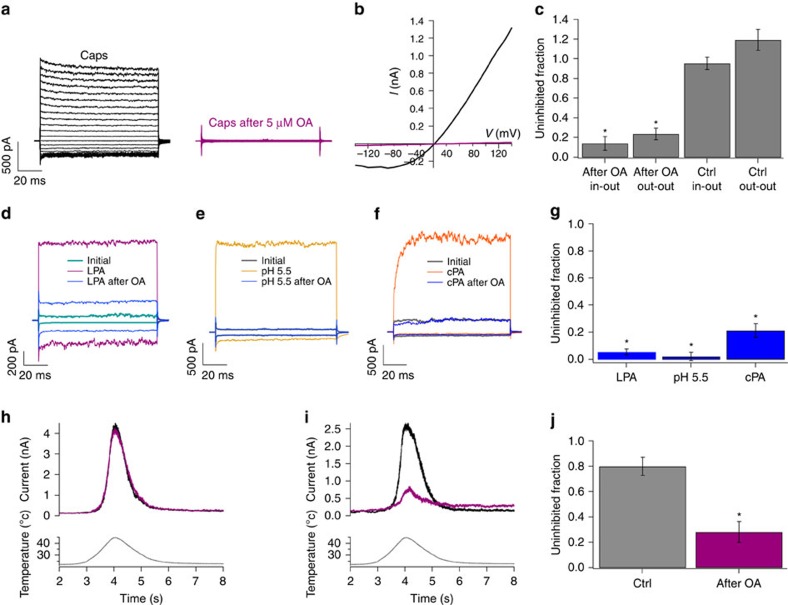
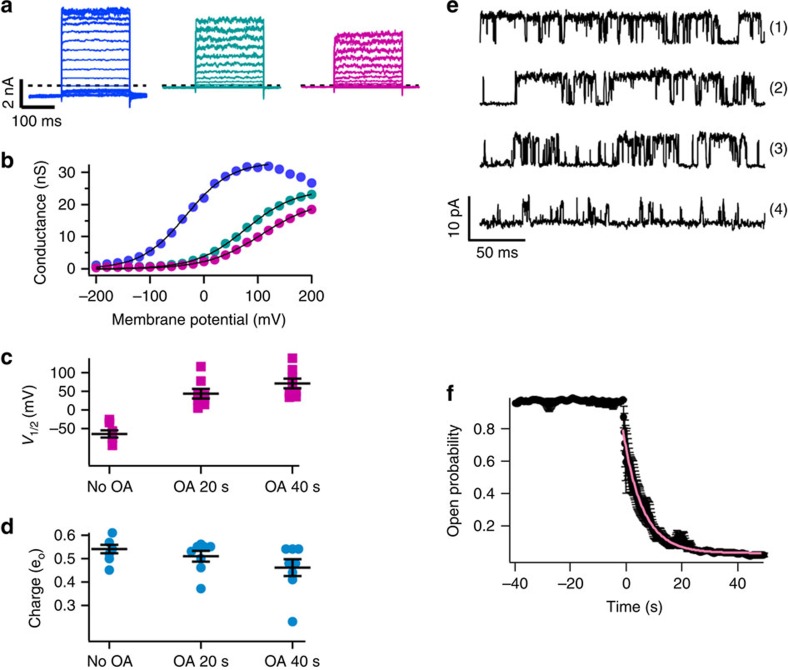
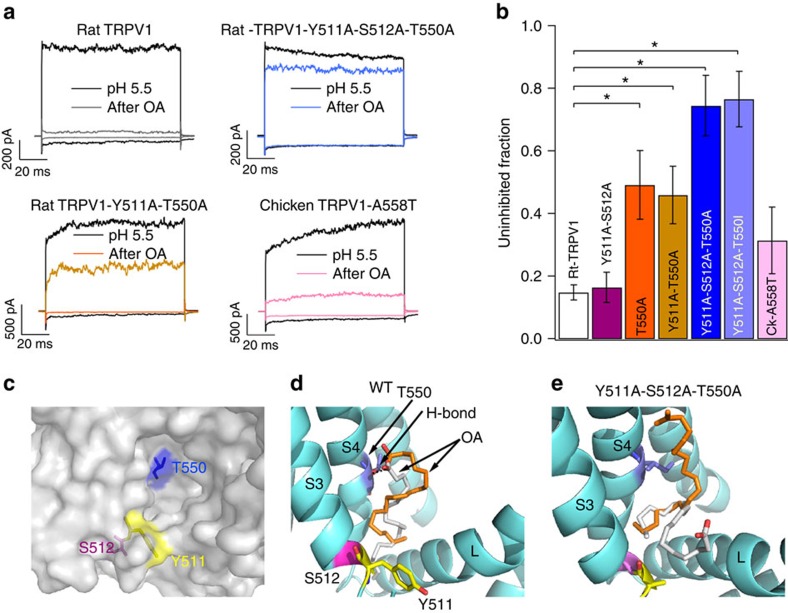
The transient receptor potential vanilloid 1 (TRPV1) ion channel is mainly found in primary nociceptive afferents whose activity has been linked to pathophysiological conditions including pain, itch and inflammation. Consequently, it is important to identify naturally occurring antagonists of this channel. Here we show that a naturally occurring monounsaturated fatty acid, oleic acid, inhibits TRPV1 activity, and also pain and itch responses in mice by interacting with the vanilloid (capsaicin)-binding pocket and promoting the stabilization of a closed state conformation. Moreover, we report an itch-inducing molecule, cyclic phosphatidic acid, that activates TRPV1 and whose pruritic activity, as well as that of histamine, occurs through the activation of this ion channel. These findings provide insights into the molecular basis of oleic acid inhibition of TRPV1 and also into a way of reducing the pathophysiological effects resulting from its activation.
瞬时受体电位香草酸 1 型(TRPV1)离子通道主要存在于初级伤害性传入神经中,其活性与包括疼痛、瘙痒和炎症在内的病理生理状况有关。因此,识别这种通道的天然拮抗剂非常重要。在这里,我们表明一种天然存在的单不饱和脂肪酸油酸通过与香草素(辣椒素)结合口袋相互作用并促进封闭状态构象的稳定来抑制 TRPV1 活性,还抑制了小鼠的疼痛和瘙痒反应。此外,我们报告了一种瘙痒诱导分子环磷酸脂酸,它激活 TRPV1,其瘙痒活性以及组胺的瘙痒活性都是通过这种离子通道的激活产生的。这些发现为油酸抑制 TRPV1 的分子基础提供了深入的了解,也为减轻其激活所导致的病理生理效应提供了一种方法。