Institute of Immunology, Zhejiang University School of Medicine, Hangzhou 310058, China.
Department of Chemotherapy, Zhejiang Cancer Hospital, Hangzhou 310022, China.
Nat Commun. 2016 Oct 10;7:13045. doi: 10.1038/ncomms13045.
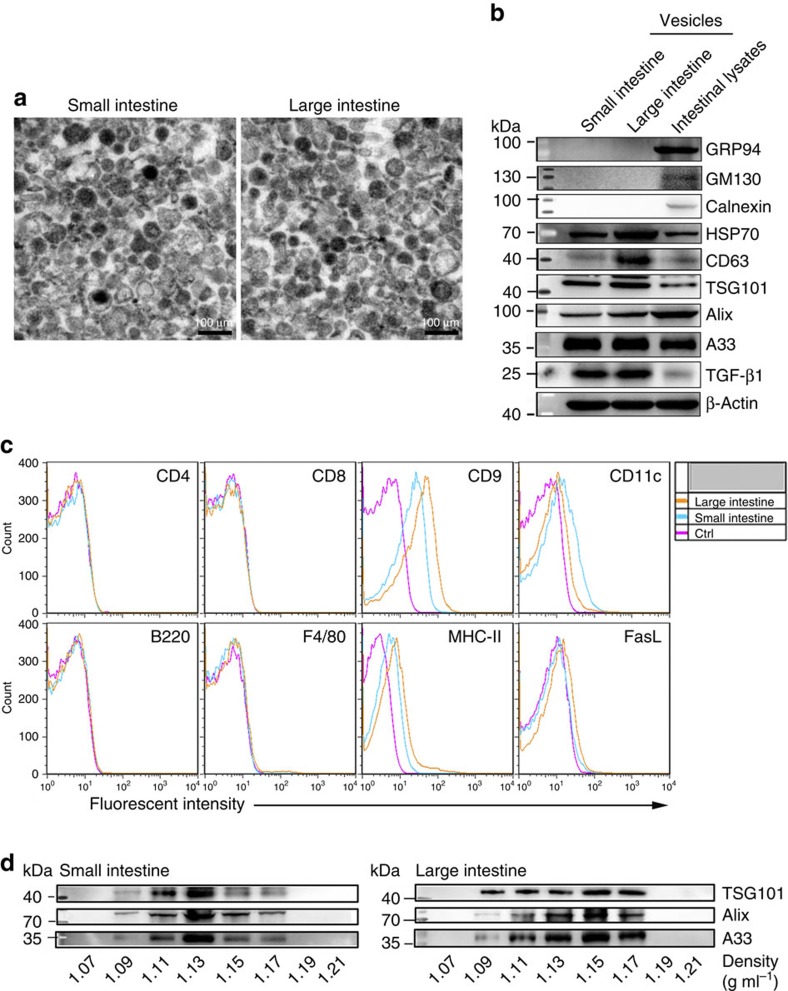
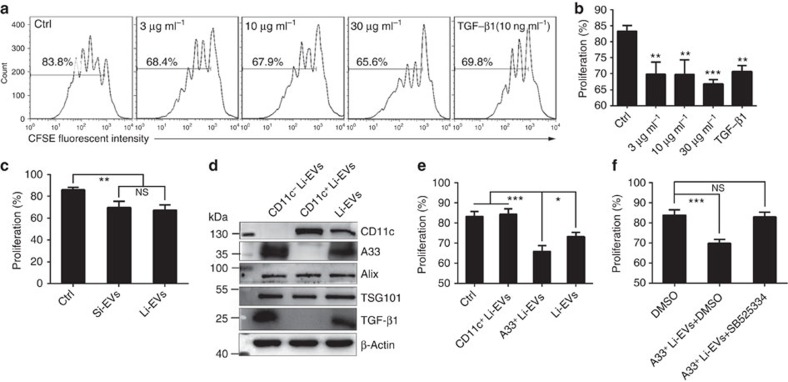
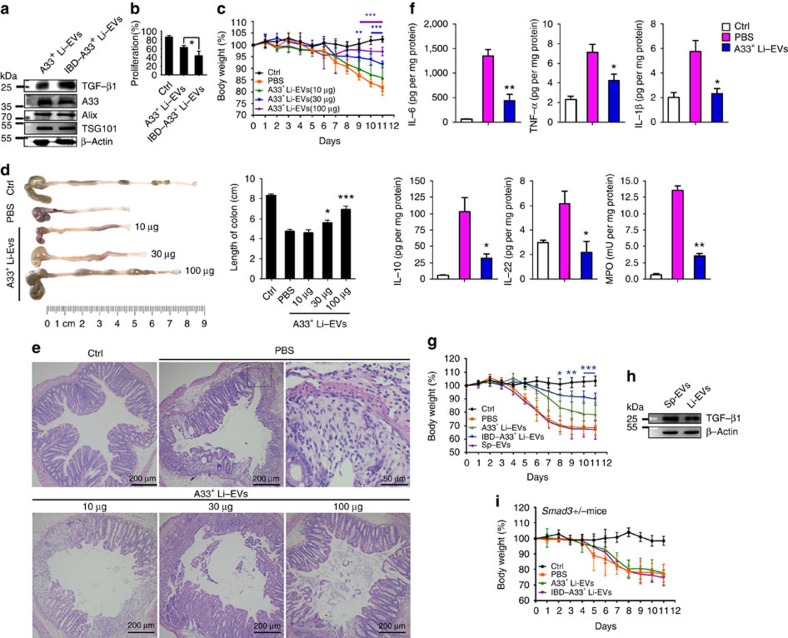
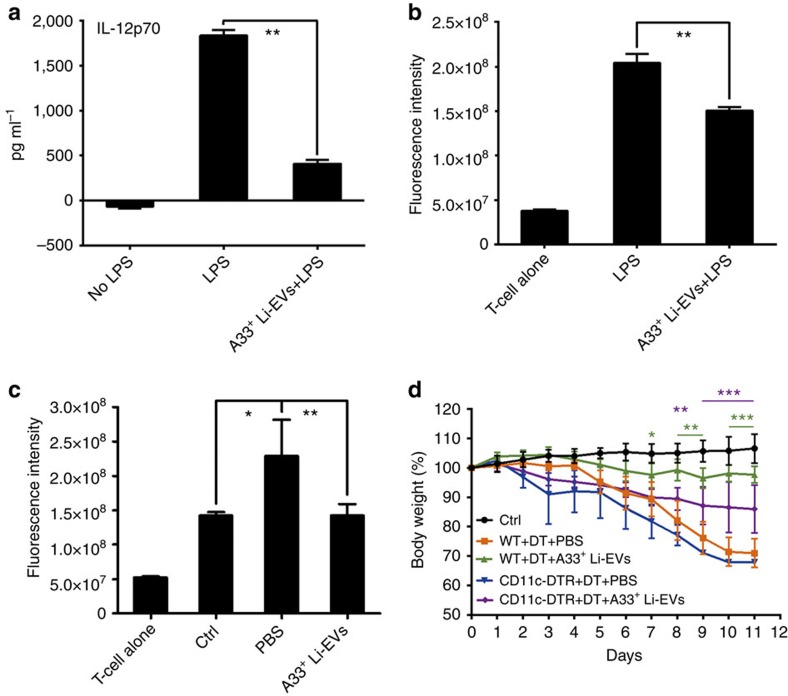
How the intestinal tract develops a tolerance to foreign antigens is still largely unknown. Here we report that extracellular vesicles (EVs) with TGF-β1-dependent immunosuppressive activity are produced by intestinal epithelial cells (IECs) under physiological conditions. Transfer of these EVs into inflammatory bowel disease (IBD) mice induced by dextran sulfate sodium salt decreases IBD severity by inducing regulatory T cells and immunosuppressive dendritic cells. In contrast, decreased endogenous EV production promotes IBD development. IECs produce EVs with increased levels of TGF-β1 upon IBD development in an ERK-dependent manner. Furthermore, these EVs tend to localize in the intestinal tract associated with epithelial cell adhesion molecule (EpCAM). Knockdown of EpCAM in vivo increases the severity of murine IBD, and the protective effect of EVs from IECs with decreased EpCAM on murine IBD is blunted. Therefore, our study indicates that EVs from IECs participate in maintaining the intestinal tract immune balance.
肠道如何对异源抗原产生耐受性在很大程度上仍不清楚。在这里,我们报告在生理条件下,肠道上皮细胞(IECs)产生具有 TGF-β1 依赖性免疫抑制活性的细胞外囊泡(EVs)。将这些 EV 转移到葡聚糖硫酸钠盐诱导的炎症性肠病(IBD)小鼠中,通过诱导调节性 T 细胞和免疫抑制性树突状细胞来减轻 IBD 严重程度。相比之下,内源性 EV 产生的减少会促进 IBD 的发展。IEC 以 ERK 依赖性方式在 IBD 发展过程中产生 TGF-β1 水平升高的 EV。此外,这些 EV 倾向于定位于与上皮细胞黏附分子(EpCAM)相关的肠道中。体内敲低 EpCAM 会增加小鼠 IBD 的严重程度,并且来自 EpCAM 减少的 IECs 的 EV 对小鼠 IBD 的保护作用减弱。因此,我们的研究表明,IEC 来源的 EV 参与维持肠道免疫平衡。