Department of Biotechnology, College of Biotechnology and Bioengineering, Zhejiang University of Technology, Hangzhou 310032, China.
Faculty of Technology, University of Turku, Turku 20014, Finland.
J Adv Res. 2021 Jul 8;37:221-233. doi: 10.1016/j.jare.2021.07.002. eCollection 2022 Mar.
The intestinal tract is a complicated ecosystem with dynamic homeostasis via interaction of intestine and microbiota. Inflammatory bowel disease (IBD) is chronic intestinal inflammation involving dysbiosis of intestinal microenvironment. Extracellular vesicles (EVs), as vital characteristics of cell-cell and cell-organism communication, contribute to homeostasis in intestine. Recently, EVs showed excellent potential for clinical applications in disease diagnoses and therapies.
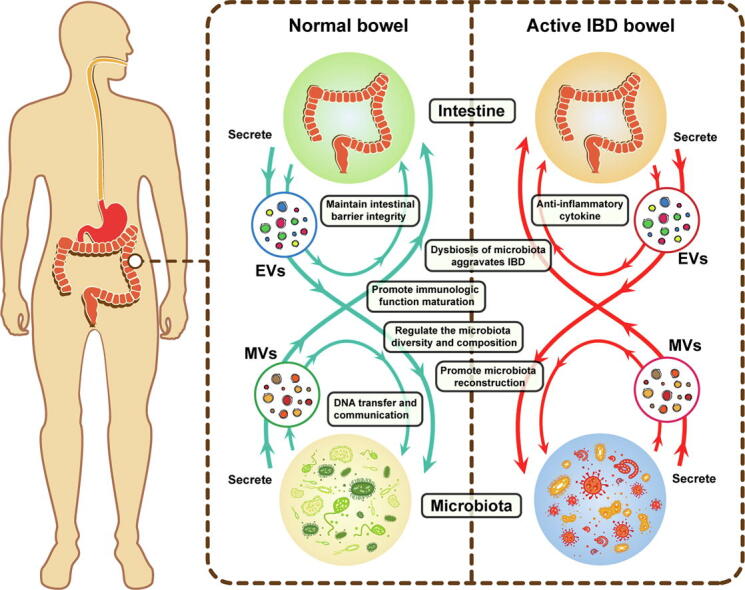
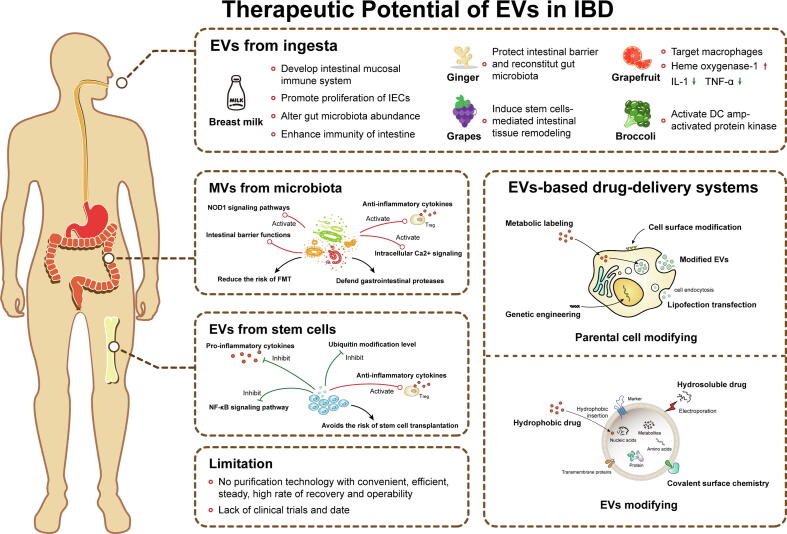
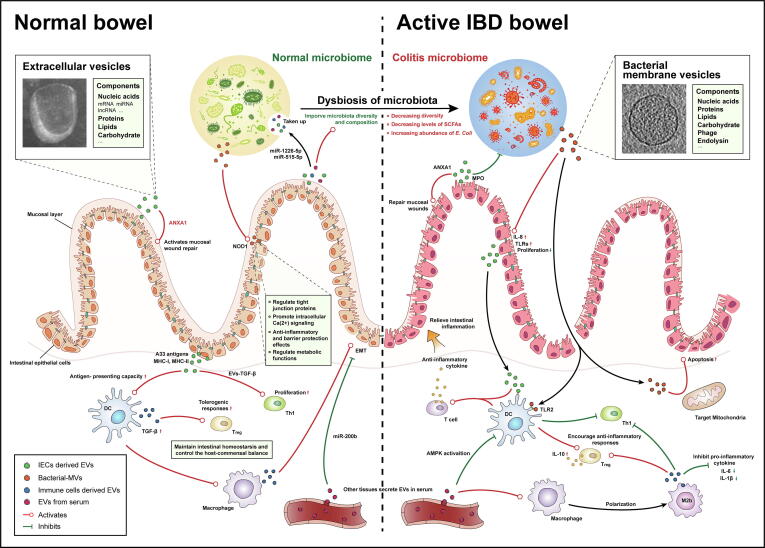
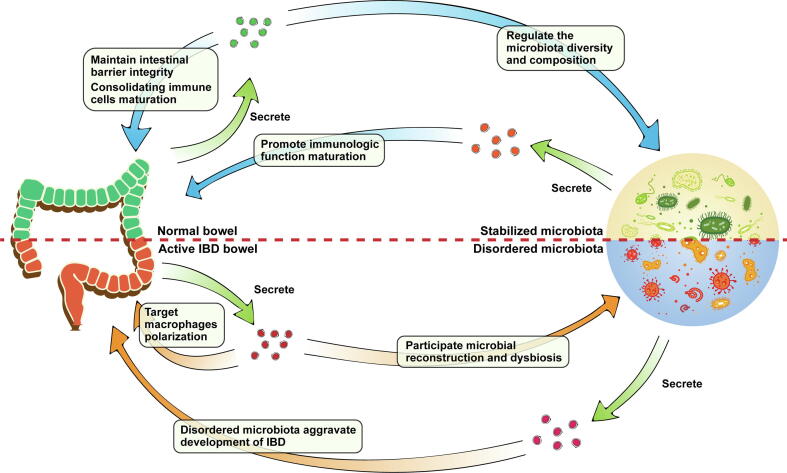
Our current review discusses the modulatory functions of EVs derived from different sources in intestine, especially their effects and applications in IBD clinical therapy. EV-mediated interaction systems between host intestine and microbiota were established to describe possible mechanisms of IBD pathogenesis and its cure.
EVs are excellent vehicles for delivering molecules containing genetic information to recipient cells. Multiple pieces of evidence have illustrated that EVs participate the interaction between host and microbiota in intestinal microenvironment. In inflammatory intestine with dysbiosis of microbiota, EVs as regulators target promoting immune response and microbial reconstruction. EVs-based immunotherapy could be a promising therapeutic approach for the treatment of IBD in the near future.
肠道是一个复杂的生态系统,通过肠和微生物群的相互作用维持动态的平衡。炎症性肠病(IBD)是一种慢性肠道炎症,涉及肠道微环境的菌群失调。细胞外囊泡(EVs)作为细胞间和细胞-机体通讯的重要特征,有助于肠道的稳态。最近,EVs 在疾病诊断和治疗的临床应用中显示出了极好的潜力。
我们目前的综述讨论了源自不同来源的 EVs 在肠道中的调节功能,特别是它们在 IBD 临床治疗中的作用和应用。建立了 EV 介导的宿主肠道与微生物群之间的相互作用系统,以描述 IBD 发病机制及其治疗的可能机制。
EVs 是将含有遗传信息的分子递送到受体细胞的优秀载体。多项证据表明,EVs 参与了肠道微环境中宿主与微生物群的相互作用。在菌群失调的炎症肠道中,EVs 作为调节剂靶向促进免疫反应和微生物重建。基于 EVs 的免疫疗法可能是治疗 IBD 的一种很有前途的治疗方法。