
通过气相水解法合成的氧化锆纳米颗粒具有良好的生物相容性和烧结性能。
Good Biocompatibility and Sintering Properties of Zirconia Nanoparticles Synthesized via Vapor-phase Hydrolysis.
作者信息
Wang Jigang, Yin Wenyan, He Xiao, Wang Qiang, Guo Ming, Chen Shaowei
机构信息
Laboratory for Micro-sized Functional Materials &College of Elementary Education, Capital Normal University, Beijing, 100048, PR China.
Department of Chemistry, Capital Normal University, Beijing, 100048, PR China.
出版信息
Sci Rep. 2016 Oct 11;6:35020. doi: 10.1038/srep35020.
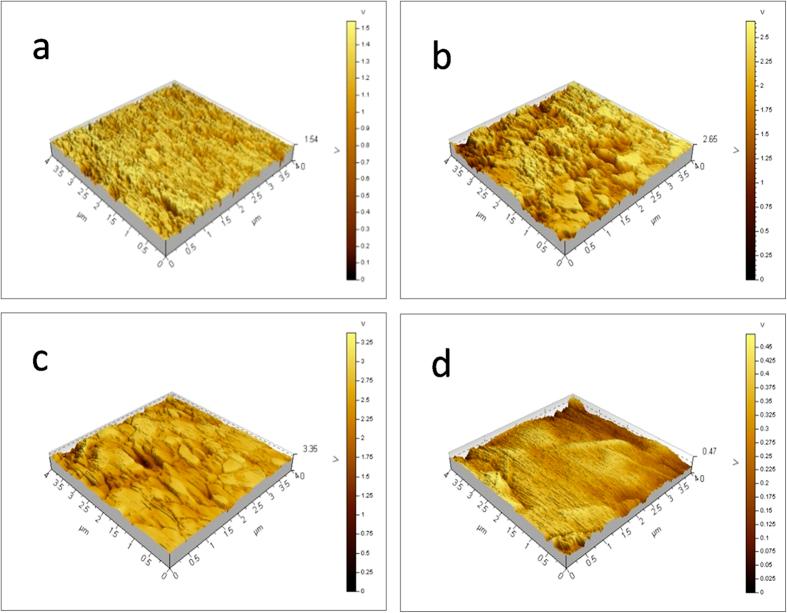
ZrO nanoparticles were synthesized by a vapor-phase hydrolysis process, and characterized in terms of crystalline structures, hardness and microstructures by X-ray diffraction, Vickers hardness test method, and atomic force microscopy (AFM) measurements. Moreover, in vitro cytotoxicity evaluation and hemolysis assay showed that the nanoparticles possessed good biocompatibility. Hardness investigations and AFM measurements indicated that both the sintering temperature and compression force played an important role in determining the physical behaviors (hardness, roughness and density) of flakes of the ZrO nanoparticles. When ZrO nanoparticles synthesized at 500 °C were pressed into flakes under 6 MPa and sintered at 1400 °C, the resulting flakes exhibited an optimal combination of hardness (534.58 gf·mm), roughness (0.07 μm) and density (4.41 g·cm). As the Vickers hardness value of human bones is of 315535 gf·mm and the density of adult femuris about 1.31.7 g·cm, the experimental results showed that the ZrO flakes were comparable to human bones with a higher density. As a result, the synthesized ZrO NPs may be useful for biomedical applications, especially for bone repair and replacement in future.
通过气相水解法合成了ZrO纳米颗粒,并通过X射线衍射、维氏硬度测试方法和原子力显微镜(AFM)测量对其晶体结构、硬度和微观结构进行了表征。此外,体外细胞毒性评估和溶血试验表明,这些纳米颗粒具有良好的生物相容性。硬度研究和AFM测量表明,烧结温度和压力在决定ZrO纳米颗粒薄片的物理行为(硬度、粗糙度和密度)方面都起着重要作用。当在500°C合成的ZrO纳米颗粒在6MPa压力下压制成薄片并在1400°C烧结时,所得薄片在硬度(534.58 gf·mm)、粗糙度(0.07μm)和密度(4.41 g·cm)方面表现出最佳组合。由于人体骨骼的维氏硬度值为315535 gf·mm,成人股骨的密度约为1.31.7 g·cm,实验结果表明ZrO薄片与人体骨骼相当,但密度更高。因此,合成的ZrO纳米颗粒可能在生物医学应用中有用,特别是在未来的骨修复和替代方面。


 Zotero 插件