Kim Han Joon, Jeong Jaemin, Park Sunhoo, Jin Young-Woo, Lee Seung-Sook, Lee Seung Bum, Choi Dongho
Department of Surgery, Hanyang University College of Medicine, Seoul, Korea.
Laboratory of Radiation Exposure & Therapeutics, National Radiation Emergency Medical Center, Korea Institute of Radiological & Medical Science (KIRAMS), Seoul, Korea.
Gut Liver. 2017 Mar 15;11(2):261-269. doi: 10.5009/gnl15389.
BACKGROUND/AIMS: Cancer is known to be a disease by many factors. However, specific results of reprogramming by pluripotency-related transcription factors remain to be scarcely reported. Here, we verified potential effects of pluripotent-related genes in hepatocellular carcinoma cancer cells.
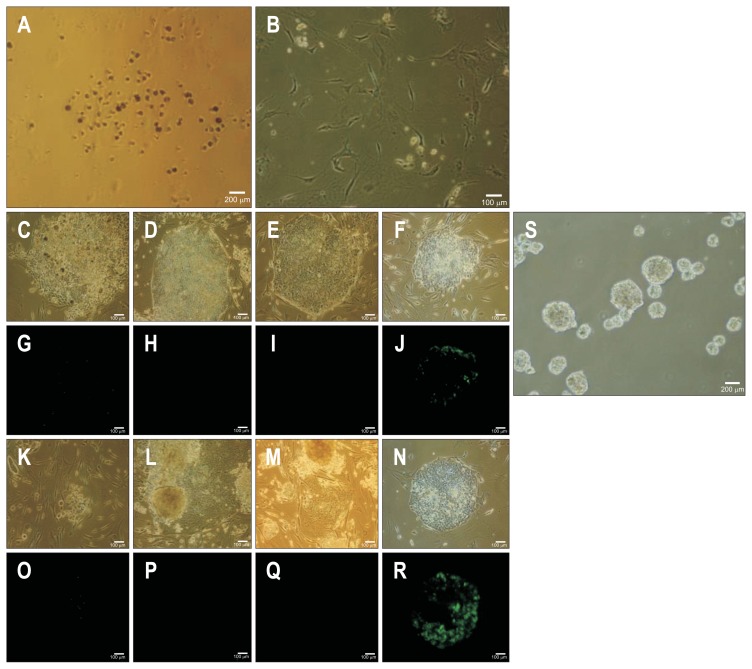
To better understand reprogramming of cancer cells in different genetic backgrounds, we used four liver cancer cell lines representing different states of p53 (HepG2, Hep3B, Huh7 and PLC). Retroviral-mediated introduction of reprogramming related genes (KLF4, Oct4, Sox2, and Myc) was used to induce the expression of proteins related to a pluripotent status in liver cancer cells.
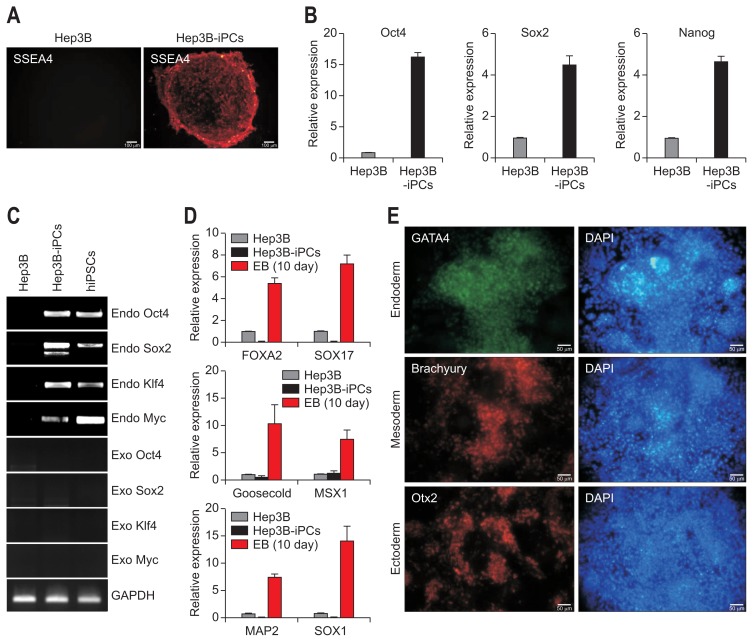
Hep3B cells (null p53) exhibited a higher efficiency of reprogramming in comparison to the other liver cancer cell lines. The reprogrammed Hep3B cells acquired similar characteristics to pluripotent stem cells. However, loss of stemness in Hep3B-iPCs was detected during continual passage.
We demonstrated that reprogramming was achieved in tumor cells through retroviral induction of genes associated with reprogramming. Interestingly, the reprogrammed pluripotent cancer cells (iPCs) were very different from original cancer cells in terms of colony shape and expressed markers. The induction of pluripotency of liver cancer cells correlated with the status of p53, suggesting that different expression level of p53 in cancer cells may affect their reprogramming.
背景/目的:癌症是一种由多种因素引起的疾病。然而,多能性相关转录因子重编程的具体结果鲜有报道。在此,我们验证了多能性相关基因在肝癌细胞中的潜在作用。
为了更好地理解不同遗传背景下癌细胞的重编程,我们使用了四种代表不同p53状态的肝癌细胞系(HepG2、Hep3B、Huh7和PLC)。通过逆转录病毒介导引入重编程相关基因(KLF4、Oct4、Sox2和Myc)来诱导肝癌细胞中与多能状态相关的蛋白质表达。
与其他肝癌细胞系相比,Hep3B细胞(p53缺失)表现出更高的重编程效率。重编程后的Hep3B细胞获得了与多能干细胞相似的特征。然而,在连续传代过程中检测到Hep3B-iPCs的干性丧失。
我们证明通过逆转录病毒诱导与重编程相关的基因可在肿瘤细胞中实现重编程。有趣的是,重编程后的多能癌细胞(iPCs)在集落形态和表达标志物方面与原始癌细胞有很大不同。肝癌细胞多能性的诱导与p53状态相关,表明癌细胞中p53的不同表达水平可能影响其重编程。