Wang Mao-Jie, Xu Yong-Yue, Huang Run-Yue, Chen Xiu-Min, Chen Hai-Ming, Han Ling, Yan Yu-Hong, Lu Chuan-Jian
The Second Affiliated Hospital, Guangzhou University of Chinese Medicine (Guangdong Provincial Hospital of Chinese Medicine), Guangzhou, China.
Section of Metabolic Diseases Research, University Medical Centre Utrecht, Utrecht University, Utrecht, The Netherlands.
Oncotarget. 2017 Jan 17;8(3):5498-5507. doi: 10.18632/oncotarget.12534.
Specific profile of microRNAs (miRNAs, miR) expressed in psoriasis has been identified in the past few years, while the studies on roles and molecular mechanisms of these miRNAs are still on the way. In our previous study, four specific miRNAs (miR-31, miR-203, hsa-miR-99a and miR-125b) were found to be specifically altered in psoriatic lesions.We therefore conducted a systematic literature review in this study to reveal the role of these miRNAs in the pathogenesis of psoriasis in order to inform future research.
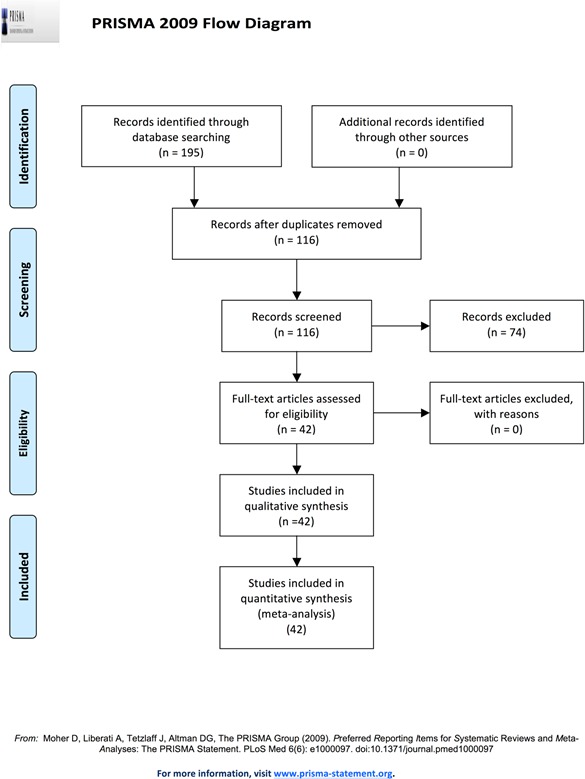
The related articles indexed in PubMed (MEDLINE) database were searched and analyzed. We identified eligible studies related to the mechanism research of miR-31, miR-203, hsa-miR-99a and miR-125b in psoriasis or psoriatic lesional skin from inception up to July 2016. The experts in the field of miRNAs and Psoriasis were involved in analysis process.
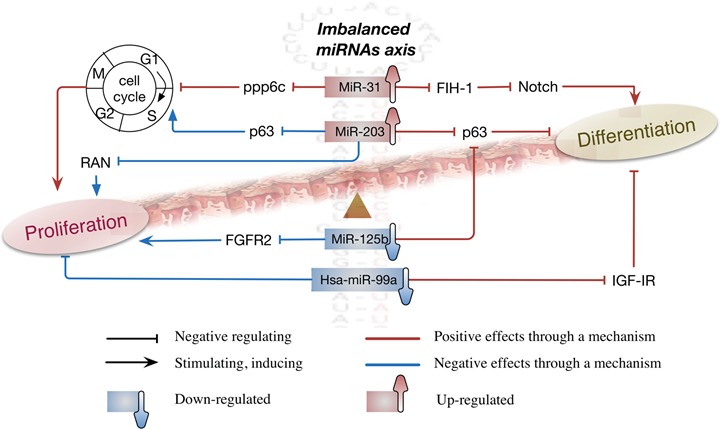
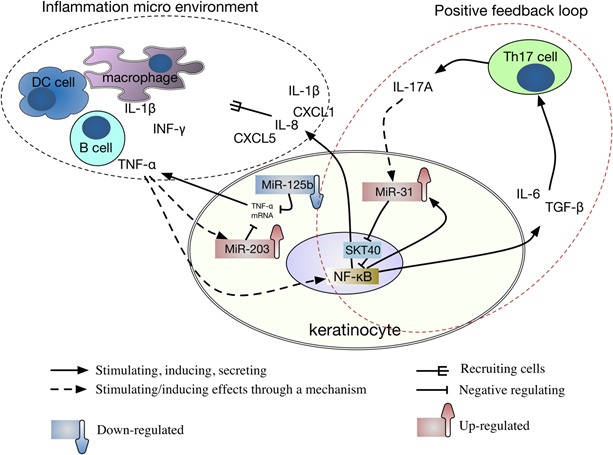
Both miR-31 and miR-203 are dramatically upregulated in psoriatic lesions. The former plays the pro-proliferative, pro-differentiative and pro-inflammatory roles and the latter holds the potentials for anti-proliferation, pro-inflammation and pro-differentiation in psoriatic keratinocytes. Conversely, both hsa-miR-99a and miR-125b are significantly downregulated in psoriatic skin. These two miRNAs are able to inhibit proliferation while promote differentiation of psoriatic keratinocytes, and miR-125b can also suppress inflammation in psoriatic lesions. By analyzing the contexts related to these miRNAs, we found that each of them does not act alone but rather work in concert with other miRNAs. The imbalance between miR-31/miR-203and hsa-miR-99a/miR-125b may contribute to the intense proliferation and abnormal differentiation of psoriatic keratinocytes, which is a characteristic of pathogenesis of psoriasis.
An imbalanced miRNAs axis was for the first time outlined. Apparently, upregulation of miR-31/miR-203 and downregulation of hsa-miR-99a/miR-125b work together in concert to facilitate the development of psoriasis pathogenesis. Further work in this field holds the potentials to open a new way to study psoriasis.
在过去几年中已确定了银屑病中表达的微小RNA(miRNA,miR)的特定特征,而对这些miRNA的作用和分子机制的研究仍在进行中。在我们之前的研究中,发现四种特定的miRNA(miR-31、miR-203、hsa-miR-99a和miR-125b)在银屑病皮损中发生了特异性改变。因此,我们在本研究中进行了系统的文献综述,以揭示这些miRNA在银屑病发病机制中的作用,为未来的研究提供参考。
检索并分析了PubMed(MEDLINE)数据库中索引的相关文章。我们确定了从创刊至2016年7月与miR-31、miR-203、hsa-miR-99a和miR-125b在银屑病或银屑病皮损皮肤中的机制研究相关的合格研究。miRNA和银屑病领域的专家参与了分析过程。
miR-31和miR-203在银屑病皮损中均显著上调。前者在银屑病角质形成细胞中发挥促增殖、促分化和促炎作用,而后者具有抗增殖、促炎和促分化的潜力。相反,hsa-miR-99a和miR-125b在银屑病皮肤中均显著下调。这两种miRNA能够抑制银屑病角质形成细胞的增殖,同时促进其分化,并且miR-125b还可以抑制银屑病皮损中的炎症。通过分析与这些miRNA相关的背景,我们发现它们各自并非单独起作用,而是与其他miRNA协同发挥作用。miR-31/miR-203与hsa-miR-99a/miR-125b之间的失衡可能导致银屑病角质形成细胞的强烈增殖和异常分化,这是银屑病发病机制的一个特征。
首次概述了一个失衡的miRNA轴。显然,miR-31/miR-203的上调和hsa-miR-99a/miR-125b的下调共同作用,促进了银屑病发病机制的发展。该领域的进一步研究有可能为银屑病的研究开辟一条新途径。