Chen Ai-Ling, Sun Xi, Wang Wei, Liu Jin-Feng, Zeng Xin, Qiu Jing-Fan, Liu Xin-Jian, Wang Yong
Department of Pathogen Biology, Key Laboratory of Pathogen Biology of Jiangsu Province, Nanjing Medical University, 140 Hanzhong Road, Nanjing, Jiangsu, 210029, China.
Wuxi Maternity and Child Health Hospital Affiliated to Nanjing Medical University, Wuxi, Jiangsu, 214002, China.
J Neuroinflammation. 2016 Oct 12;13(1):266. doi: 10.1186/s12974-016-0743-z.
Immunosuppression has been described as a consequence of brain injury and infection by different mechanisms. Angiostrongylus cantonensis can cause injury to the central nervous system and eosinophilic meningitis to human. Both T cell and B cell immunity play an essential role in the resistance of the infection. However, whether brain injury caused by A. cantonensis infection can lead to immunosuppression is not clear. Therefore, the present study sought to observe the alteration of immune responses in mice infected with A. cantonensis.
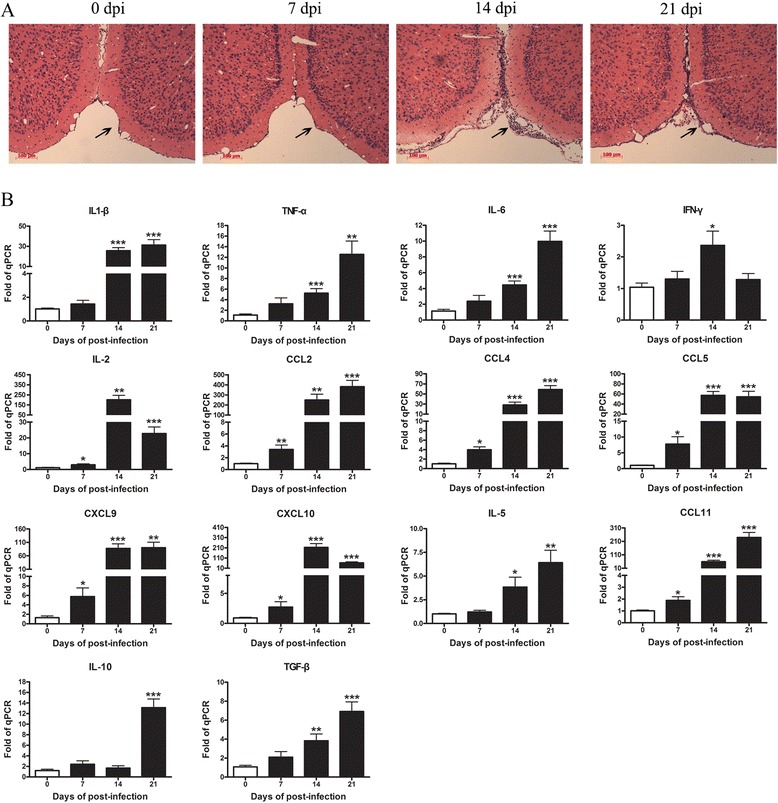
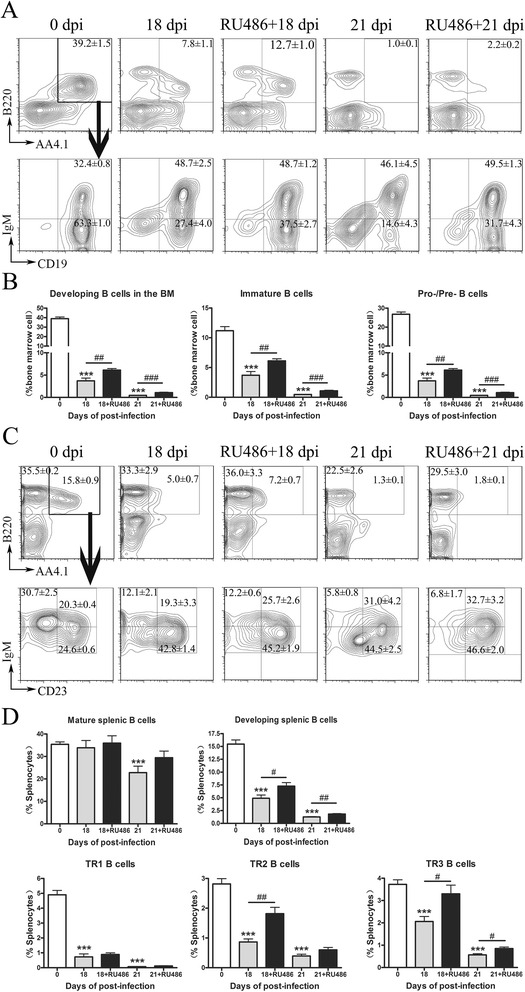
Mice were infected with 20 third-stage A. cantonensis larvae. The messenger RNA (mRNA) expression of inflammatory mediators in brain tissues was observed by qRT-PCR. Cell surface markers including CD3, CD4, CD8, CD19, B220, 7-AAD, annexin-V, IgM, AA4.1, and CD23 were evaluated by using flow cytometry. The immune functions of T and B lymphocytes were detected upon stimulation by ConA and antibody responses to a nonself antigen OVA, respectively. Activation of the hypothalamic-pituitary-adrenal axis was evaluated by analyzing the concentration of plasma corticosterone and levels of mRNA for corticotropin-releasing hormone, tyrosine hydroxylase, and c-fos.
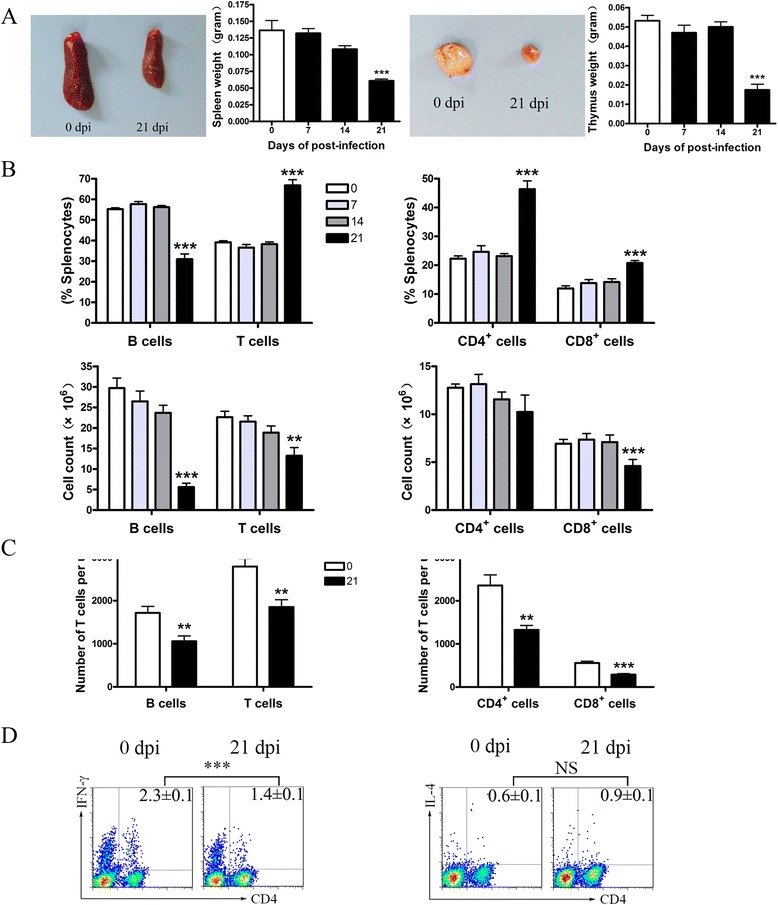
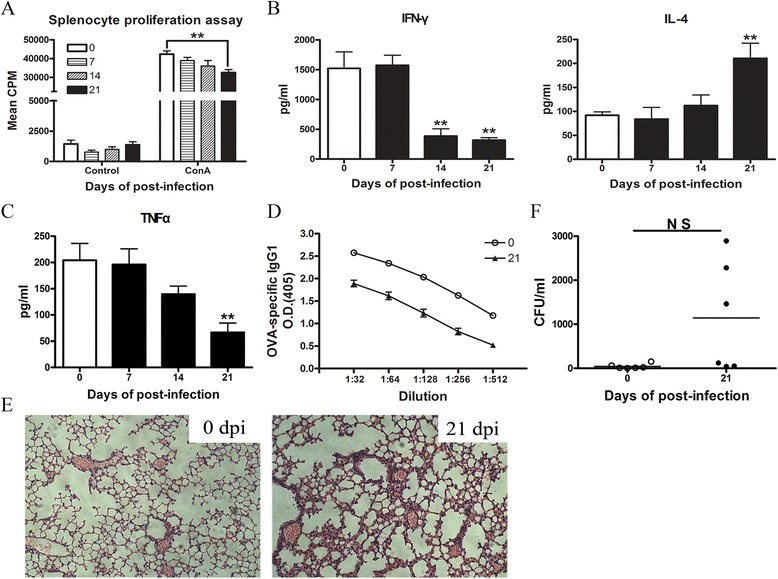
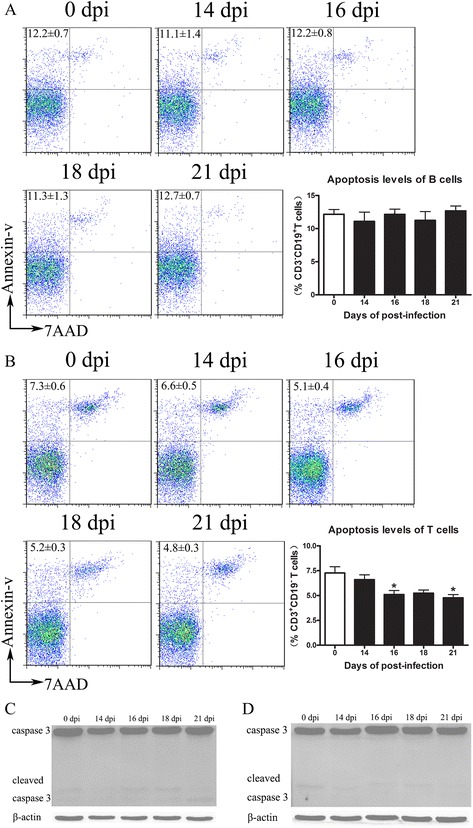
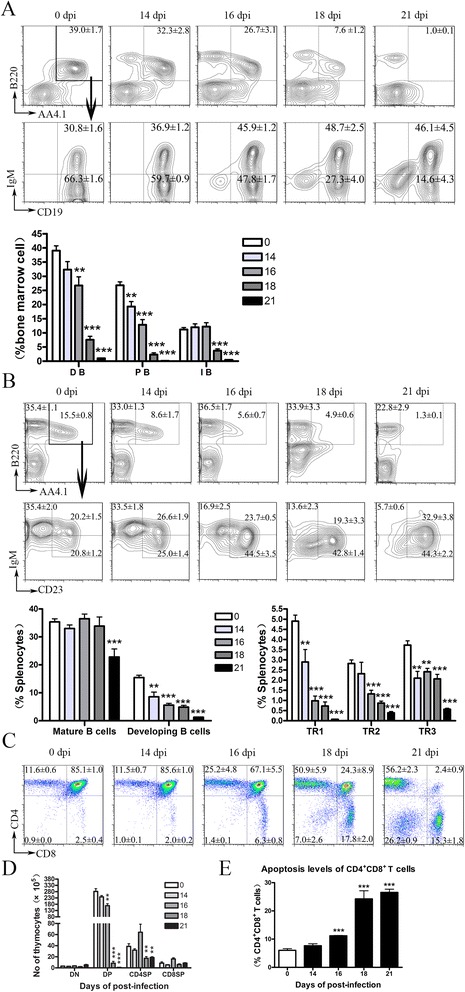
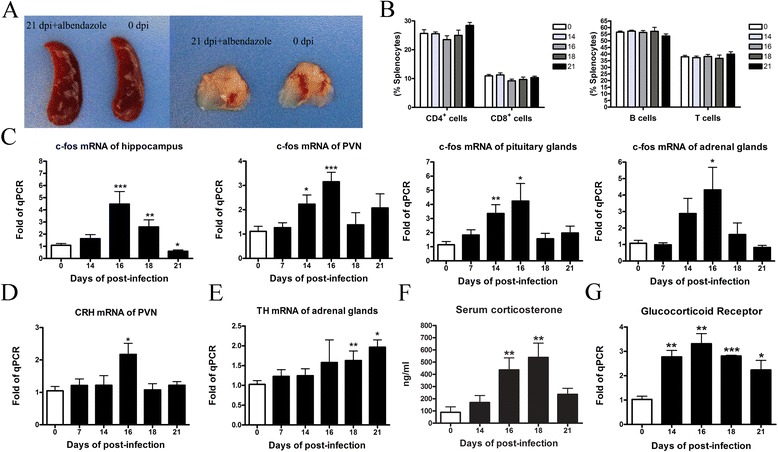
A. cantonensis infection results in obvious immunosuppression evidenced as progressive spleen and thymus atrophy and significant decrease in the number of lymphocyte subsets including B cells, CD3 T cells, CD4 T cells, and CD8 T cells, as well as reduced T cell proliferation at 21 days post-infection and antibody reaction to exogenous protein after infection. However, the sharp decrease of splenic and thymic cells was not due to cell apoptosis but to B cell genesis cessation and impairing thymocyte development. In addition, helminthicide treatment with albendazole on infected mice at 7 days post-infection could prevent immunosuppressive symptoms. Importantly, infected mice displayed hypothalamic-pituitary-adrenal axis activation, with peak responses occurring at 16 days post-infection, and glucocorticoid receptor antagonist could partially restore the infection-induced cessation of B cell genesis.
Brain injury caused by A. cantonensis infection, like that of brain stroke and trauma, enhanced endogenous corticosteroid activity, resulting in peripheral immunosuppression.
免疫抑制被认为是脑损伤和感染通过不同机制导致的结果。广州管圆线虫可引起人类中枢神经系统损伤和嗜酸性粒细胞性脑膜炎。T细胞和B细胞免疫在抵抗该感染中均发挥重要作用。然而,广州管圆线虫感染所致的脑损伤是否会导致免疫抑制尚不清楚。因此,本研究旨在观察感染广州管圆线虫的小鼠免疫反应的变化。
给小鼠感染20条第三期广州管圆线虫幼虫。通过qRT-PCR观察脑组织中炎症介质的信使核糖核酸(mRNA)表达。使用流式细胞术评估细胞表面标志物,包括CD3、CD4、CD8、CD19、B220、7-氨基放线菌素D(7-AAD)、膜联蛋白-V、IgM、AA4.1和CD23。分别通过刀豆蛋白A(ConA)刺激检测T淋巴细胞的免疫功能以及对非自身抗原卵清蛋白(OVA)的抗体反应来检测B淋巴细胞的免疫功能。通过分析血浆皮质酮浓度以及促肾上腺皮质激素释放激素、酪氨酸羟化酶和c-fos的mRNA水平来评估下丘脑-垂体-肾上腺轴的激活情况。
广州管圆线虫感染导致明显的免疫抑制,表现为脾脏和胸腺进行性萎缩,包括B细胞、CD3⁺ T细胞、CD4⁺ T细胞和CD8⁺ T细胞在内的淋巴细胞亚群数量显著减少,以及感染后21天T细胞增殖减少和感染后对外源蛋白的抗体反应降低。然而,脾脏和胸腺细胞的急剧减少并非由于细胞凋亡,而是由于B细胞生成停止和胸腺细胞发育受损。此外,在感染后7天用阿苯达唑对感染小鼠进行驱虫治疗可预防免疫抑制症状。重要的是,感染小鼠表现出下丘脑-垂体-肾上腺轴激活,在感染后16天出现峰值反应,糖皮质激素受体拮抗剂可部分恢复感染诱导的B细胞生成停止。
广州管圆线虫感染所致的脑损伤与脑卒中和创伤一样,增强了内源性皮质类固醇活性,导致外周免疫抑制。