School of Medicine, South China University of Technology, Guangzhou, China.
Department of Rehabilitation Medicine, Guangzhou First People's Hospital, School of Medicine, South China University of Technology, Guangzhou, China.
Front Immunol. 2022 Feb 28;13:845011. doi: 10.3389/fimmu.2022.845011. eCollection 2022.
Demyelinating disease of the central nervous system is one of the most common neurological diseases and effective treatment is still under in-depth research. Our previous study showed that infection can induce demyelination injury in mouse brains and IL-17A expression was shown to be significantly increased during this process. Moreover, we found that IL-17A inhibition attenuated the demyelination caused by infection. However, the underlying mechanisms have not yet been fully elucidated.
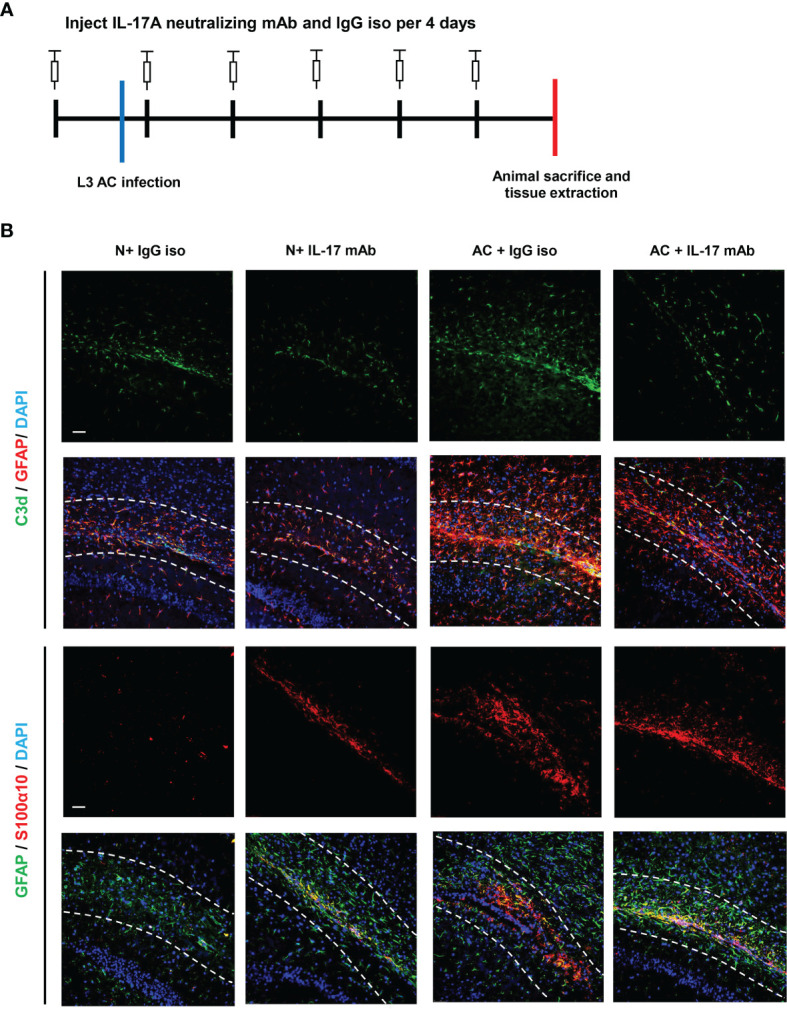
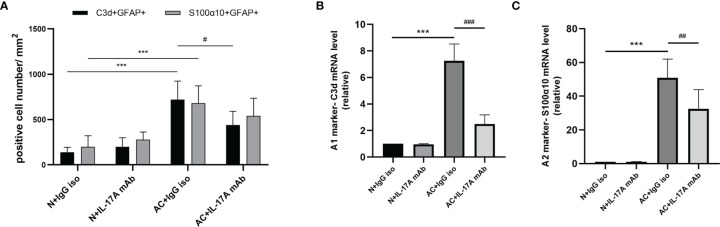
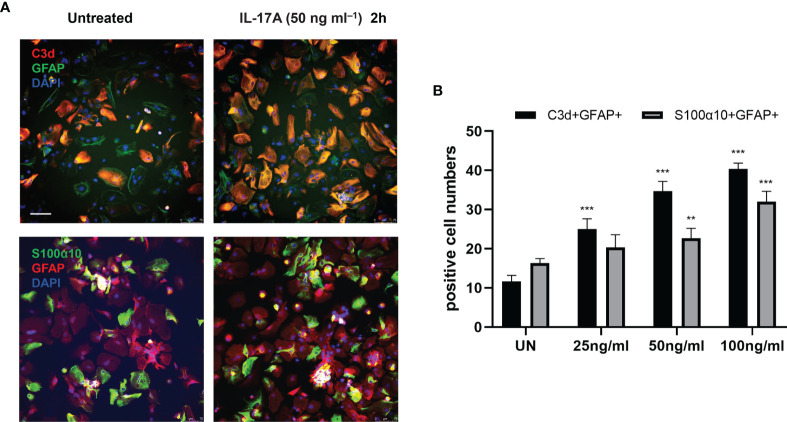
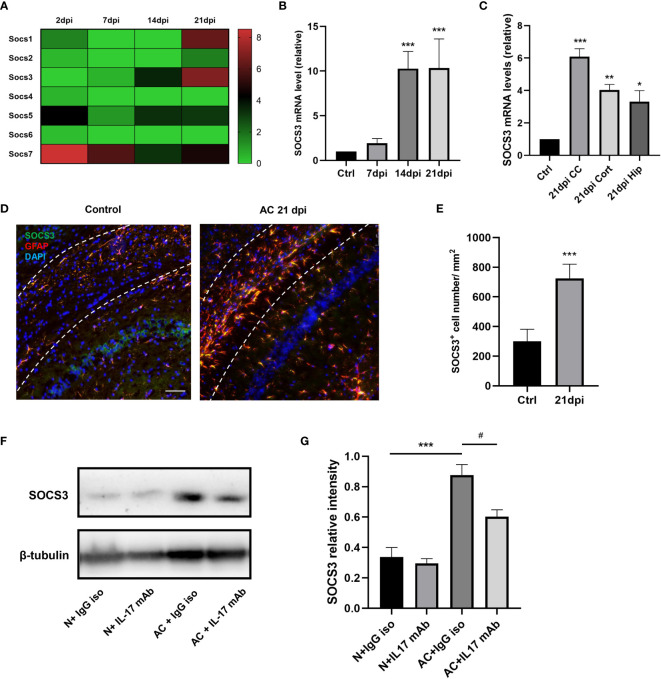
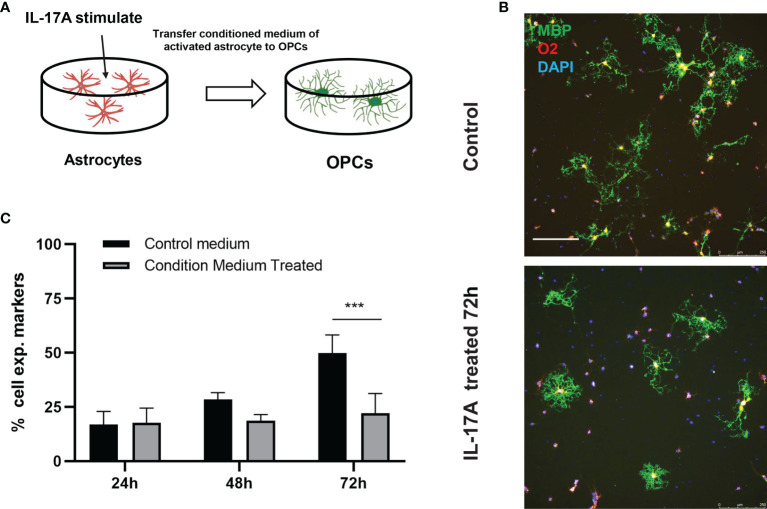
IL-17A neutralizing antibodies were injected into infected mice to decrease IL-17A levels. The activation of glial cells in the brain and the expression of cell markers were detected by a variety of methods, including real-time quantitative PCR, western blotting, and immunofluorescence staining. The relationship between IL-17A and astrocyte activation was further identified by experiments. The role of SOCS3 in the IL-17A stimulating process was determined using RNA-seq data collection of infected mice and the siRNA interference method.
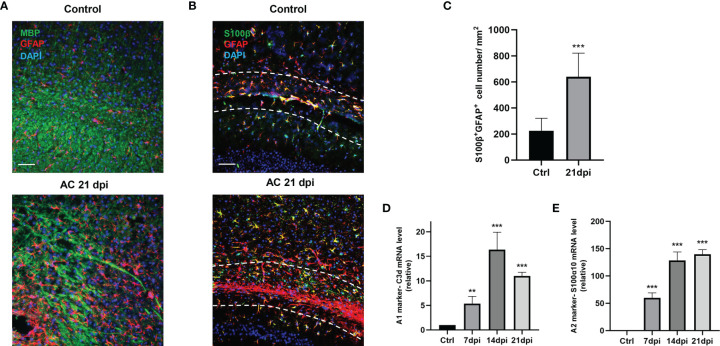
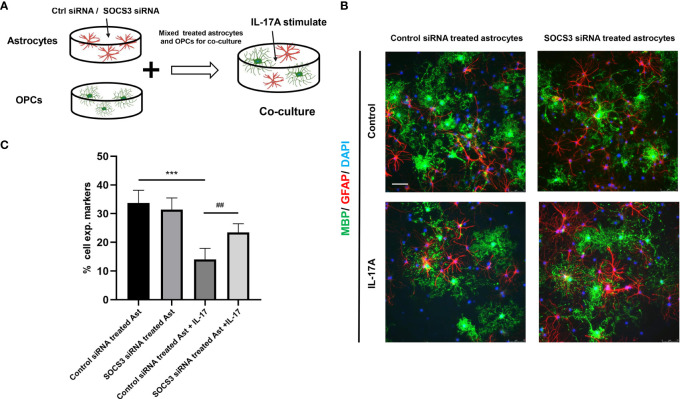
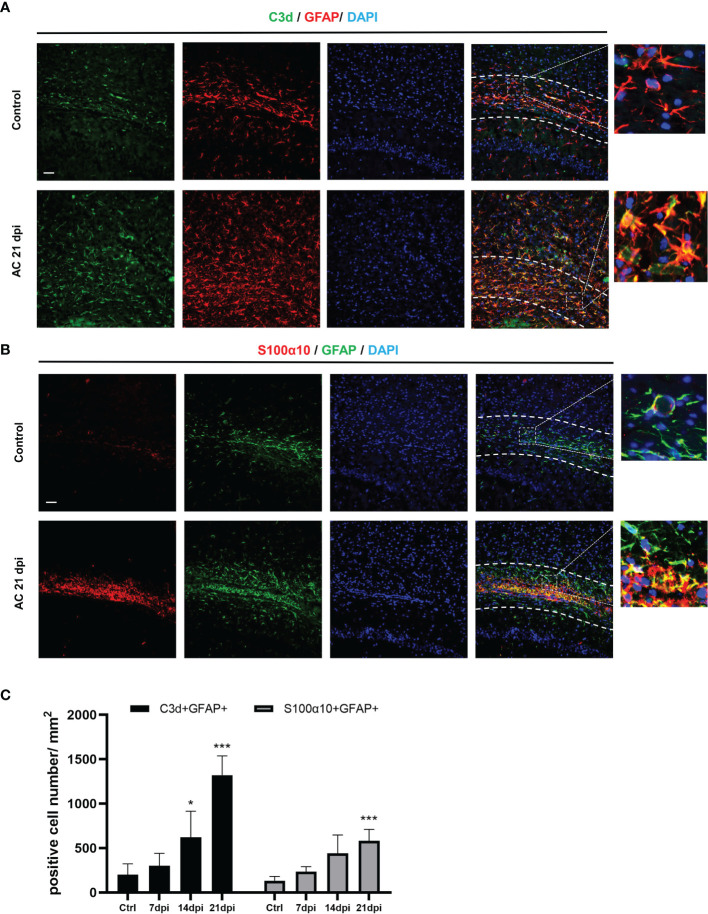
Demyelination of the corpus callosum was relieved after administration of IL-17A neutralizing antibody and this was accompanied by decreased activation of A1 type astrocytes around this region. The expression of SOCS3 was attenuated and activation of astrocytes by IL-17A was mediated by the IL-17RA/STAT3/SOCS3 pathway. IL-17A not only directly damaged oligodendrocytes but also indirectly damaged oligodendrocytes through A1 astrocyte mediation. Specific siRNA inhibition of IL-17A-inducible SOCS3 in astrocytes alleviated their damaging effects on oligodendrocytes.
IL-17A plays an important role in demyelination induced by infection the IL-17RA/STAT3/SOCS3 pathway in A1-type astrocytes, indicating that specific blockage of IL-17A and SOCS3 activity could be a therapeutic strategy for neuroinflammatory demyelinating diseases associated with astrocyte activation.
中枢神经系统脱髓鞘疾病是最常见的神经系统疾病之一,其有效治疗仍在深入研究中。我们之前的研究表明, 感染可诱导小鼠大脑脱髓鞘损伤,在此过程中 IL-17A 的表达明显增加。此外,我们发现 IL-17A 抑制可减轻 感染引起的脱髓鞘。然而,其潜在机制尚未完全阐明。
用 IL-17A 中和抗体注射 感染的小鼠以降低 IL-17A 水平。通过实时定量 PCR、western blot 和免疫荧光染色等多种方法检测脑内神经胶质细胞的激活和细胞标志物的表达。通过 实验进一步确定了 IL-17A 与星形胶质细胞激活的关系。采用感染小鼠的 RNA-seq 数据收集和 siRNA 干扰方法确定 SOCS3 在 IL-17A 刺激过程中的作用。
给予 IL-17A 中和抗体后缓解了胼胝体的脱髓鞘,同时该区域周围 A1 型星形胶质细胞的激活减少。SOCS3 的表达减弱,IL-17A 通过 IL-17RA/STAT3/SOCS3 通路介导星形胶质细胞的激活。IL-17A 不仅直接损伤少突胶质细胞,还通过 A1 星形胶质细胞介导间接损伤少突胶质细胞。特异性 siRNA 抑制星形胶质细胞中 IL-17A 诱导的 SOCS3 可减轻其对少突胶质细胞的损伤作用。
IL-17A 在 感染诱导的脱髓鞘中起重要作用,通过 A1 型星形胶质细胞中的 IL-17RA/STAT3/SOCS3 通路,表明特异性阻断 IL-17A 和 SOCS3 活性可能是治疗与星形胶质细胞激活相关的神经炎症性脱髓鞘疾病的一种策略。