Tănase Liviu Cristian, Apostol Nicoleta Georgiana, Abramiuc Laura Elena, Tache Cristian Alexandru, Hrib Luminița, Trupină Lucian, Pintilie Lucian, Teodorescu Cristian Mihail
National Institute of Materials Physics, Atomistilor 405A, 077125 Măgurele-Ilfov, Romania.
University of Bucharest, Faculty of Physics, Atomiştilor 405, 077125 Măgurele-Ilfov, Romania.
Sci Rep. 2016 Oct 14;6:35301. doi: 10.1038/srep35301.
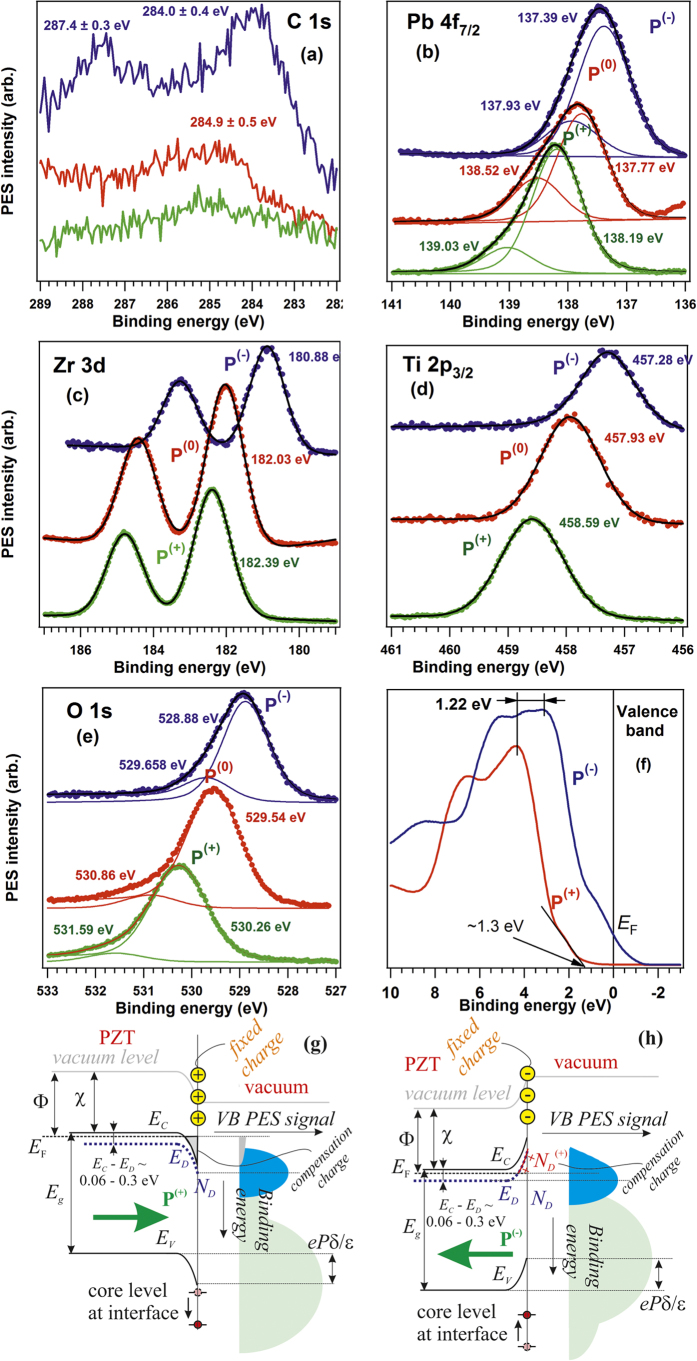
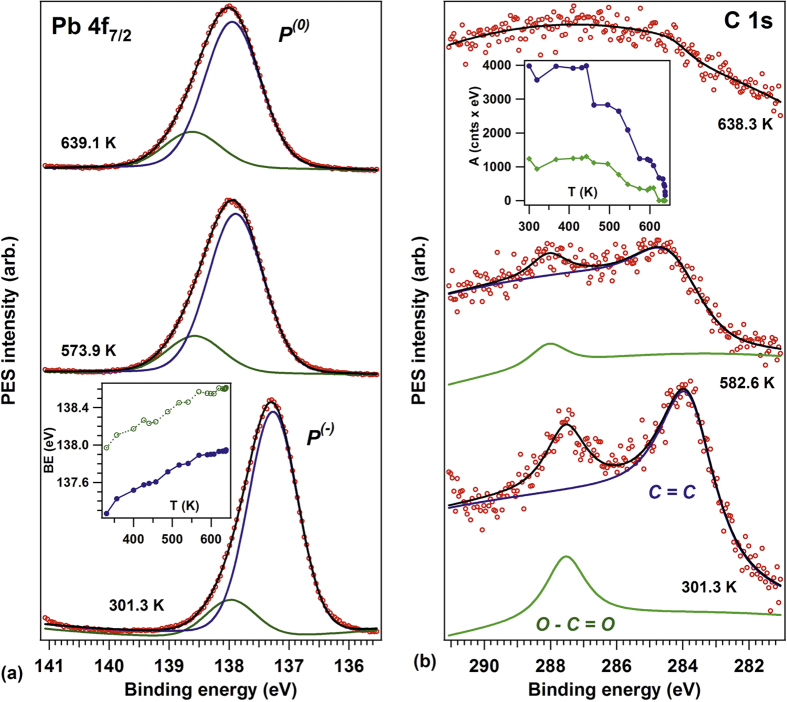
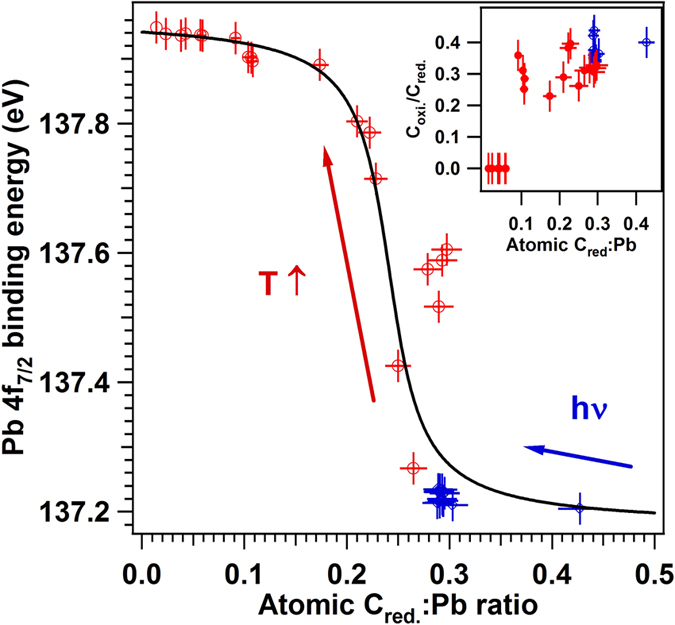
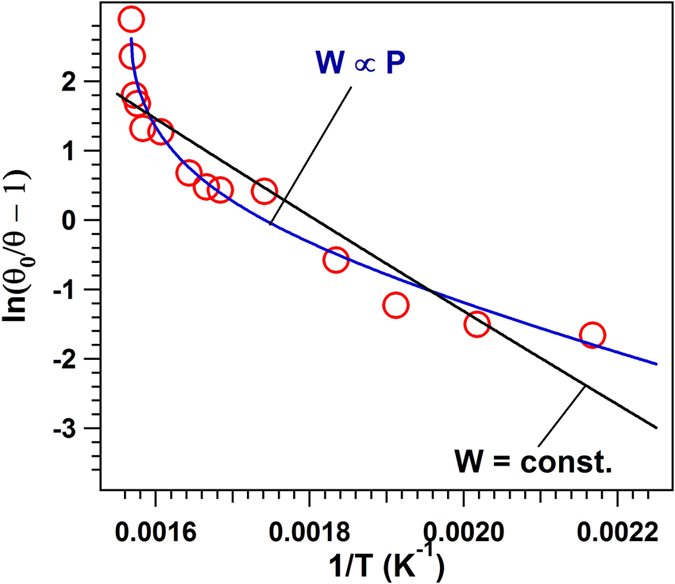
Atomically clean lead zirco-titanate PbZrTiO (001) layers exhibit a polarization oriented inwards P, visible by a band bending of all core levels towards lower binding energies, whereas as introduced layers exhibit P polarization under air or in ultrahigh vacuum. The magnitude of the inwards polarization decreases when the temperature is increased at 700 K. CO adsorption on P polarized surfaces saturates at about one quarter of a monolayer of carbon, and occurs in both molecular (oxidized) and dissociated (reduced) states of carbon, with a large majority of reduced state. The sticking of CO on the surface in ultrahigh vacuum is found to be directly related to the P polarization state of the surface. A simple electrostatic mechanism is proposed to explain these dissociation processes and the sticking of carbon on P polarized areas. Carbon desorbs also when the surface is irradiated with soft X-rays. Carbon desorption when the polarization is lost proceeds most probably in form of CO. Upon carbon desorption cycles, the ferroelectric surface is depleted in oxygen and at some point reverses its polarization, owing to electrons provided by oxygen vacancies which are able to screen the depolarization field produced by positive fixed charges at the surface.
原子级清洁的锆钛酸铅PbZrTiO(001)层呈现出向内的极化P,这可通过所有芯能级向较低结合能的能带弯曲来观察到,而引入的层在空气或超高真空下呈现P极化。当温度在700K升高时,向内极化的幅度减小。CO在P极化表面上的吸附在约四分之一单层碳时达到饱和,并且以碳的分子态(氧化态)和解离态(还原态)发生,其中还原态占大多数。发现在超高真空下CO在表面上的吸附直接与表面的P极化状态相关。提出了一种简单的静电机制来解释这些解离过程以及碳在P极化区域上的吸附。当用软X射线照射表面时,碳也会解吸。极化消失时的碳解吸最有可能以CO的形式进行。在碳解吸循环中,铁电表面的氧会耗尽,并且在某个时刻会由于氧空位提供的电子能够屏蔽表面正固定电荷产生的去极化场而使其极化反转。