Sordillo Joanne E, Zhou Yanjiao, McGeachie Michael J, Ziniti John, Lange Nancy, Laranjo Nancy, Savage Jessica R, Carey Vincent, O'Connor George, Sandel Megan, Strunk Robert, Bacharier Leonard, Zeiger Robert, Weiss Scott T, Weinstock George, Gold Diane R, Litonjua Augusto A
Channing Division of Network Medicine, Department of Medicine, Brigham and Women's Hospital and Harvard Medical School, Boston, Mass.
Jackson Laboratory, Farmington, Conn.
J Allergy Clin Immunol. 2017 Feb;139(2):482-491.e14. doi: 10.1016/j.jaci.2016.08.045. Epub 2016 Oct 13.
The gut microbiome in infancy influences immune system maturation, and may have an important impact on allergic disease risk.
We sought to determine how prenatal and early life factors impact the gut microbiome in a relatively large, ethnically diverse study population of infants at age 3 to 6 months, who were enrolled in Vitamin D Antenatal Asthma Reduction Trial, a clinical trial of vitamin D supplementation in pregnancy to prevent asthma and allergies in offspring.
We performed 16S rRNA gene sequencing on 333 infants' stool samples. Microbial diversity was computed using the Shannon index. Factor analysis applied to the top 25 most abundant taxa revealed 4 underlying bacterial coabundance groups; the first dominated by Firmicutes (Lachnospiraceae/Clostridiales), the second by Proteobacteria (Klebsiella/Enterobacter), the third by Bacteriodetes, and the fourth by Veillonella. Scores for coabundance groups were used as outcomes in regression models, with prenatal/birth and demographic characteristics as independent predictors. Multivariate analysis, using all microbial community members, was also conducted.
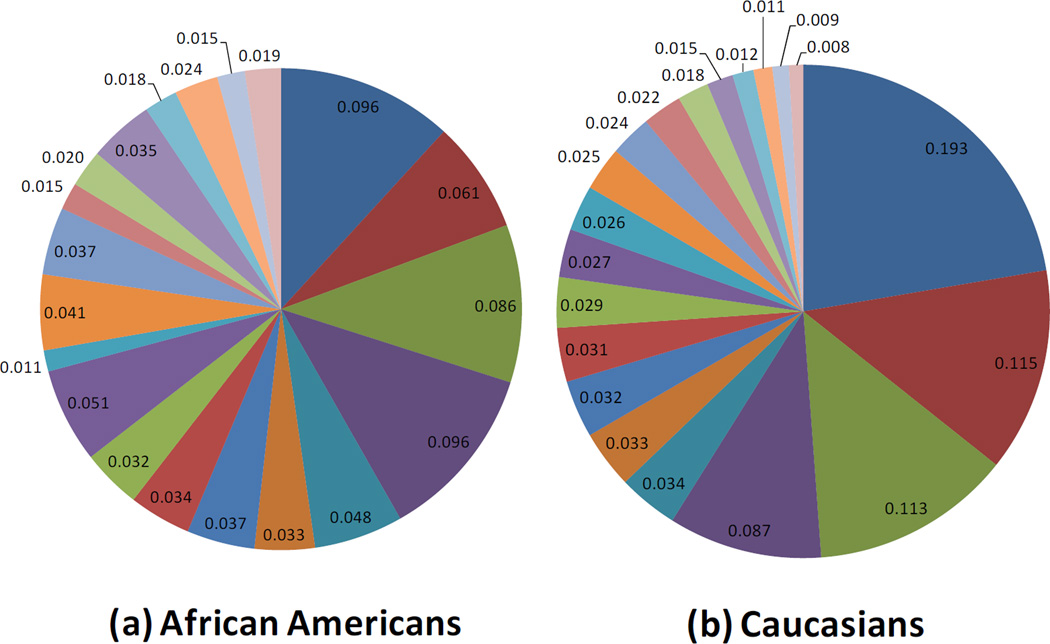
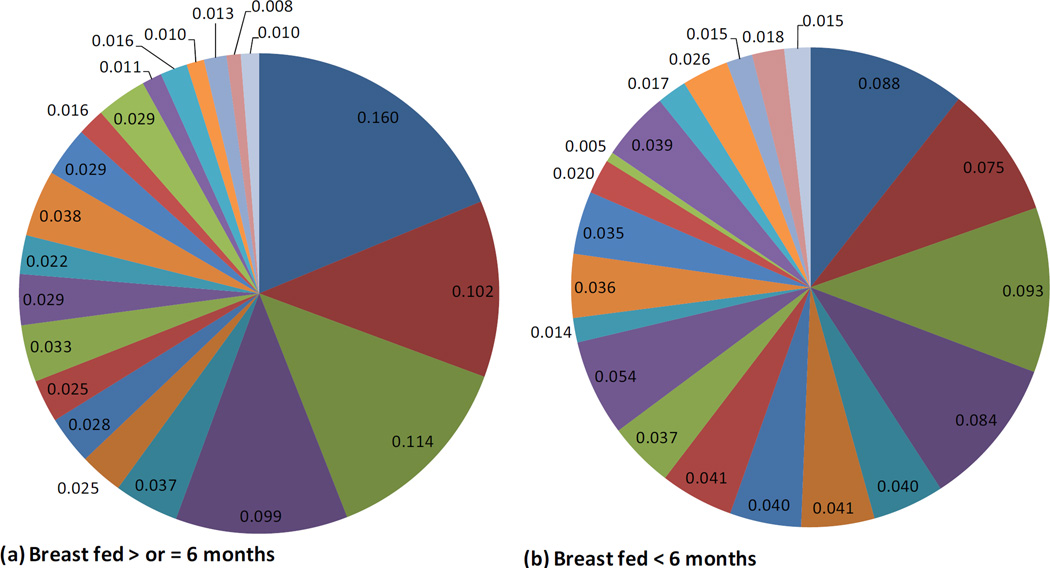
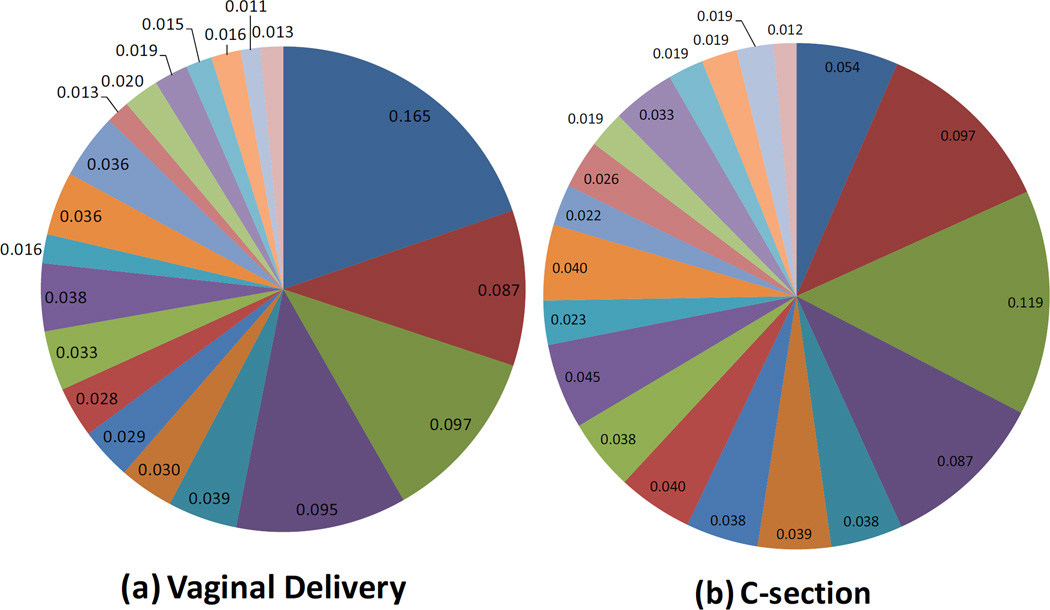
White race/ethnicity was associated with lower diversity but higher Bacteroidetes coabundance scores. C-section birth was associated with higher diversity, but decreased Bacteroidetes coabundance scores. Firmicutes scores were higher for infants born by C-section. Breast-fed infants had lower proportions of Clostridiales. Cord blood vitamin D was linked to increased Lachnobacterium, but decreased Lactococcus.
The findings presented here suggest that race, mode of delivery, breast-feeding, and cord blood vitamin D levels are associated with infant gut microbiome composition, with possible long-term implications for immune system modulation and asthma/allergic disease incidence.
婴儿期的肠道微生物群会影响免疫系统的成熟,并且可能对过敏性疾病风险产生重要影响。
在一个相对较大的、种族多样化的3至6个月婴儿研究群体中,我们试图确定产前和生命早期因素如何影响肠道微生物群。这些婴儿参加了维生素D产前哮喘降低试验,这是一项关于孕期补充维生素D以预防后代哮喘和过敏的临床试验。
我们对333名婴儿的粪便样本进行了16S rRNA基因测序。使用香农指数计算微生物多样性。对最丰富的25个分类群进行因子分析,揭示了4个潜在的细菌共丰度组;第一组以厚壁菌门(毛螺菌科/梭菌目)为主,第二组以变形菌门(克雷伯菌属/肠杆菌属)为主,第三组以拟杆菌门为主,第四组以韦荣球菌属为主。共丰度组的分数用作回归模型的结果,产前/出生和人口统计学特征作为独立预测因素。还使用所有微生物群落成员进行了多变量分析。
白人种族与较低的多样性但较高的拟杆菌共丰度分数相关。剖宫产与较高的多样性相关,但拟杆菌共丰度分数降低。剖宫产出生的婴儿厚壁菌门分数较高。母乳喂养的婴儿梭菌目的比例较低。脐血维生素D与拉氏杆菌增加有关,但与乳球菌减少有关。
此处呈现的研究结果表明,种族、分娩方式、母乳喂养和脐血维生素D水平与婴儿肠道微生物群组成有关,可能对免疫系统调节和哮喘/过敏性疾病发病率具有长期影响。