Vílchez Juan I, García-Fontana Cristina, Román-Naranjo Desireé, González-López Jesús, Manzanera Maximino
Institute for Water Research, and Department of Microbiology, University of Granada Granada, Spain.
Front Microbiol. 2016 Sep 30;7:1577. doi: 10.3389/fmicb.2016.01577. eCollection 2016.
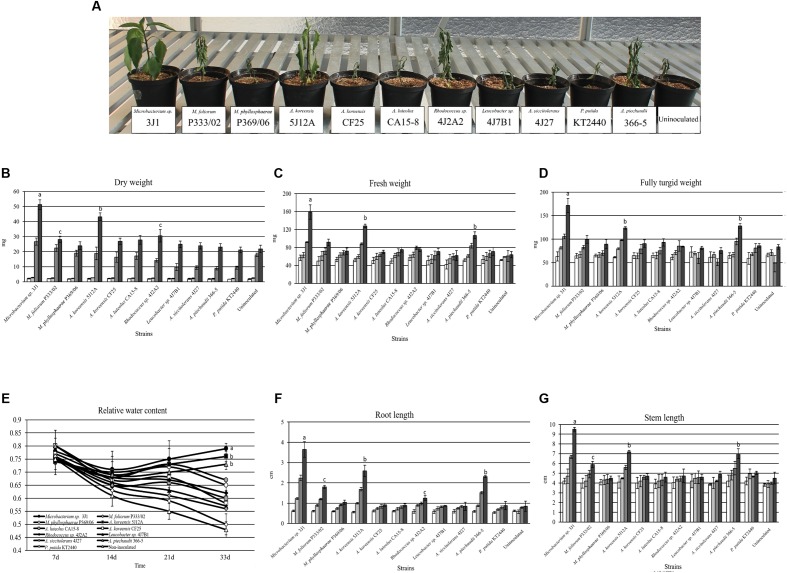
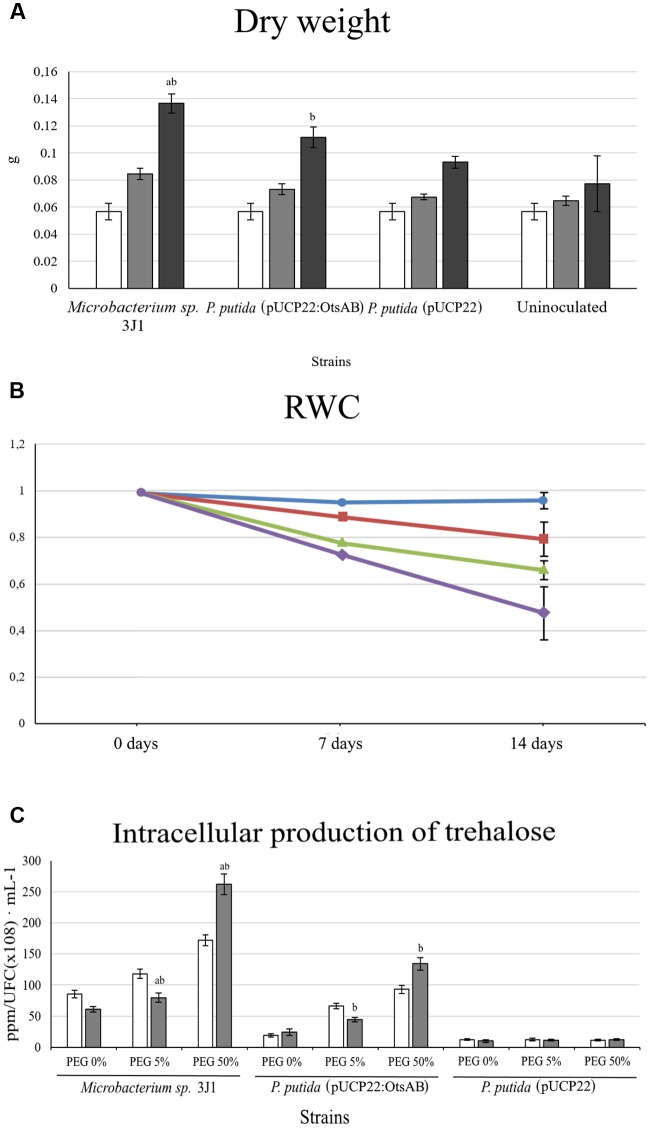
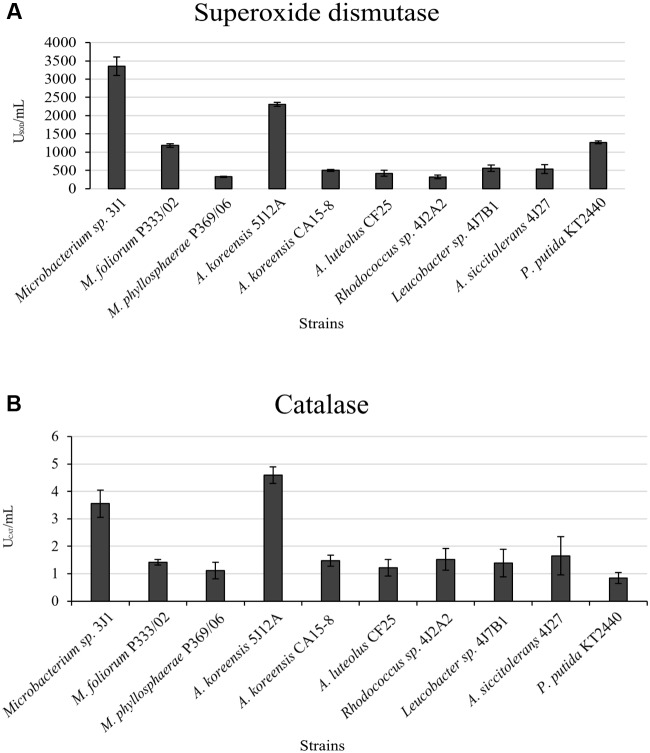
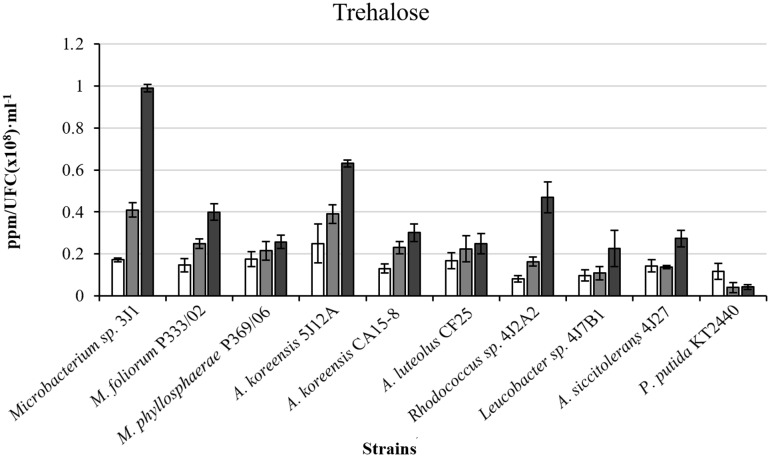
A collection of desiccation-tolerant xeroprotectant-producing microorganisms was screened for their ability to protect plants against drought, and their role as plant growth-promoting rhizobacteria was investigated in two different crops (tomato and pepper). The most commonly described biochemical mechanisms for plant protection against drought by microorganisms including the production of phytohormones, antioxidants and xeroprotectants were analyzed. In particular, the degree of plant protection against drought provided by these microorganisms was characterized. After studying the findings and comparing them with results of the closest taxonomic relatives at the species and strain levels, we propose that trehalose produced by these microorganisms is correlated with their ability to protect plants against drought. This proposal is based on the increased protection of plants against drought by the desiccation-sensitive microorganism KT2440, which expresses the AB genes for trehalose biosynthesis .
筛选了一批能产生耐旱保护剂的耐干燥微生物,以研究它们保护植物免受干旱影响的能力,并在两种不同作物(番茄和辣椒)中研究了它们作为植物促生根际细菌的作用。分析了微生物保护植物免受干旱影响的最常见生化机制,包括植物激素、抗氧化剂和保护剂的产生。特别地,对这些微生物提供的植物抗旱保护程度进行了表征。在研究结果并将其与物种和菌株水平上最相近的分类学亲属的结果进行比较后,我们提出这些微生物产生的海藻糖与其保护植物免受干旱影响的能力相关。这一建议基于对干旱敏感的微生物KT2440对植物抗旱保护作用的增强,该微生物表达海藻糖生物合成的AB基因。