Cacace Andrea, Sboarina Martina, Vazeille Thibaut, Sonveaux Pierre
Pole of Pharmacology, Institut de Recherche Expérimentale et Clinique (IREC), Université catholique de Louvain (UCL), Brussels, Belgium.
Oncogene. 2017 Apr;36(15):2074-2084. doi: 10.1038/onc.2016.364. Epub 2016 Oct 17.
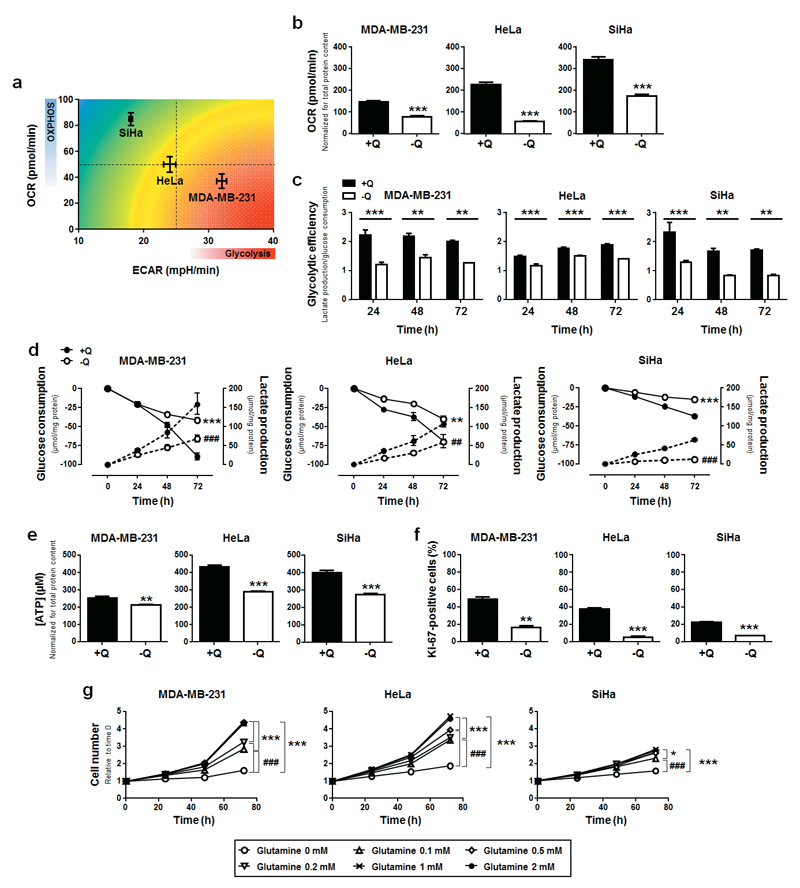
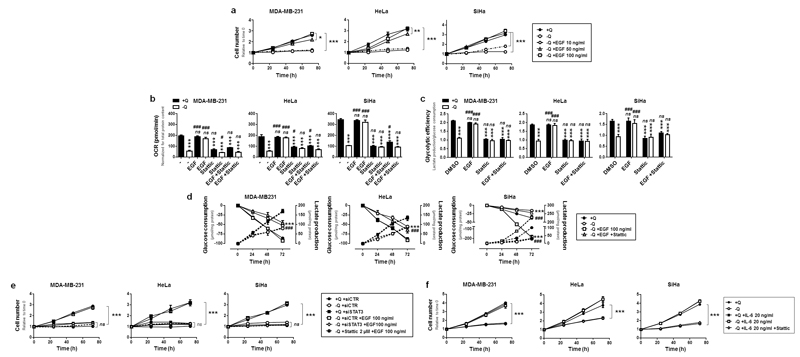
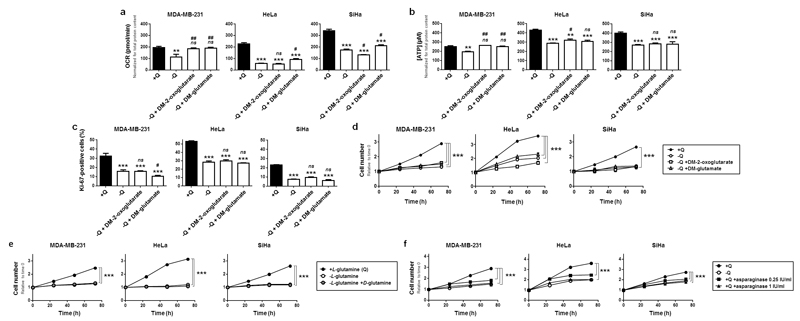
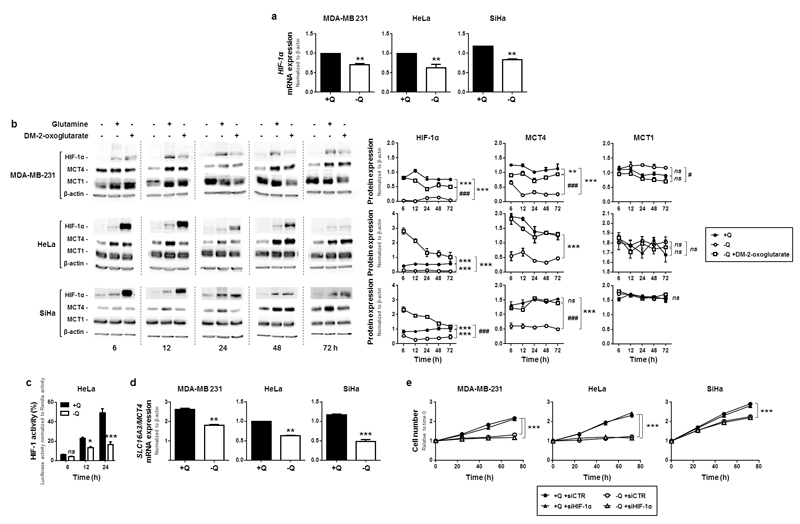
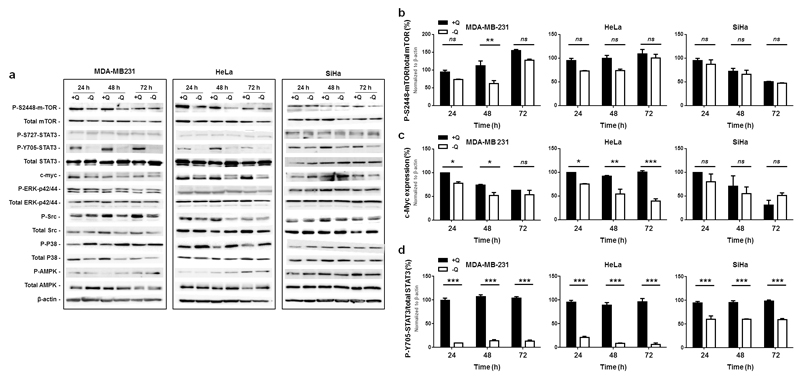
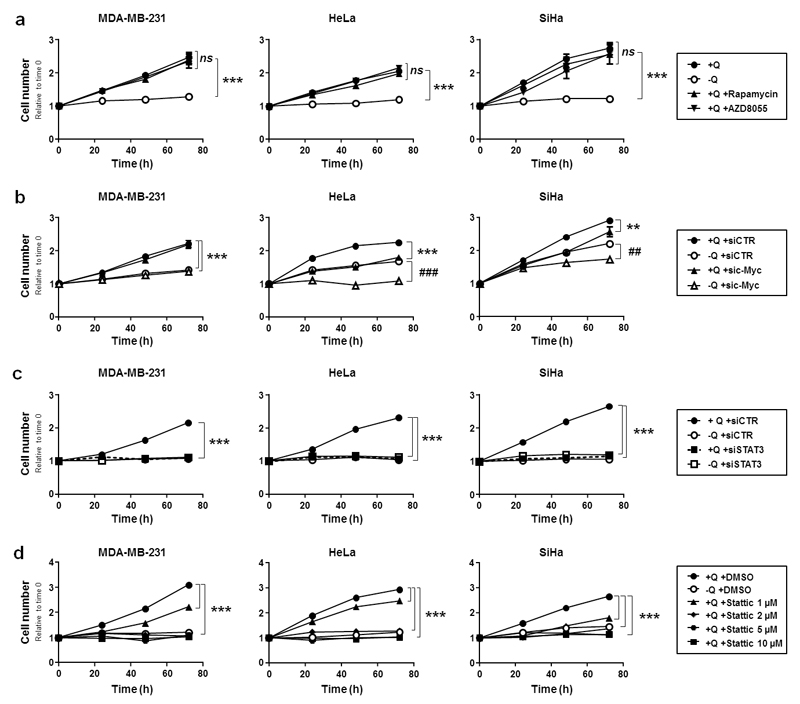
Cancer cells can use a variety of metabolic substrates to fulfill the bioenergetic and biosynthetic needs of their oncogenic program. Besides bioenergetics, cancer cell metabolism also directly influences genetic, epigenetic and signaling events associated with tumor progression. Many cancer cells are addicted to glutamine, and this addiction is observed in oxidative as well as in glycolytic cells. Although both oxidative and bioreductive glutamine metabolism can contribute to cancer progression and glutamine can further serve to generate peptides (including glutathione) and proteins, we report that glutamine promotes the proliferation of cancer cells independently of its use as a metabolic fuel or as a precursor of glutathione. Extracellular glutamine activates transcription factor signal transducer and activator of transcription 3 (STAT3), which is necessary and sufficient to mediate the proliferative effects of glutamine on glycolytic and oxidative cancer cells. Glutamine also activates transcription factors hypoxia-inducible factor-1, mammalian target of rapamycin and c-Myc, but these factors do not mediate the effects of glutamine on cancer cell proliferation. Our findings shed a new light on the anticancer effects of l-asparaginase that possesses glutaminase activity and converts glutamine into glutamate extracellularly. Conversely, cancer resistance to treatments that block glutamine metabolism could arise from glutamine-independent STAT3 reactivation.
癌细胞可以利用多种代谢底物来满足其致癌程序的生物能量和生物合成需求。除了生物能量学,癌细胞代谢还直接影响与肿瘤进展相关的遗传、表观遗传和信号转导事件。许多癌细胞对谷氨酰胺成瘾,这种成瘾现象在氧化型和糖酵解型细胞中均有观察到。尽管氧化型和生物还原型谷氨酰胺代谢都可能促进癌症进展,且谷氨酰胺还可进一步用于生成肽(包括谷胱甘肽)和蛋白质,但我们报告称,谷氨酰胺促进癌细胞增殖的作用与其作为代谢燃料或谷胱甘肽前体的用途无关。细胞外谷氨酰胺激活转录因子信号转导和转录激活因子3(STAT3),而STAT3对于介导谷氨酰胺对糖酵解型和氧化型癌细胞的增殖作用是必要且充分的。谷氨酰胺还可激活转录因子缺氧诱导因子-1、雷帕霉素靶蛋白和c-Myc,但这些因子并不介导谷氨酰胺对癌细胞增殖的影响。我们的研究结果为具有谷氨酰胺酶活性并能在细胞外将谷氨酰胺转化为谷氨酸的L-天冬酰胺酶的抗癌作用提供了新的线索。相反,癌症对阻断谷氨酰胺代谢治疗的抗性可能源于谷氨酰胺非依赖性的STAT3重新激活。