Wang Qiongshan, Liu Nian, Yang Xiyan, Tu Lili, Zhang Xianlong
National Key Laboratory of Crop Genetic Improvement, Huazhong Agricultural University, Wuhan, Hubei, 430070, China.
Sci Rep. 2016 Oct 18;6:35558. doi: 10.1038/srep35558.
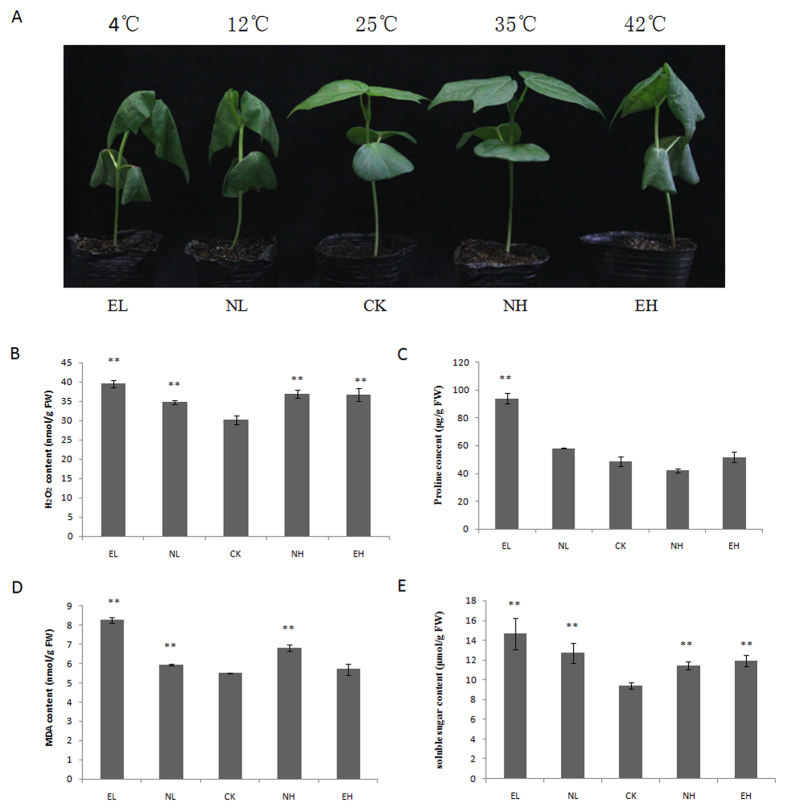
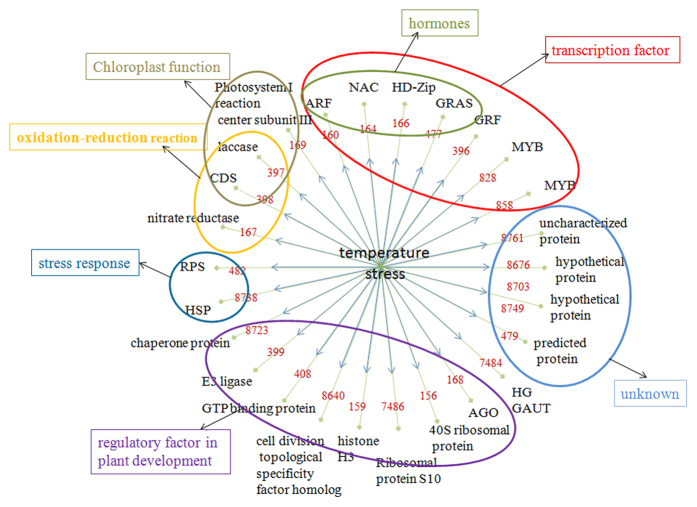
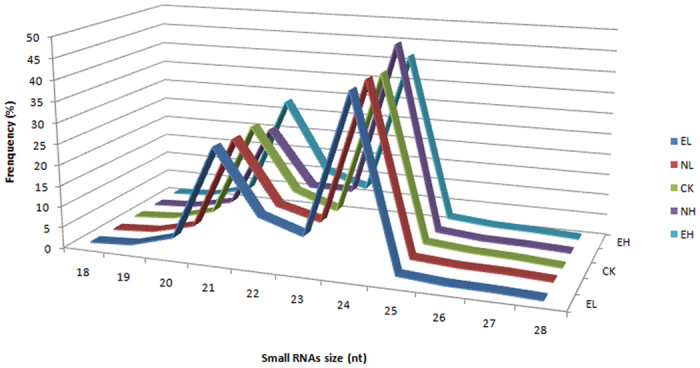
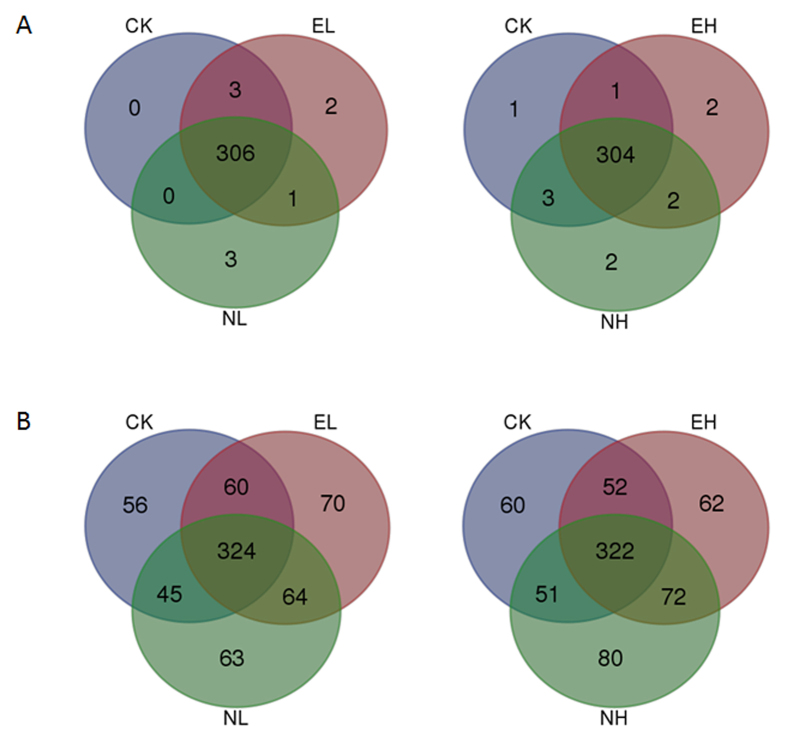
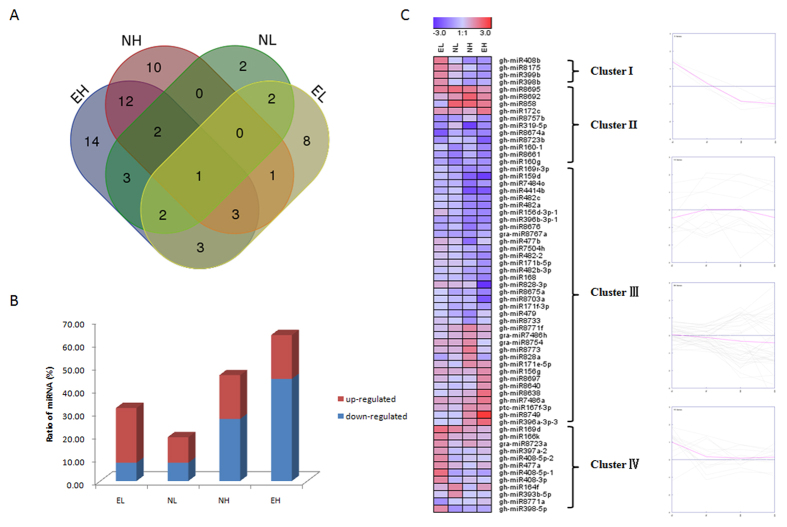
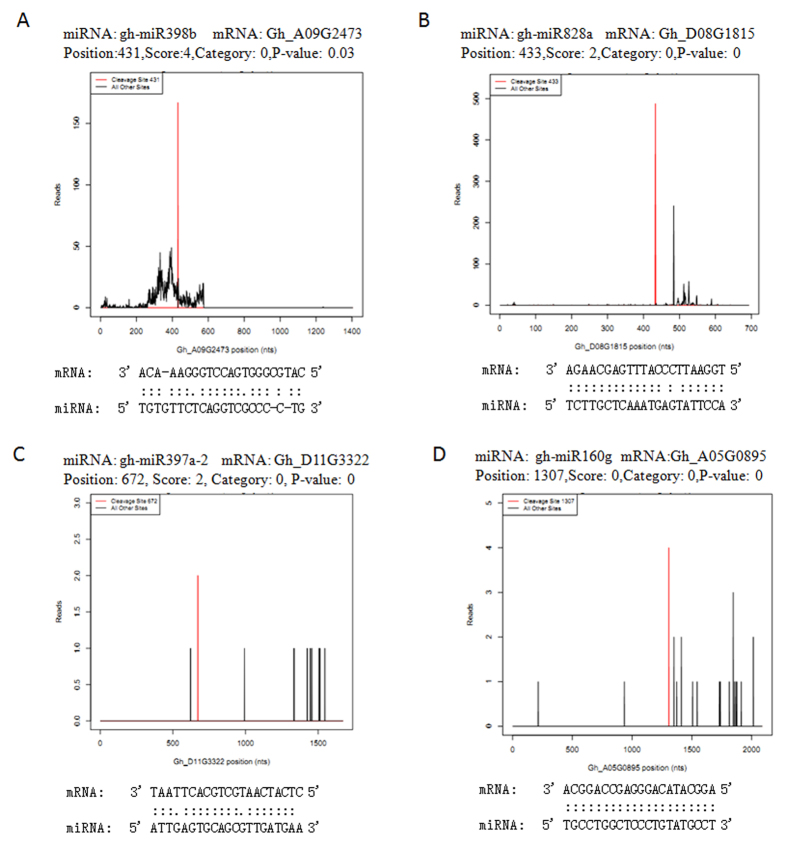
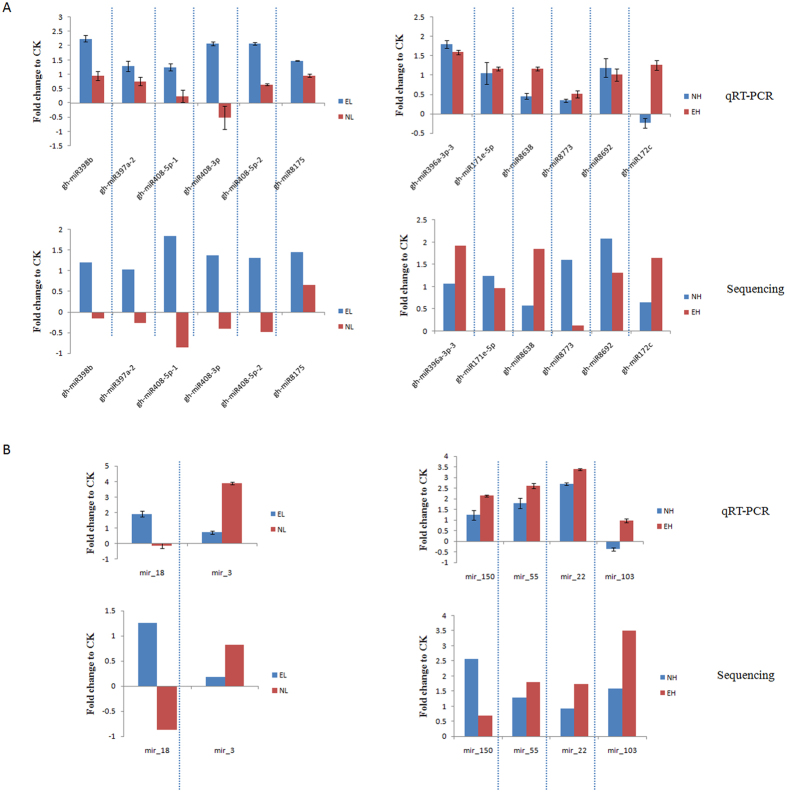
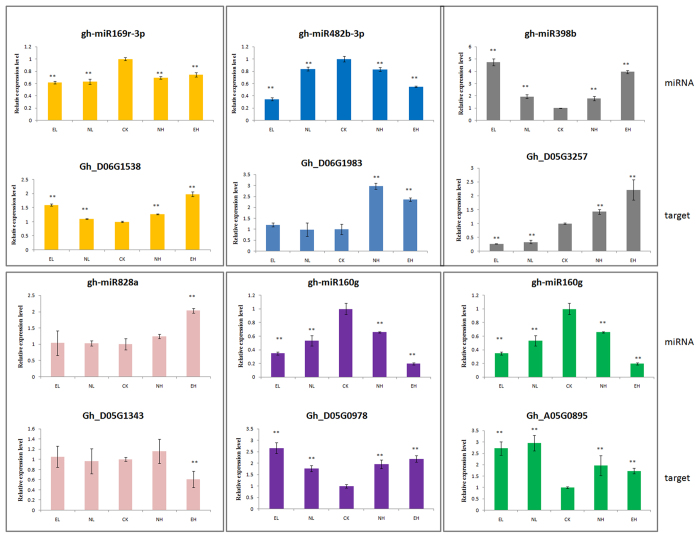
MicroRNAs (miRNAs) are one class of endogenous non-coding RNAs modulating the expression of target genes involved in plant development and stress tolerance, by degrading mRNA or repressing translation. In this study, small RNA and mRNA degradome sequencing were used to identify low- and high-temperature stress-responsive miRNAs and their targets in cotton (Gossypium hirsutum). Cotton seedlings were treated under different temperature conditions (4, 12, 25, 35, and 42 °C) and then the effects were investigated. In total, 319 known miRNAs and 800 novel miRNAs were identified, and 168 miRNAs were differentially expressed between different treatments. The targets of these miRNAs were further analysed by degradome sequencing. Based on studies from Gene Ontology and Kyoto Encyclopedia of Genes and Genomes, the majority of the miRNAs are from genes that are likely involved in response to hormone stimulus, oxidation-reduction reaction, photosynthesis, plant-pathogen interaction and plant hormone signal transduction pathways. This study provides new insight into the molecular mechanisms of plant response to extreme temperature stresses, and especially the roles of miRNAs under extreme temperatures.
微小RNA(miRNA)是一类内源性非编码RNA,通过降解mRNA或抑制翻译来调节参与植物发育和胁迫耐受性的靶基因的表达。在本研究中,利用小RNA和mRNA降解组测序来鉴定棉花(陆地棉)中响应低温和高温胁迫的miRNA及其靶标。对棉花幼苗进行不同温度条件(4、12、25、35和42°C)处理,然后研究其效果。共鉴定出319个已知miRNA和800个新miRNA,不同处理之间有168个miRNA差异表达。通过降解组测序进一步分析了这些miRNA的靶标。基于基因本体论和京都基因与基因组百科全书的研究,大多数miRNA来自可能参与激素刺激响应、氧化还原反应、光合作用、植物-病原体相互作用和植物激素信号转导途径的基因。本研究为植物对极端温度胁迫的分子机制,特别是miRNA在极端温度下的作用提供了新的见解。