Jiang Peng, Hu Zhixin, Liu Jun, Yu Shanen, Wu Feng
College of Automation, Hangzhou Dianzi University, 310018 Hangzhou, China.
State Key Laboratory of Industrial Control Technology, Institute of Industrial Process Control, Zhejiang University, 310027 Hangzhou, China.
Sensors (Basel). 2016 Oct 13;16(10):1695. doi: 10.3390/s16101695.
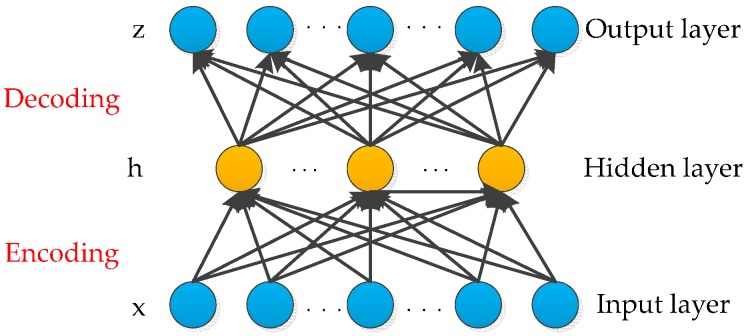
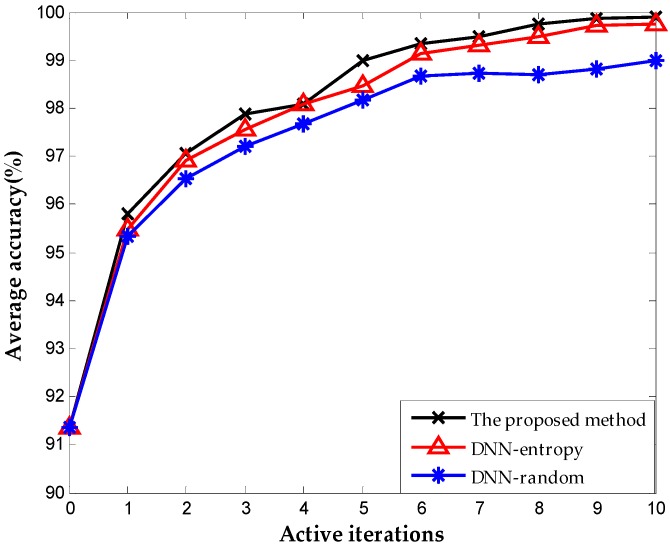
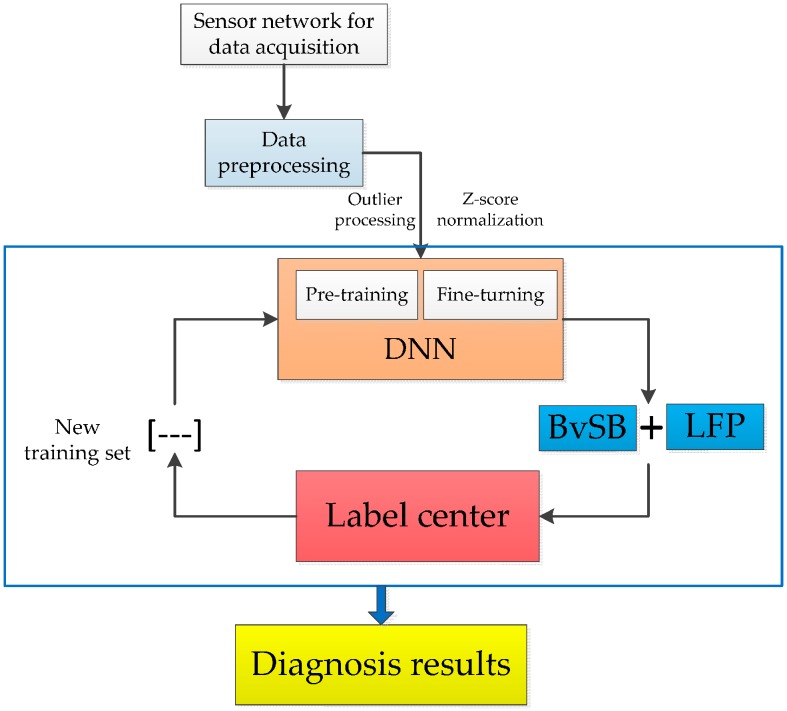
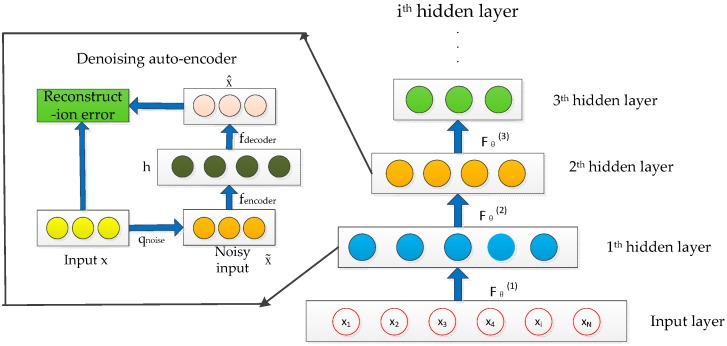
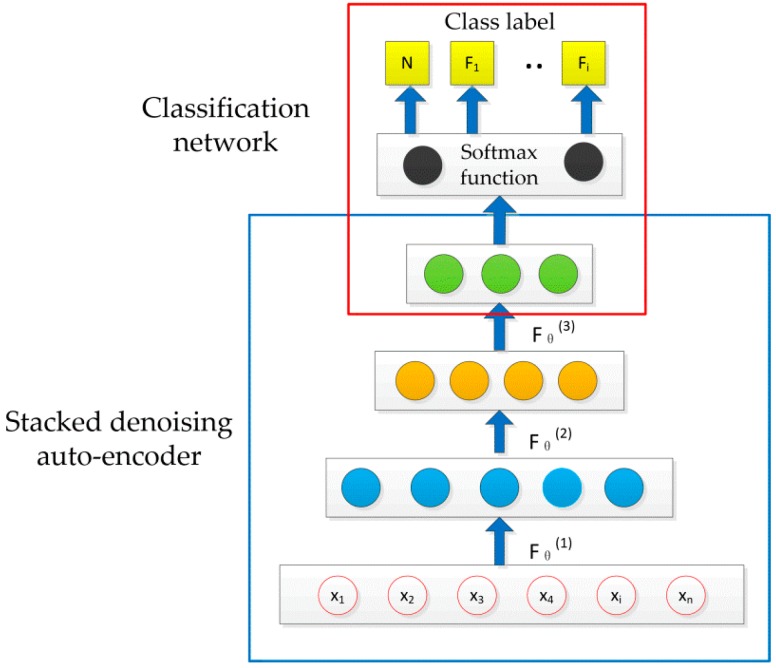
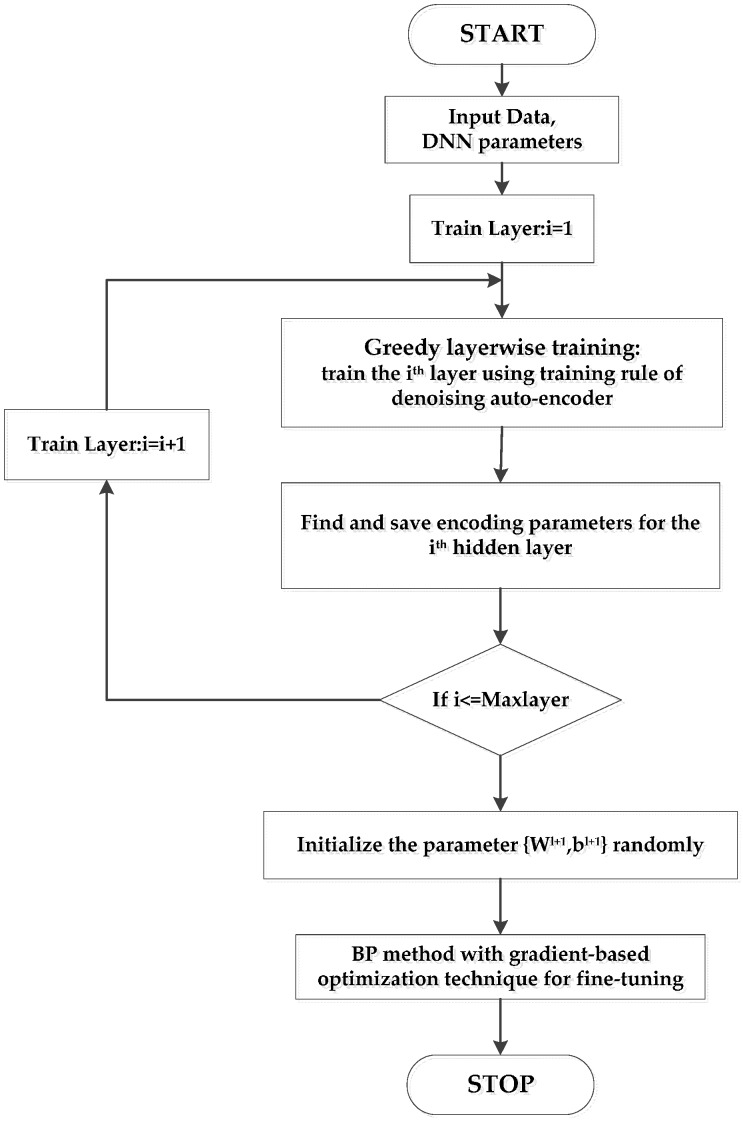
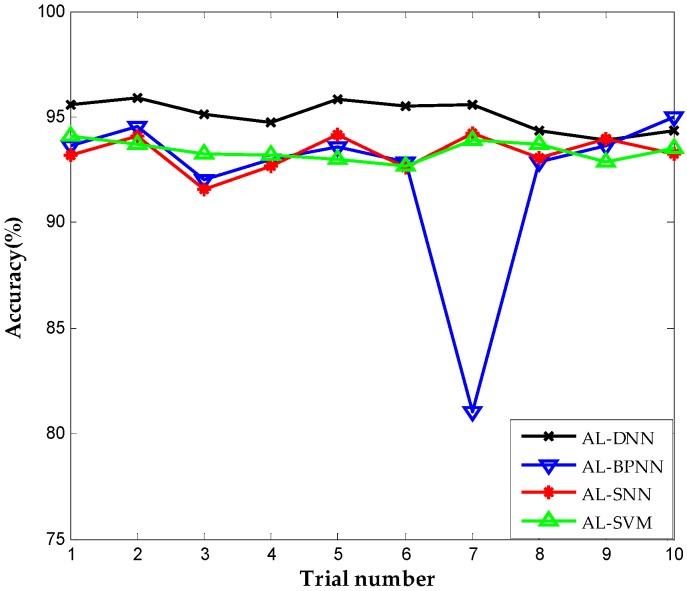
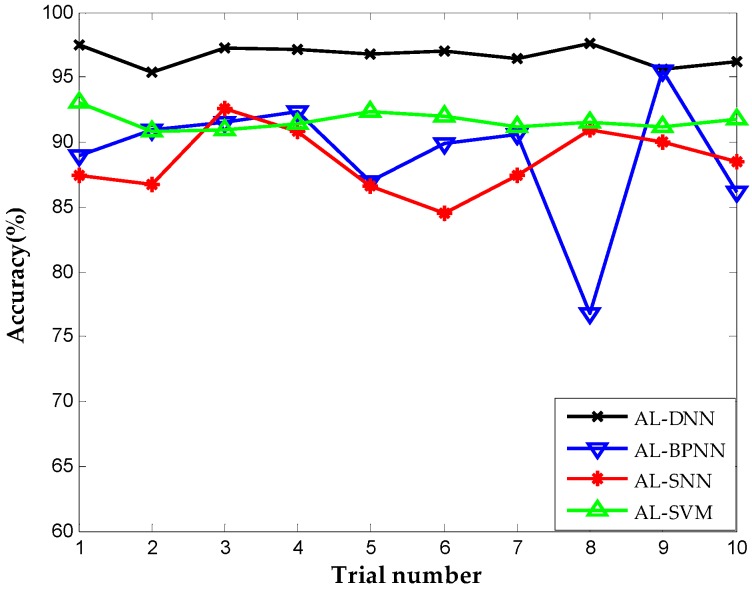
Big sensor data provide significant potential for chemical fault diagnosis, which involves the baseline values of security, stability and reliability in chemical processes. A deep neural network (DNN) with novel active learning for inducing chemical fault diagnosis is presented in this study. It is a method using large amount of chemical sensor data, which is a combination of deep learning and active learning criterion to target the difficulty of consecutive fault diagnosis. DNN with deep architectures, instead of shallow ones, could be developed through deep learning to learn a suitable feature representation from raw sensor data in an unsupervised manner using stacked denoising auto-encoder (SDAE) and work through a layer-by-layer successive learning process. The features are added to the top Softmax regression layer to construct the discriminative fault characteristics for diagnosis in a supervised manner. Considering the expensive and time consuming labeling of sensor data in chemical applications, in contrast to the available methods, we employ a novel active learning criterion for the particularity of chemical processes, which is a combination of Best vs. Second Best criterion (BvSB) and a Lowest False Positive criterion (LFP), for further fine-tuning of diagnosis model in an active manner rather than passive manner. That is, we allow models to rank the most informative sensor data to be labeled for updating the DNN parameters during the interaction phase. The effectiveness of the proposed method is validated in two well-known industrial datasets. Results indicate that the proposed method can obtain superior diagnosis accuracy and provide significant performance improvement in accuracy and false positive rate with less labeled chemical sensor data by further active learning compared with existing methods.
大型传感器数据为化学故障诊断提供了巨大潜力,这涉及化学过程中的安全性、稳定性和可靠性的基线值。本研究提出了一种用于化学故障诊断的具有新型主动学习的深度神经网络(DNN)。它是一种使用大量化学传感器数据的方法,是深度学习和主动学习准则的结合,以解决连续故障诊断的难题。具有深度架构而非浅层架构的DNN可以通过深度学习开发,使用堆叠去噪自动编码器(SDAE)以无监督方式从原始传感器数据中学习合适的特征表示,并通过逐层连续学习过程进行工作。将这些特征添加到顶部的Softmax回归层,以有监督的方式构建用于诊断的判别性故障特征。考虑到化学应用中传感器数据标记成本高且耗时,与现有方法相比,我们针对化学过程的特殊性采用了一种新型主动学习准则,即最佳与次佳准则(BvSB)和最低误报准则(LFP)的组合,以主动而非被动的方式对诊断模型进行进一步微调。也就是说,我们允许模型对最具信息性的传感器数据进行排序以便标记,从而在交互阶段更新DNN参数。所提方法的有效性在两个著名的工业数据集上得到了验证。结果表明,与现有方法相比,所提方法通过进一步的主动学习,能够以更少的标记化学传感器数据获得更高的诊断准确率,并在准确率和误报率方面提供显著的性能提升。