van Schendel Robin, van Heteren Jane, Welten Richard, Tijsterman Marcel
Department of Human Genetics, Leiden University Medical Center, Leiden, The Netherlands.
PLoS Genet. 2016 Oct 18;12(10):e1006368. doi: 10.1371/journal.pgen.1006368. eCollection 2016 Oct.
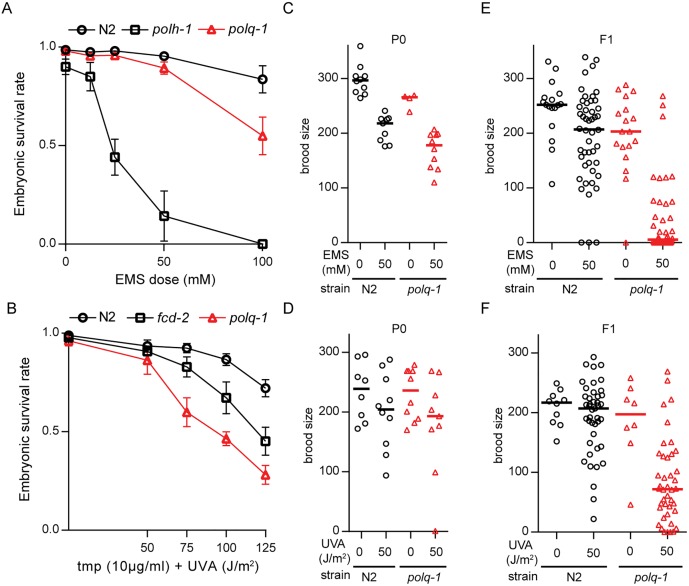
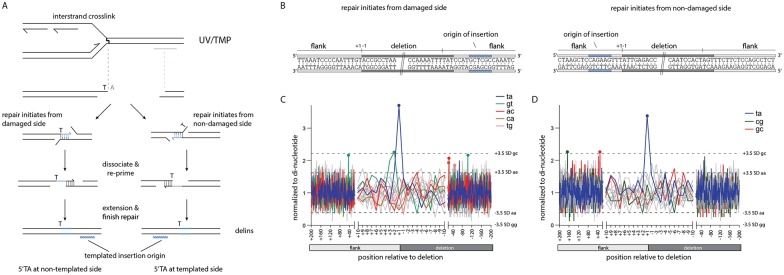
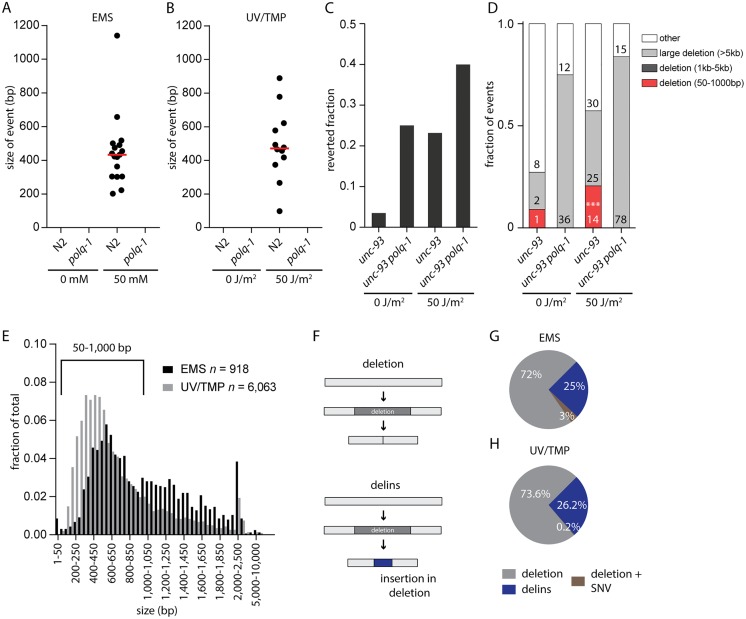
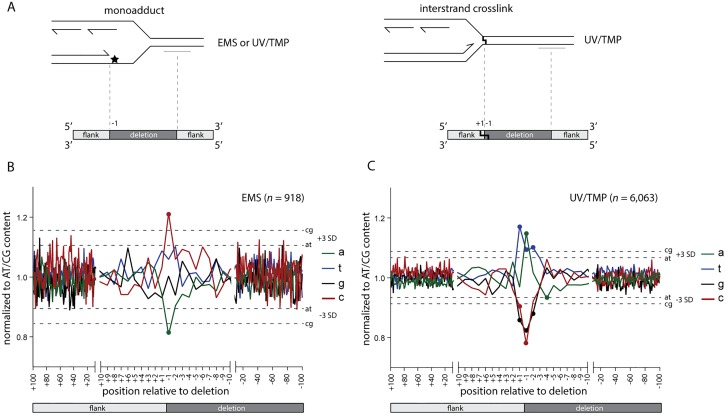
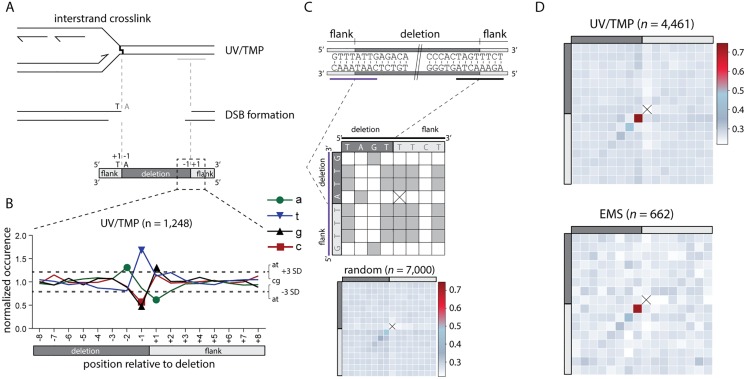
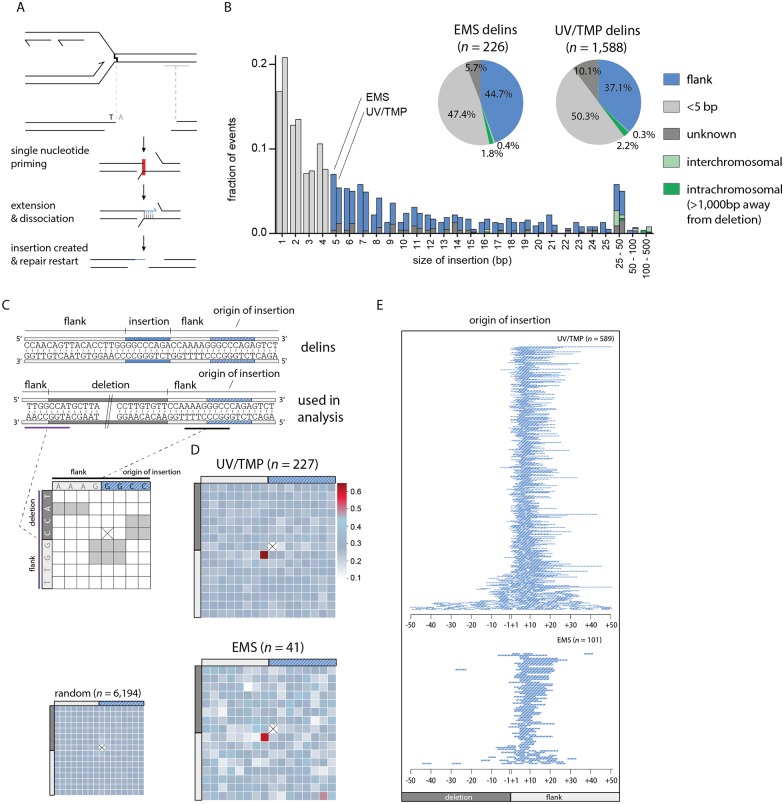
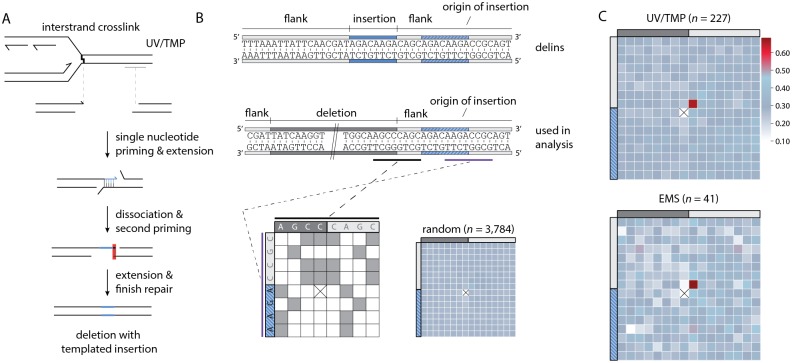
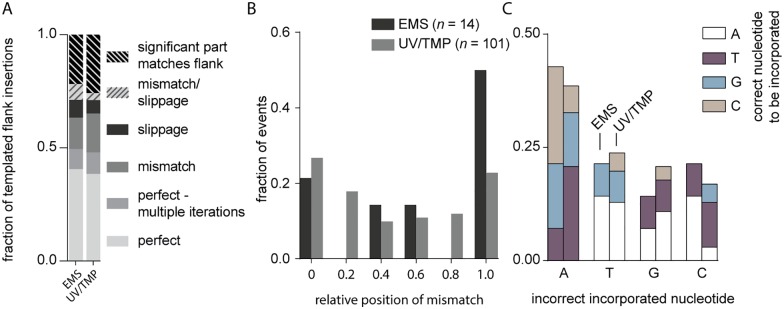
For more than half a century, genotoxic agents have been used to induce mutations in the genome of model organisms to establish genotype-phenotype relationships. While inaccurate replication across damaged bases can explain the formation of single nucleotide variants, it remained unknown how DNA damage induces more severe genomic alterations. Here, we demonstrate for two of the most widely used mutagens, i.e. ethyl methanesulfonate (EMS) and photo-activated trimethylpsoralen (UV/TMP), that deletion mutagenesis is the result of polymerase Theta (POLQ)-mediated end joining (TMEJ) of double strand breaks (DSBs). This discovery allowed us to survey many thousands of available C. elegans deletion alleles to address the biology of this alternative end-joining repair mechanism. Analysis of ~7,000 deletion breakpoints and their cognate junctions reveals a distinct order of events. We found that nascent strands blocked at sites of DNA damage can engage in one or more cycles of primer extension using a more downstream located break end as a template. Resolution is accomplished when 3' overhangs have matching ends. Our study provides a step-wise and versatile model for the in vivo mechanism of POLQ action, which explains the molecular nature of mutagen-induced deletion alleles.
半个多世纪以来,遗传毒性剂一直被用于诱导模式生物基因组中的突变,以建立基因型与表型的关系。虽然跨损伤碱基的不准确复制可以解释单核苷酸变异的形成,但DNA损伤如何诱导更严重的基因组改变仍不清楚。在这里,我们针对两种最广泛使用的诱变剂,即甲磺酸乙酯(EMS)和光活化三甲补骨脂素(UV/TMP),证明缺失诱变是聚合酶Theta(POLQ)介导的双链断裂(DSB)末端连接(TMEJ)的结果。这一发现使我们能够调查数千个可用的秀丽隐杆线虫缺失等位基因,以研究这种替代末端连接修复机制的生物学特性。对约7000个缺失断点及其同源连接点的分析揭示了一个独特的事件顺序。我们发现,在DNA损伤位点受阻的新生链可以以更下游的断裂末端为模板进行一个或多个引物延伸循环。当3'突出端具有匹配末端时,即可完成修复。我们的研究为POLQ作用的体内机制提供了一个逐步且通用的模型,该模型解释了诱变剂诱导的缺失等位基因的分子本质。