McGillen Jessica B, Anderson Sarah-Jane, Hallett Timothy B
HIV Modelling Consortium, Department of Infectious Disease Epidemiology, Imperial College London, London, UK;
HIV Modelling Consortium, Department of Infectious Disease Epidemiology, Imperial College London, London, UK.
J Int AIDS Soc. 2016 Oct 18;19(7(Suppl 6)):21104. doi: 10.7448/IAS.19.7.21104. eCollection 2016.
The new WHO guidelines recommend offering pre-exposure prophylaxis (PrEP) to people who are at substantial risk of HIV infection. However, where PrEP should be prioritised, and for which population groups, remains an open question. The HIV landscape in sub-Saharan Africa features limited prevention resources, multiple options for achieving cost saving, and epidemic heterogeneity. This paper examines what role PrEP should play in optimal prevention in this complex and dynamic landscape.
We use a model that was previously developed to capture subnational HIV transmission in sub-Saharan Africa. With this model, we can consider how prevention funds could be distributed across and within countries throughout sub-Saharan Africa to enable optimal HIV prevention (that is, avert the greatest number of infections for the lowest cost). Here, we focus on PrEP to elucidate where, and to whom, it would optimally be offered in portfolios of interventions (alongside voluntary medical male circumcision, treatment as prevention, and behaviour change communication). Over a range of continental expenditure levels, we use our model to explore prevention patterns that incorporate PrEP, exclude PrEP, or implement PrEP according to a fixed incidence threshold.
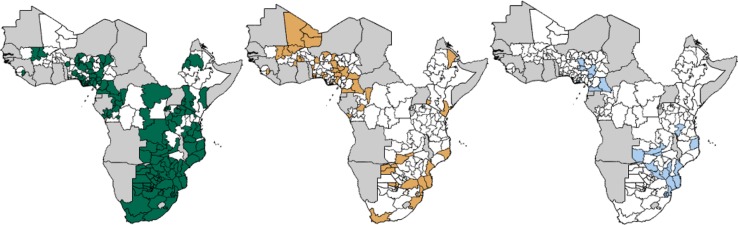
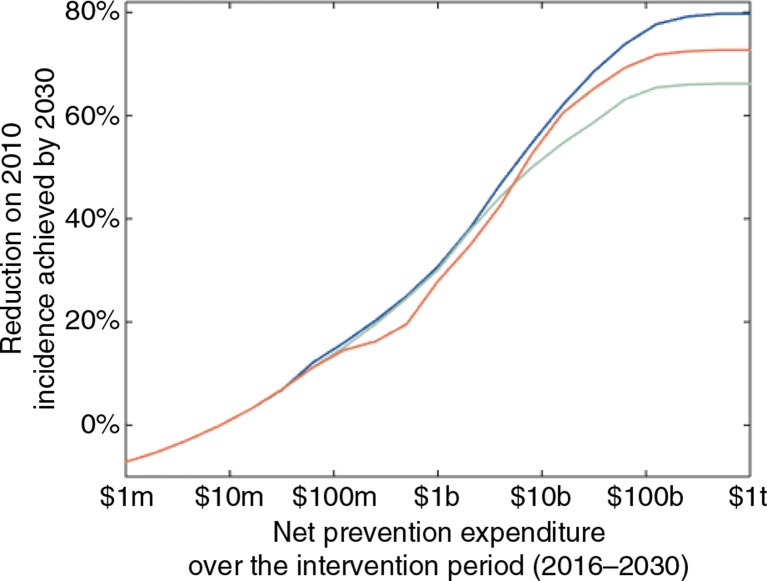
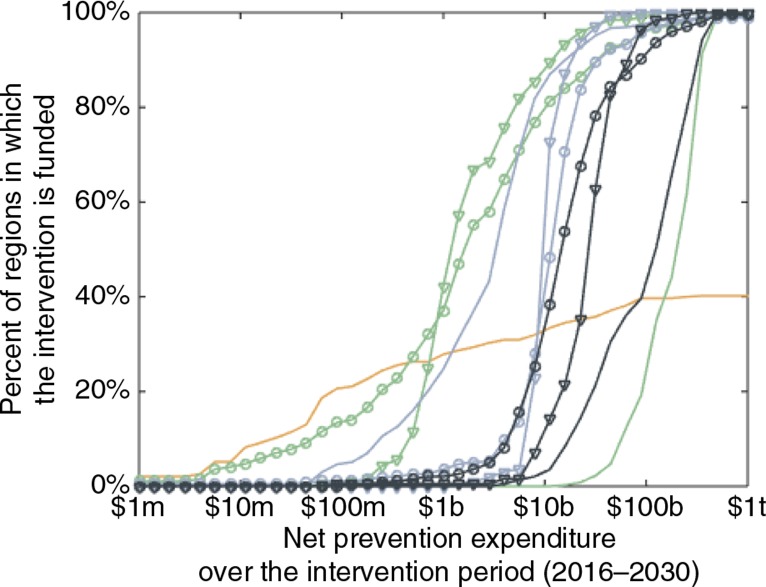
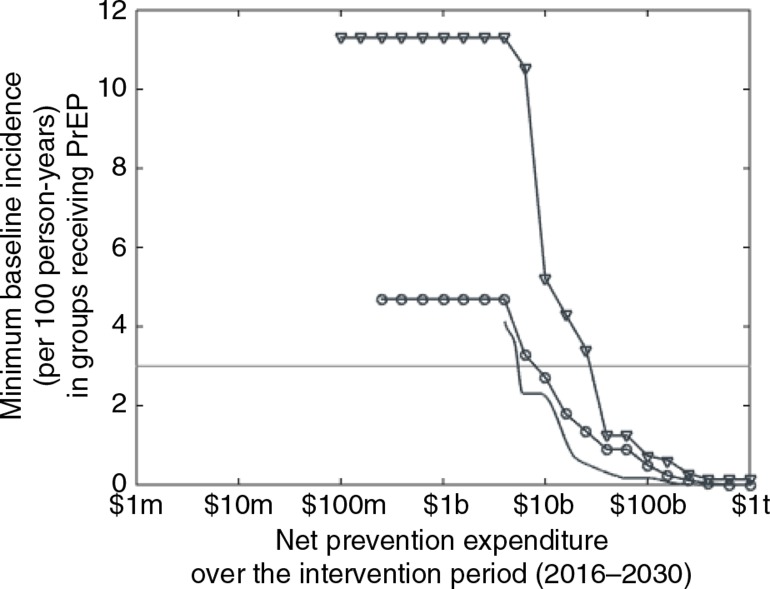
At low-to-moderate levels of total prevention expenditure, we find that the optimal intervention portfolios would include PrEP in only a few regions and primarily for female sex workers (FSW). Prioritisation of PrEP would expand with increasing total expenditure, such that the optimal prevention portfolios would offer PrEP in more subnational regions and increasingly for men who have sex with men (MSM) and the lower incidence general population. The marginal benefit of including PrEP among the available interventions increases with overall expenditure by up to 14% (relative to excluding PrEP). The minimum baseline incidence for the optimal offer of PrEP declines for all population groups as expenditure increases. We find that using a fixed incidence benchmark to guide PrEP decisions would incur considerable losses in impact (up to 7%) compared with an approach that uses PrEP more flexibly in light of prevailing budget conditions.
Our findings suggest that, for an optimal distribution of prevention resources, choices of whether to implement PrEP in subnational regions should depend on the scope for impact of other possible interventions, local incidence in population groups, and total resources available. If prevention funding were to become restricted in the future, it may be suboptimal to use PrEP according to a fixed incidence benchmark, and other prevention modalities may be more cost-effective. In contrast, expansions in funding could permit PrEP to be used to its full potential in epidemiologically driven prevention portfolios and thereby enable a more cost-effective HIV response across Africa.
世界卫生组织的新指南建议为感染艾滋病毒风险极高的人群提供暴露前预防(PrEP)。然而,PrEP应优先用于哪些地区以及哪些人群,仍是一个悬而未决的问题。撒哈拉以南非洲地区的艾滋病毒防治情况是预防资源有限、有多种实现成本节约的选择以及疫情存在异质性。本文探讨了在这一复杂多变的情况下,PrEP在最佳预防中应发挥何种作用。
我们使用一个先前开发的模型来捕捉撒哈拉以南非洲地区国家以下层面的艾滋病毒传播情况。利用该模型,我们可以考虑预防资金如何在撒哈拉以南非洲各国及国内进行分配,以实现最佳的艾滋病毒预防效果(即以最低成本避免最多的感染)。在此,我们聚焦于PrEP,以阐明在一系列干预措施(包括自愿男性包皮环切术、治疗即预防以及行为改变宣传)组合中,PrEP应在何处以及针对哪些人群进行最佳提供。在一系列大陆支出水平范围内,我们使用模型探索包含PrEP、排除PrEP或根据固定发病率阈值实施PrEP的预防模式。
在预防总支出处于低到中等水平时,我们发现最佳干预措施组合仅在少数地区将PrEP纳入,且主要针对女性性工作者(FSW)。随着总支出增加,PrEP的优先程度会提高,以至于最佳预防组合将在更多国家以下地区提供PrEP,并且越来越多地针对男男性行为者(MSM)和发病率较低的普通人群。在现有干预措施中纳入PrEP的边际效益随总体支出增加,最高可达14%(相对于排除PrEP的情况)。随着支出增加,所有人群中PrEP最佳提供的最低基线发病率均下降。我们发现,与根据当前预算情况更灵活使用PrEP的方法相比,使用固定发病率基准来指导PrEP决策会导致相当大的影响损失(高达7%)。
我们的研究结果表明,为实现预防资源的最佳分配,在国家以下地区是否实施PrEP的选择应取决于其他可能干预措施的影响范围、人群中的当地发病率以及可用的总资源。如果未来预防资金受到限制,按照固定发病率基准使用PrEP可能并非最佳选择,其他预防方式可能更具成本效益。相反,资金的增加可以使PrEP在以流行病学为导向的预防组合中充分发挥潜力,从而在整个非洲实现更具成本效益的艾滋病毒应对措施。