Zhao Zhenze, Ma Xiuye, Shelton Spencer D, Sung Derek C, Li Monica, Hernandez Daniel, Zhang Maggie, Losiewicz Michael D, Chen Yidong, Pertsemlidis Alexander, Yu Xiaojie, Liu Yuanhang, Du Liqin
Department of Chemistry and Biochemistry at Texas State University, San Marcos, Texas, USA.
Greehey Children's Cancer Research Institute at UT Health Science Center at San Antonio, San Antonio, Texas, USA.
Oncotarget. 2016 Nov 29;7(48):79372-79387. doi: 10.18632/oncotarget.12676.
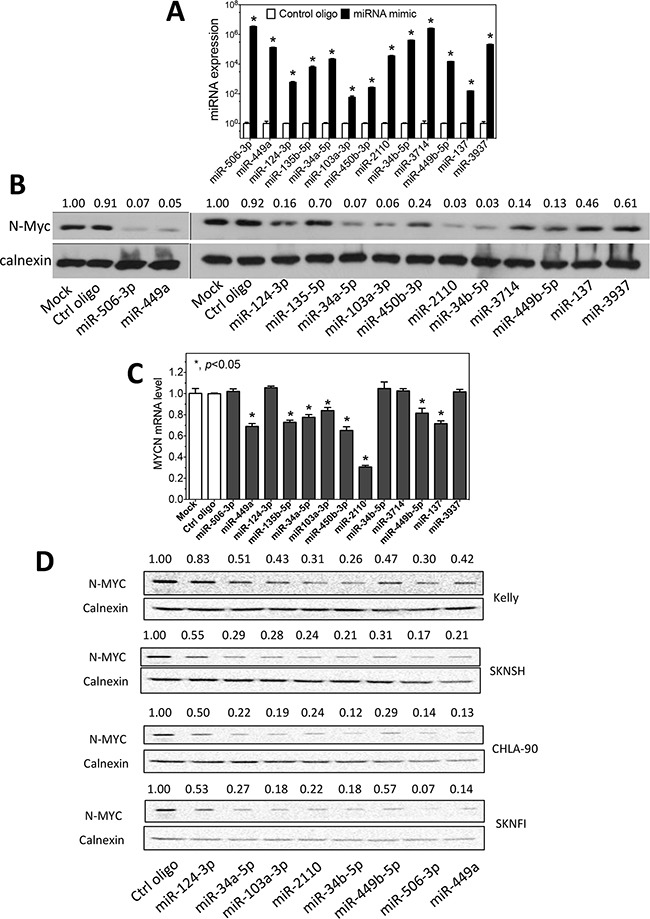
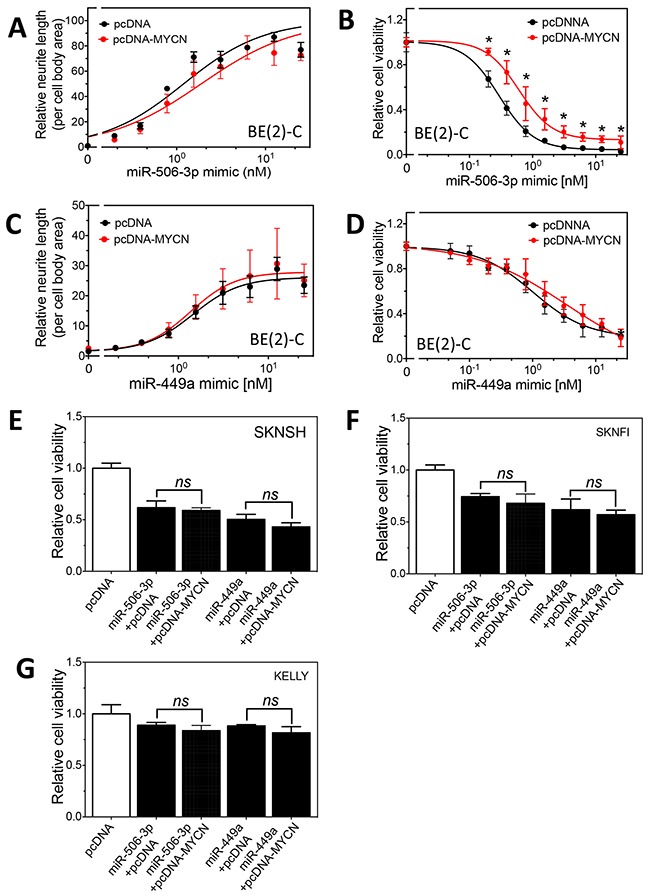
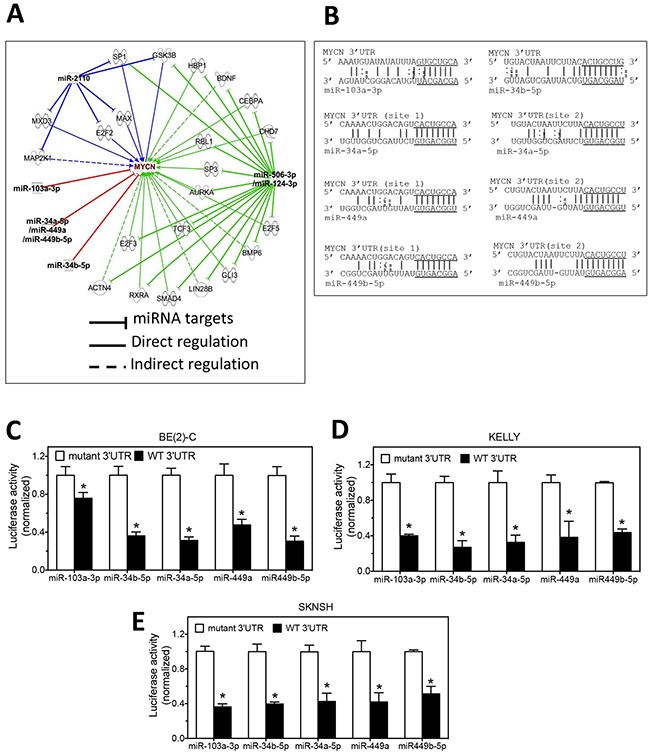
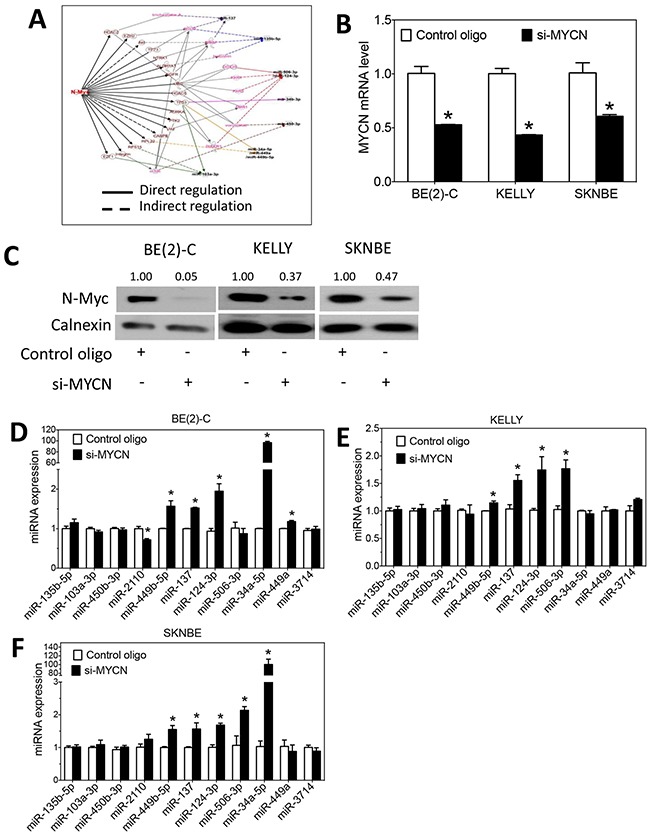
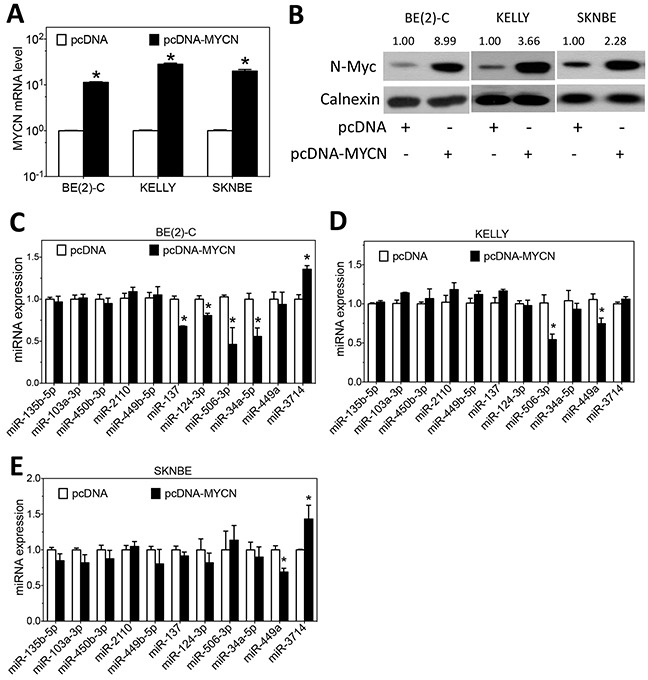
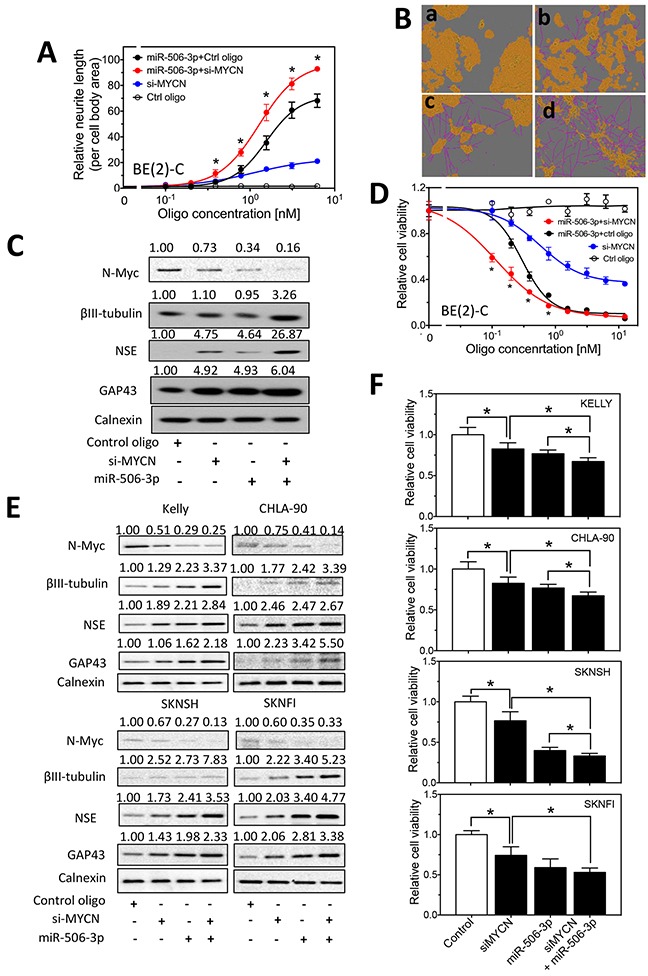
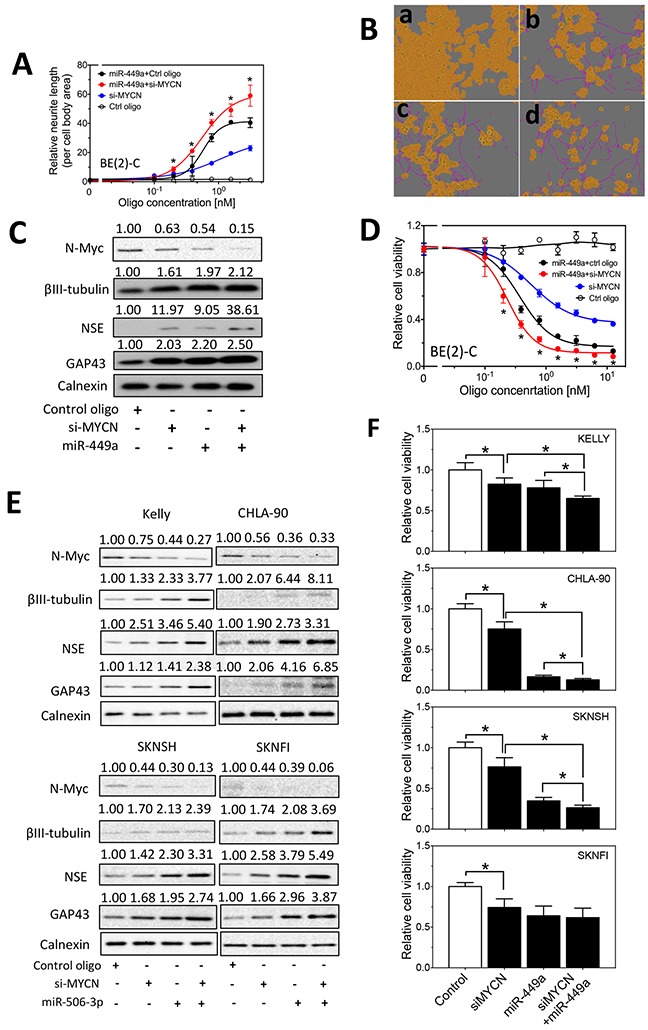
MYCN amplification is the most common genetic alteration in neuroblastoma and plays a critical role in neuroblastoma tumorigenesis. MYCN regulates neuroblastoma cell differentiation, which is one of the mechanisms underlying its oncogenic function. We recently identified a group of differentiation-inducing microRNAs. Given the demonstrated inter-regulation between MYCN and microRNAs, we speculated that MYCN and the differentiation-inducing microRNAs might form an interaction network to control the differentiation of neuroblastoma cells. In this study, we found that eight of the thirteen differentiation-inducing microRNAs, miR-506-3p, miR-124-3p, miR-449a, miR-34a-5p, miR-449b-5p, miR-103a-3p, miR-2110 and miR-34b-5p, inhibit N-Myc expression by either directly targeting the MYCN 3'UTR or through indirect regulations. Further investigation showed that both MYCN-dependent and MYCN-independent pathways play roles in mediating the differentiation-inducing function of miR-506-3p and miR-449a, two microRNAs that dramatically down-regulate MYCN expression. On the other hand, we found that N-Myc inhibits the expression of multiple differentiation-inducing microRNAs, suggesting that these miRNAs play a role in mediating the function of MYCN. In examining the published dataset collected from clinical neuroblastoma specimens, we found that expressions of two miRNAs, miR-137 and miR-2110, were significantly anti-correlated with MYCN mRNA levels, suggesting their interactions with MYCN play a clinically-relevant role in maintaining the MYCN and miRNA expression levels in neuroblastoma. Our findings altogether suggest that MYCN and differentiation-inducing miRNAs form an interaction network that play an important role in neuroblastoma tumorigenesis through regulating cell differentiation.
MYCN基因扩增是神经母细胞瘤中最常见的基因改变,在神经母细胞瘤的肿瘤发生过程中起关键作用。MYCN调节神经母细胞瘤细胞分化,这是其致癌功能的潜在机制之一。我们最近鉴定出一组诱导分化的微小RNA。鉴于已证实的MYCN与微小RNA之间的相互调节作用,我们推测MYCN与诱导分化的微小RNA可能形成一个相互作用网络来控制神经母细胞瘤细胞的分化。在本研究中,我们发现13种诱导分化的微小RNA中的8种,即miR-506-3p、miR-124-3p、miR-449a、miR-34a-5p、miR-449b-5p、miR-103a-3p、miR-2110和miR-34b-5p,通过直接靶向MYCN的3'UTR或通过间接调节来抑制N-Myc的表达。进一步研究表明,MYCN依赖性和MYCN非依赖性途径在介导miR-506-3p和miR-449a这两种能显著下调MYCN表达的微小RNA的诱导分化功能中均发挥作用。另一方面,我们发现N-Myc抑制多种诱导分化的微小RNA的表达,这表明这些微小RNA在介导MYCN的功能中发挥作用。在检查从临床神经母细胞瘤标本收集的已发表数据集时,我们发现两种微小RNA,即miR-137和miR-2110的表达与MYCN mRNA水平显著负相关,这表明它们与MYCN的相互作用在维持神经母细胞瘤中MYCN和微小RNA的表达水平方面具有临床相关作用。我们的研究结果共同表明,MYCN与诱导分化的微小RNA形成一个相互作用网络,该网络通过调节细胞分化在神经母细胞瘤的肿瘤发生过程中发挥重要作用。