Lin Fan, Dong Liang, Wang Weiming, Liu Yuchen, Huang Weiren, Cai Zhiming
State Engineering Laboratory of Medical Key Technologies Application of Synthetic Biology, Shenzhen Second People's Hospital, The First Affiliated Hospital of Shenzhen University, Shenzhen 518039, PR China.
Int J Biol Sci. 2016 Oct 18;12(10):1273-1278. doi: 10.7150/ijbs.16162. eCollection 2016.
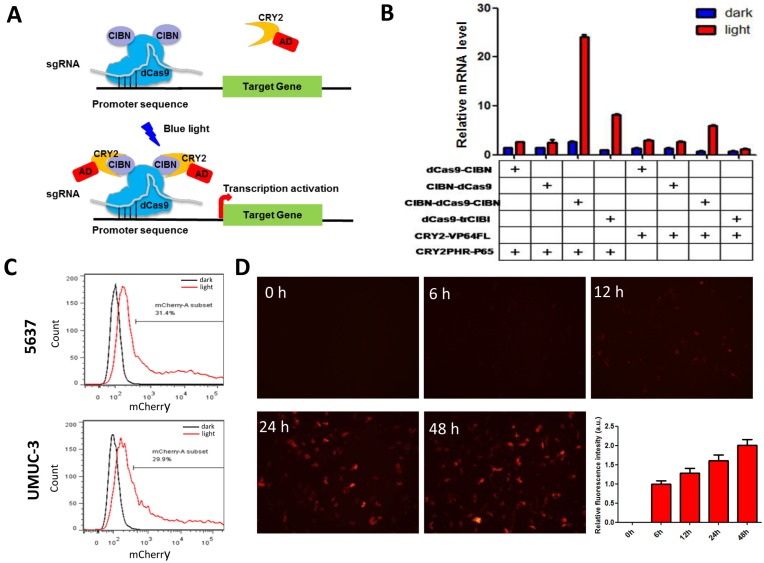
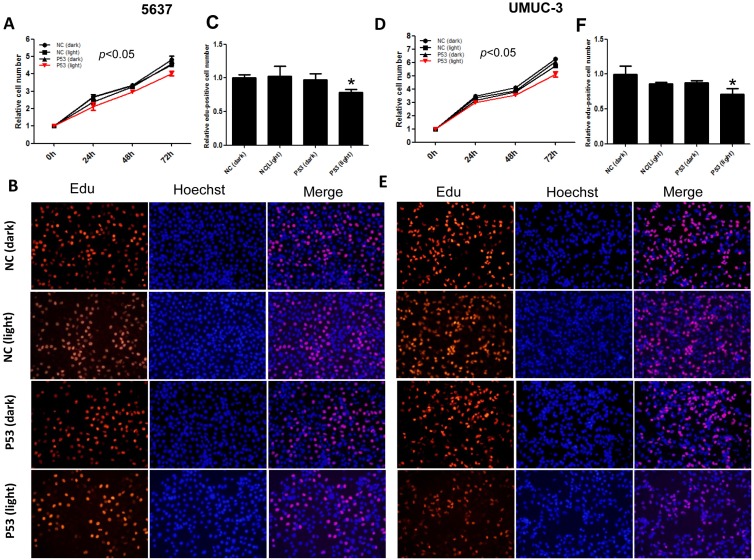
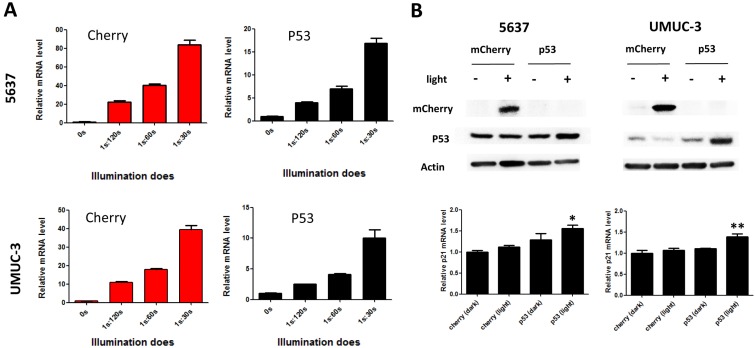
Optogenetic gene expression systems enable spatial-temporal modulation of gene transcription and cell behavior. Although applications in biomedicine are emerging, the utility of optogenetic gene switches remains elusive in cancer research due to the relative low gene activation efficiency. Here, we present an optimized CRISPR-Cas9-based light-inducible gene expression device that controls gene transcription in a dose-dependent manner. To prove the potential utility of this device, P53 was tested as a functional target in the bladder cancer cell models. It was illustrated that the light-induced P53 inhibited proliferation of 5637 and UMUC-3 cell effectively. The "light-on" gene expression system may demonstrate a novel therapeutic strategy for bladder cancer intervention.
光遗传学基因表达系统能够对基因转录和细胞行为进行时空调控。尽管在生物医学领域的应用不断涌现,但由于基因激活效率相对较低,光遗传学基因开关在癌症研究中的效用仍不明确。在此,我们展示了一种基于CRISPR-Cas9优化的光诱导基因表达装置,该装置能够以剂量依赖的方式控制基因转录。为证明该装置的潜在效用,我们在膀胱癌细胞模型中将P53作为功能靶点进行了测试。结果表明,光诱导的P53能够有效抑制5637和UMUC-3细胞的增殖。这种“光开启”基因表达系统可能为膀胱癌干预提供一种新的治疗策略。