Bighiu Maria Alexandra, Eriksson-Wiklund Ann-Kristin, Eklund Britta
Department of Environmental Science and Analytical Chemistry, Stockholm University, 10691, Stockholm, Sweden.
Environ Sci Pollut Res Int. 2017 Jan;24(1):997-1006. doi: 10.1007/s11356-016-7883-7. Epub 2016 Oct 20.
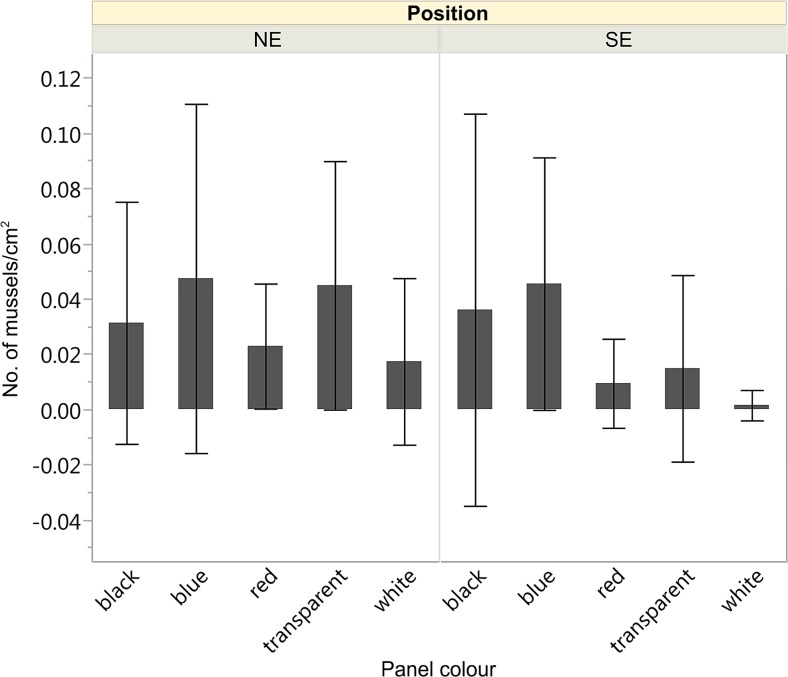
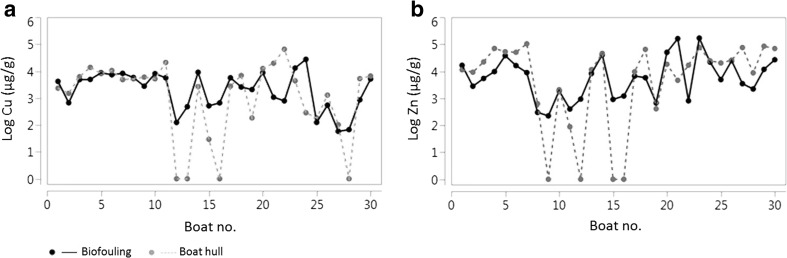
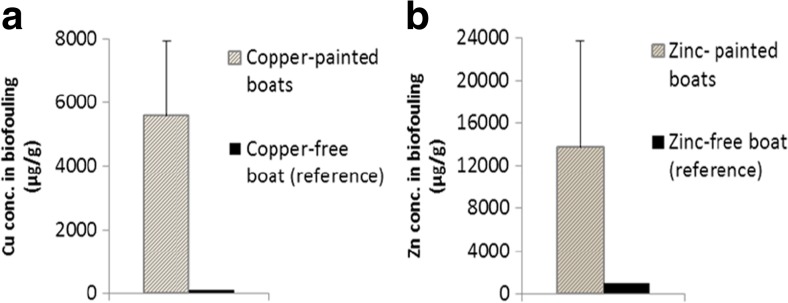
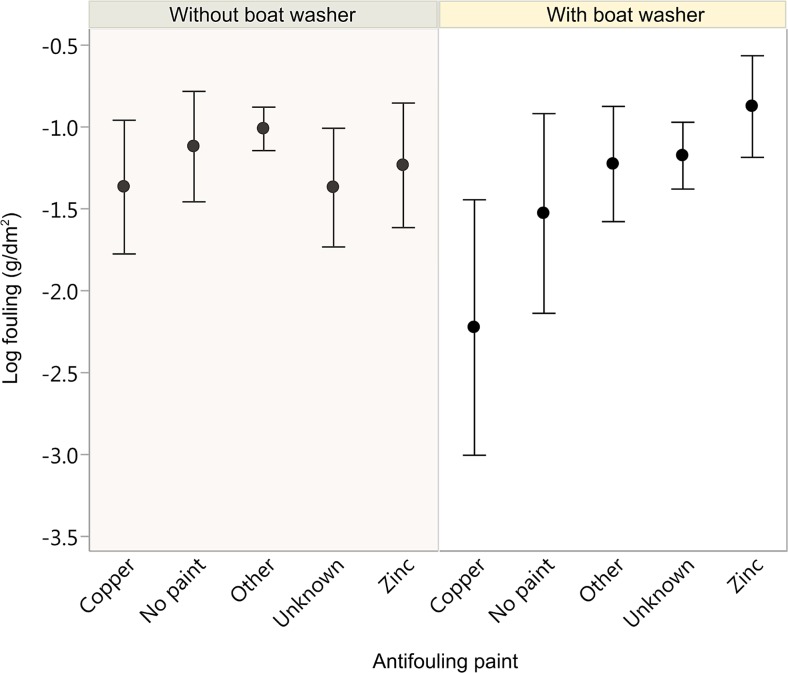
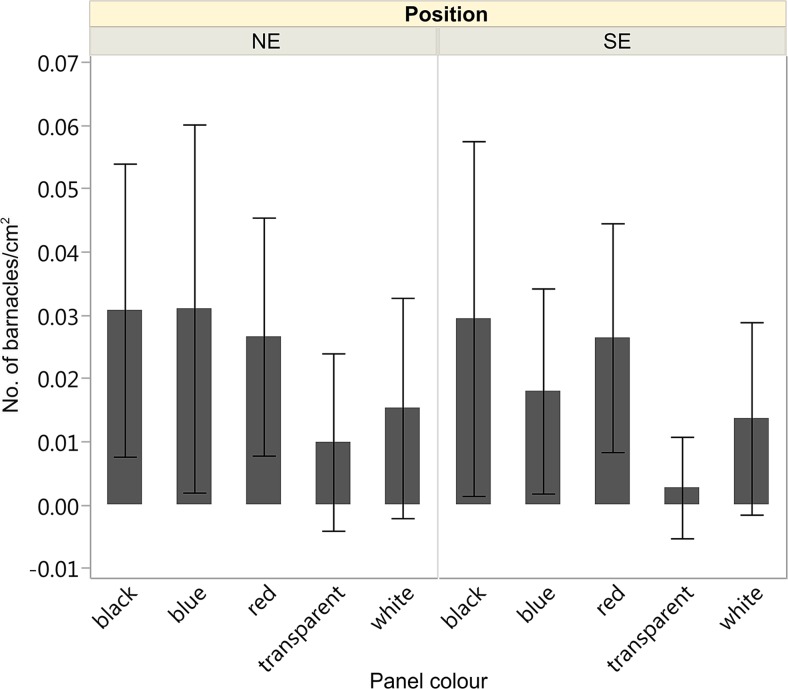
The release of harmful metals from antifouling paints to water bodies is a well-known problem. In this study, we measured both the amount of biofouling growth on leisure boats during one season as well as the concentration of metals accumulated by the biofouling matrix. Furthermore, the efficiency of antifouling paints and mechanical boat cleaning as well as the effect of hull colour on biofouling were evaluated. Unlike paint residues, biofouling waste has never been regarded as a source of metal contamination and has previously been neglected in the scientific literature. Our results revealed that the biofouling waste contained very high concentrations of metals, up to 28,000 mg copper/kg dw and 171,000 mg zinc/kg dw, which exceeds the guidance values for least sensitive land use in Sweden by factors of 140 and 340, respectively. This observation is important because the contaminated biofouling waste is commonly disposed of in boatyard soils at the end of each season, thus increasing the levels of metal pollution. Moreover, there was no significant difference in the amount of biofouling if the boats were coated with copper or zinc containing paints or no paint at all, indicating that biocide paints might not be necessary in low-salinity areas such as the Stockholm archipelago. For boats that were not painted at all during the season, those washed on boat washers (mechanically) had on average half of the amount of biofouling compared to boats that were not cleaned mechanically. The results of the study indicate the importance of proper management of biofouling waste as well as the use of more environmentally friendly removal methods for biofouling such as boat washers.
防污漆中有害金属向水体的释放是一个众所周知的问题。在本研究中,我们测量了一个季节内休闲船上生物污损生长的量以及生物污损基质积累的金属浓度。此外,还评估了防污漆和机械船体清洁的效率以及船体颜色对生物污损的影响。与油漆残留物不同,生物污损废物从未被视为金属污染的来源,并且在科学文献中此前一直被忽视。我们的结果表明,生物污损废物含有非常高浓度的金属,铜含量高达28,000毫克/千克干重,锌含量高达171,000毫克/千克干重,分别超过瑞典对最不敏感土地用途的指导值140倍和340倍。这一观察结果很重要,因为受污染的生物污损废物通常在每个季节结束时被丢弃在船厂的土壤中,从而增加了金属污染水平。此外,如果船只涂有含铜或含锌的油漆或根本不涂漆,生物污损的量没有显著差异,这表明在斯德哥尔摩群岛等低盐度地区可能不需要使用杀生漆。对于在该季节完全未涂漆的船只,与未进行机械清洁的船只相比,在船用清洗机上清洗的船只平均生物污损量只有一半。该研究结果表明了妥善管理生物污损废物以及使用更环保的生物污损清除方法(如船用清洗机)的重要性。