Reig-Valiente Juan L, Viruel Juan, Sales Ester, Marqués Luis, Terol Javier, Gut Marta, Derdak Sophia, Talón Manuel, Domingo Concha
Centro de Genómica, Instituto Valenciano de Investigaciones Agrarias, Carretera CV 315 Km 10,7 (Carretera Moncada - Náquera Km 4.5), 46113, Moncada, Spain.
Dpto. Biología Vegetal y Ecología, SGI Herbario - Universidad de Sevilla, Edif. Celestino Mutis, Av. Reina Mercedes s/n, 41012, Sevilla, Spain.
Rice (N Y). 2016 Dec;9(1):58. doi: 10.1186/s12284-016-0130-5. Epub 2016 Oct 20.
After its domestication, rice cultivation expanded from tropical regions towards northern latitudes with temperate climate in a progressive process to overcome limiting photoperiod and temperature conditions. This process has originated a wide range of diversity that can be regarded as a valuable resource for crop improvement. In general, current rice breeding programs have to deal with a lack of both germplasm accessions specifically adapted to local agro-environmental conditions and adapted donors carrying desired agronomical traits. Comprehensive maps of genome variability and population structure would facilitate genome-wide association studies of complex traits, functional gene investigations and the selection of appropriate donors for breeding purposes.
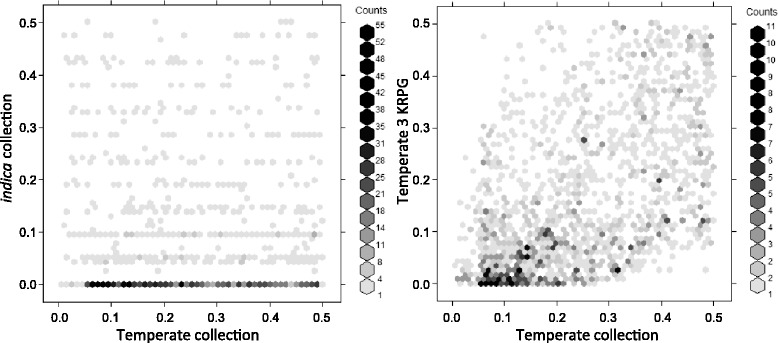
A collection of 217 rice varieties mainly cultivated in temperate regions was generated. The collection encompasses modern elite and old cultivars, as well as traditional landraces covering a wide genetic diversity available for rice breeders. Whole Genome Sequencing was performed on 14 cultivars representative of the collection and the genomic profiles of all cultivars were constructed using a panel of 2697 SNPs with wide coverage throughout the rice genome, obtained from the sequencing data. The population structure and genetic relationship analyses showed a strong substructure in the temperate rice population, predominantly based on grain type and the origin of the cultivars. Dendrogram also agrees population structure results.
Based on SNP markers, we have elucidated the genetic relationship and the degree of genetic diversity among a collection of 217 temperate rice varieties possessing an enormous variety of agromorphological and physiological characters. Taken together, the data indicated the occurrence of relatively high gene flow and elevated rates of admixture between cultivars grown in remote regions, probably favoured by local breeding activities. The results of this study significantly expand the current genetic resources available for temperate varieties of rice, providing a valuable tool for future association mapping studies.
水稻驯化后,其种植从热带地区逐渐向气候温和的高纬度地区扩展,以克服光周期和温度条件的限制。这一过程产生了广泛的多样性,可视为作物改良的宝贵资源。一般来说,当前的水稻育种计划面临着缺乏特别适应当地农业环境条件的种质资源以及携带所需农艺性状的合适供体的问题。基因组变异和群体结构的综合图谱将有助于对复杂性状进行全基因组关联研究、功能基因研究以及为育种目的选择合适的供体。
构建了一个包含217个主要在温带地区种植的水稻品种的集合。该集合涵盖现代优良品种和古老品种,以及传统地方品种,为水稻育种者提供了广泛的遗传多样性。对代表该集合的14个品种进行了全基因组测序,并利用从测序数据中获得的覆盖水稻全基因组的2697个单核苷酸多态性(SNP)构建了所有品种的基因组图谱。群体结构和遗传关系分析表明,温带水稻群体中存在强烈的亚结构,主要基于粒型和品种的起源。聚类图也与群体结构结果一致。
基于SNP标记,我们阐明了217个具有多种农艺形态和生理特征的温带水稻品种之间的遗传关系和遗传多样性程度。总体而言,数据表明在偏远地区种植的品种之间存在相对较高的基因流动和混合率升高的情况,这可能得益于当地的育种活动。本研究结果显著扩展了目前温带水稻品种可用的遗传资源,为未来的关联作图研究提供了有价值的工具。