Díez Javier
Program of Cardiovascular Diseases, Centre for Applied Medical Research, and Department of Cardiology and Cardiac Surgery, University of Navarra Clinic, University of Navarra, Pamplona, Spain.
Eur J Heart Fail. 2017 Feb;19(2):167-176. doi: 10.1002/ejhf.656. Epub 2016 Oct 21.
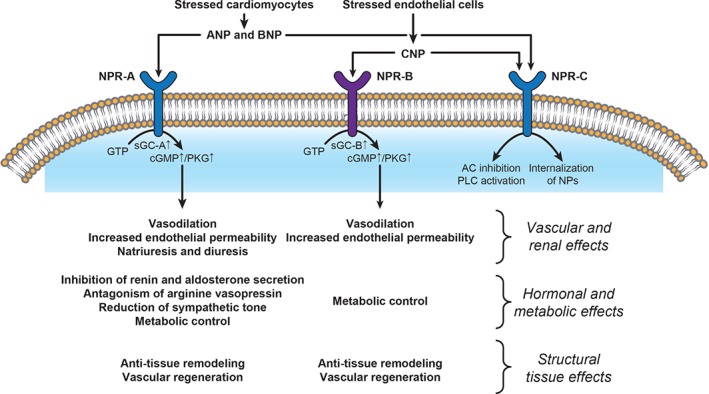
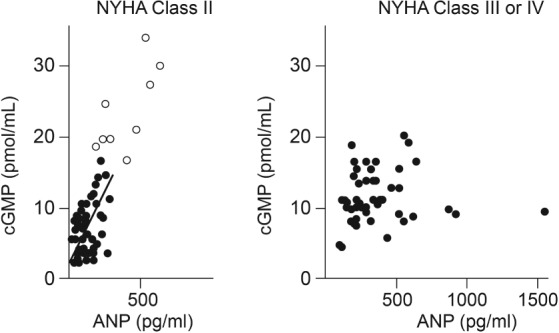
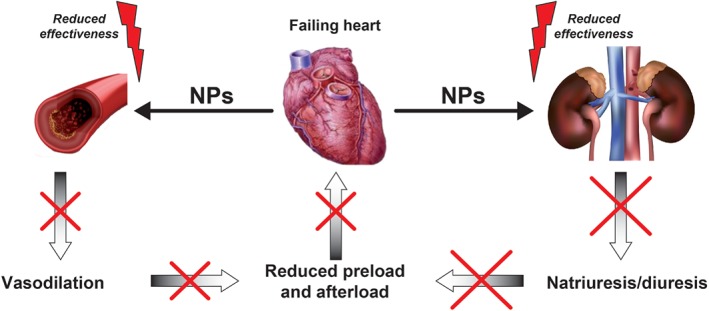
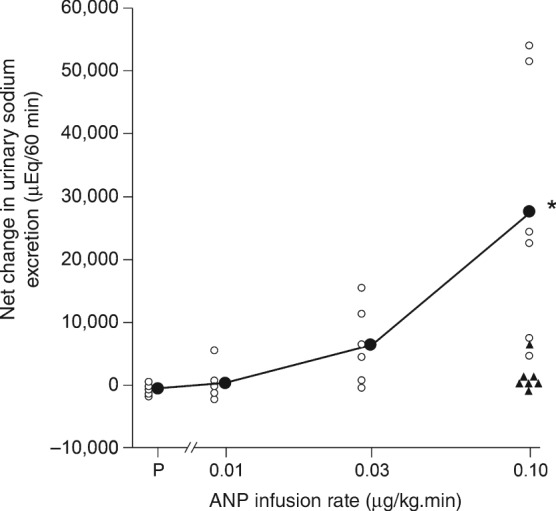
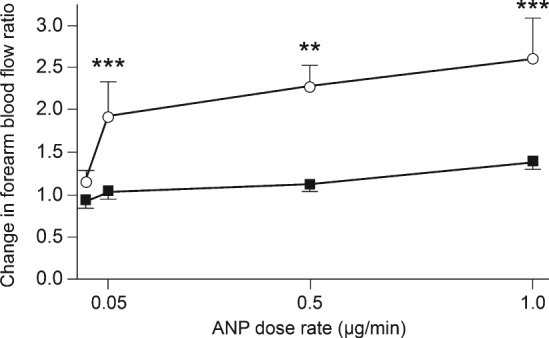
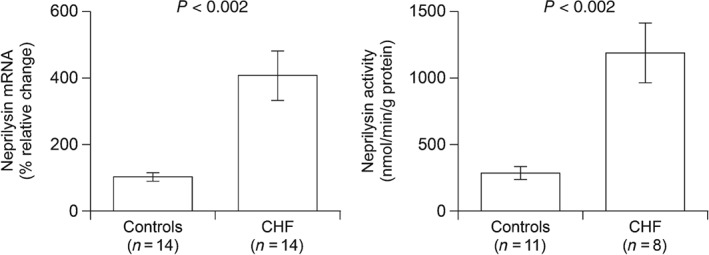
Natriuretic peptides (NPs) promote diuresis, natriuresis and vasodilation in early chronic heart failure (CHF), countering renin-angiotensin-aldosterone system (RAAS) and sympathetic nervous system (SNS) overstimulation. Despite dramatic increases in circulating NP concentrations as CHF progresses, their effects become blunted. Increases in diuresis, natriuresis, and vasodilation after administration of exogenous atrial (ANP) or brain (BNP) natriuretic peptides are attenuated in patients with advanced CHF compared with controls. Several major factors may account for the reduced effectiveness of the natriuretic peptide system (NPS) in CHF. First, there is reduced availability of active forms of NPs, namely BNP. Second, target organ responsiveness becomes diminished. Third, the counter-regulatory hormones of the RAAS and SNS, and endothelin-1 become over-activated. Therefore, pharmacological approaches to enhance the functional effectiveness of the NPS in CHF have been explored in recent years. In terms of clinical outcomes, studies of synthetic BNP, or of neprilysin inhibitors alone or associated with an angiotensin converting enzyme inhibitor, have been controversial for several reasons. Recently, however, encouraging results have been obtained with the angiotensin receptor neprilysin inhibitor sacubitril/valsartan. The available data show that treatment with sacubitril/valsartan is associated with increased levels of NPs and their intracellular mediator cyclic guanosine monophosphate, suggesting improved functional effectiveness of the NPS, in addition to beneficial effects on mortality and morbidity outcomes. Therefore, combined targeting of the NPS and RAAS with sacubitril/valsartan emerges as the current optimal approach for redressing the neurohormonal imbalance in CHF.
利钠肽(NPs)在早期慢性心力衰竭(CHF)中促进利尿、利钠和血管舒张,对抗肾素-血管紧张素-醛固酮系统(RAAS)和交感神经系统(SNS)的过度刺激。尽管随着CHF进展循环NP浓度显著升高,但其作用变得迟钝。与对照组相比,晚期CHF患者给予外源性心房利钠肽(ANP)或脑利钠肽(BNP)后,利尿、利钠和血管舒张的增加减弱。几个主要因素可能导致利钠肽系统(NPS)在CHF中的有效性降低。首先,活性形式的NP(即BNP)的可用性降低。其次,靶器官反应性降低。第三,RAAS和SNS的反调节激素以及内皮素-1过度激活。因此,近年来人们探索了增强NPS在CHF中功能有效性的药理学方法。就临床结果而言,合成BNP或单独使用或与血管紧张素转换酶抑制剂联合使用的中性肽链内切酶抑制剂的研究存在争议,原因有几个。然而,最近,血管紧张素受体脑啡肽酶抑制剂沙库巴曲/缬沙坦取得了令人鼓舞的结果。现有数据表明,沙库巴曲/缬沙坦治疗与NP及其细胞内介质环磷酸鸟苷水平升高相关,这表明NPS的功能有效性得到改善,此外对死亡率和发病率结果也有有益影响。因此,沙库巴曲/缬沙坦联合靶向NPS和RAAS成为目前纠正CHF神经激素失衡的最佳方法。