Affaticati Pierre E, Dai Shao-Bo, Payongsri Panwajee, Hailes Helen C, Tittmann Kai, Dalby Paul A
Department of Biochemical Engineering, Gordon Street, University College London, WC1H 0AH, UK.
Albrecht-von-Haller Institute, Göttingen Center for Molecular Biosciences, Georg-August University Göttingen, 37077 Göttingen, Germany.
Sci Rep. 2016 Oct 21;6:35716. doi: 10.1038/srep35716.
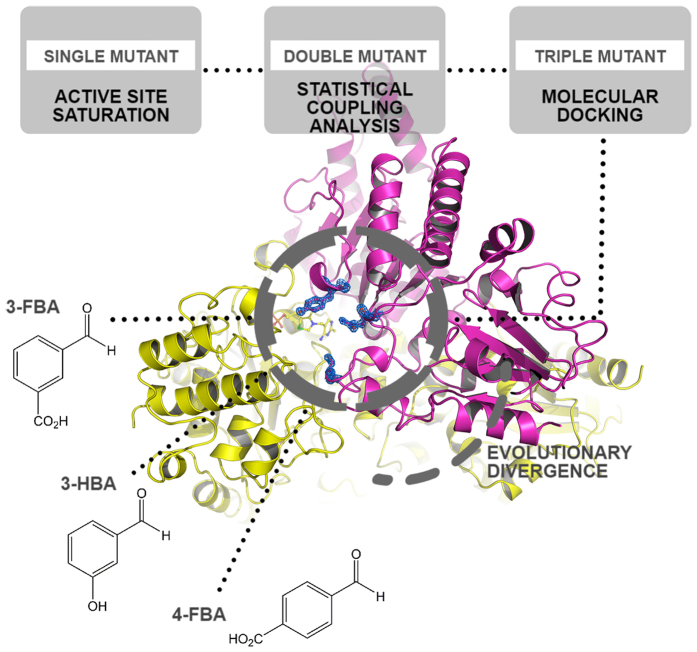
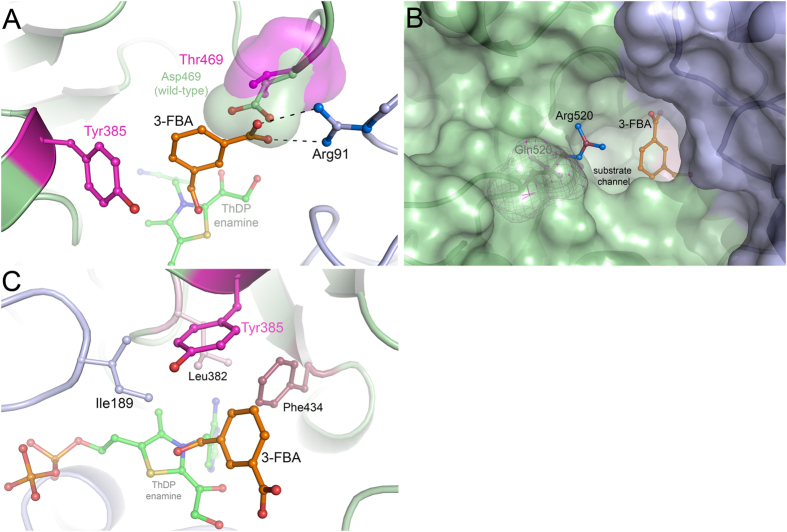
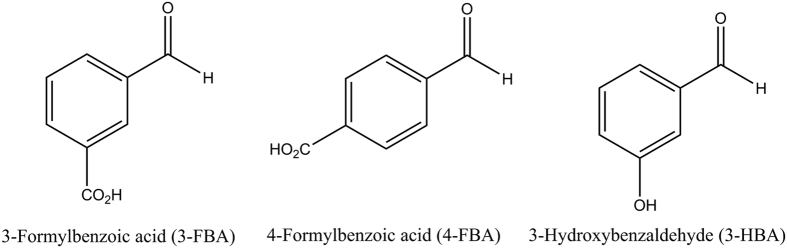
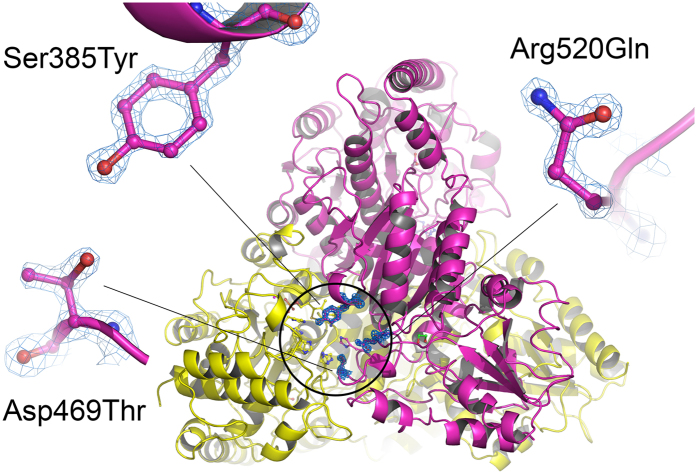
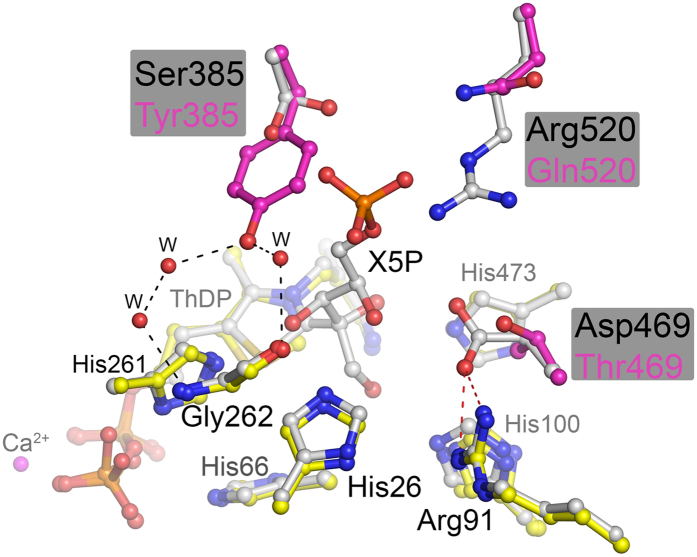
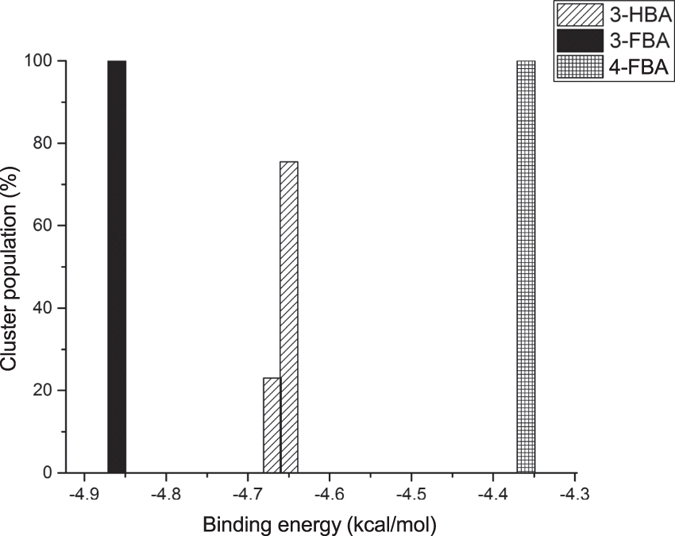
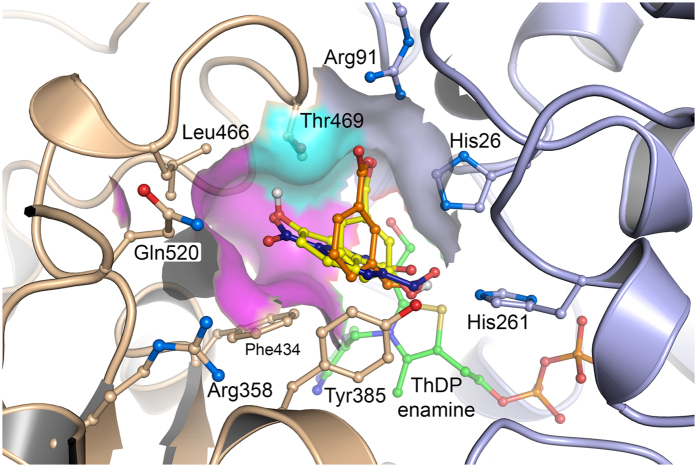
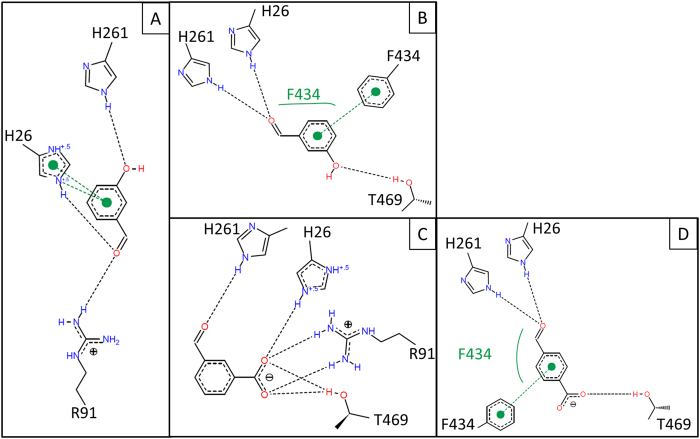
The S385Y/D469T/R520Q variant of E. coli transketolase was evolved previously with three successive smart libraries, each guided by different structural, bioinformatical or computational methods. Substrate-walking progressively shifted the target acceptor substrate from phosphorylated aldehydes, towards a non-phosphorylated polar aldehyde, a non-polar aliphatic aldehyde, and finally a non-polar aromatic aldehyde. Kinetic evaluations on three benzaldehyde derivatives, suggested that their active-site binding was differentially sensitive to the S385Y mutation. Docking into mutants generated in silico from the wild-type crystal structure was not wholly satisfactory, as errors accumulated with successive mutations, and hampered further smart-library designs. Here we report the crystal structure of the S385Y/D469T/R520Q variant, and molecular docking of three substrates. This now supports our original hypothesis that directed-evolution had generated an evolutionary intermediate with divergent binding modes for the three aromatic aldehydes tested. The new active site contained two binding pockets supporting π-π stacking interactions, sterically separated by the D469T mutation. While 3-formylbenzoic acid (3-FBA) preferred one pocket, and 4-FBA the other, the less well-accepted substrate 3-hydroxybenzaldehyde (3-HBA) was caught in limbo with equal preference for the two pockets. This work highlights the value of obtaining crystal structures of evolved enzyme variants, for continued and reliable use of smart library strategies.
大肠杆菌转酮醇酶的S385Y/D469T/R520Q变体先前是通过三个连续的智能文库进化而来的,每个文库都由不同的结构、生物信息学或计算方法指导。底物步移逐渐将目标受体底物从磷酸化醛类,转向非磷酸化极性醛类、非极性脂肪族醛类,最后是非极性芳香族醛类。对三种苯甲醛衍生物的动力学评估表明,它们的活性位点结合对S385Y突变的敏感性存在差异。从野生型晶体结构在计算机上生成的突变体对接并不完全令人满意,因为随着连续突变误差会累积,这阻碍了进一步的智能文库设计。在此,我们报告了S385Y/D469T/R520Q变体的晶体结构以及三种底物的分子对接情况。这现在支持了我们最初的假设,即定向进化产生了一种进化中间体,对所测试的三种芳香族醛类具有不同的结合模式。新的活性位点包含两个支持π-π堆积相互作用的结合口袋,由D469T突变在空间上分隔开。虽然3-甲酰基苯甲酸(3-FBA)偏好一个口袋,4-FBA偏好另一个口袋,但较难被接受的底物3-羟基苯甲醛(3-HBA)则处于两难境地,对两个口袋的偏好相同。这项工作突出了获得进化酶变体晶体结构对于持续可靠地使用智能文库策略的价值。