Kwon Mijung, Kim Jae-Hoon, Rybak Yevangelina, Luna Alex, Choi Chel Hun, Chung Joon-Yong, Hewitt Stephen M, Adem Asha, Tubridy Elizabeth, Lin Juan, Libutti Steven K
Department of Surgery, Albert Einstein College of Medicine, Bronx, NY 10461, USA.
Department of Obstetrics and Gynecology, Gangnam Severance Hospital, Yonsei University College of Medicine, Seoul 135-720, Korea.
Oncotarget. 2016 Nov 22;7(47):77052-77070. doi: 10.18632/oncotarget.12784.
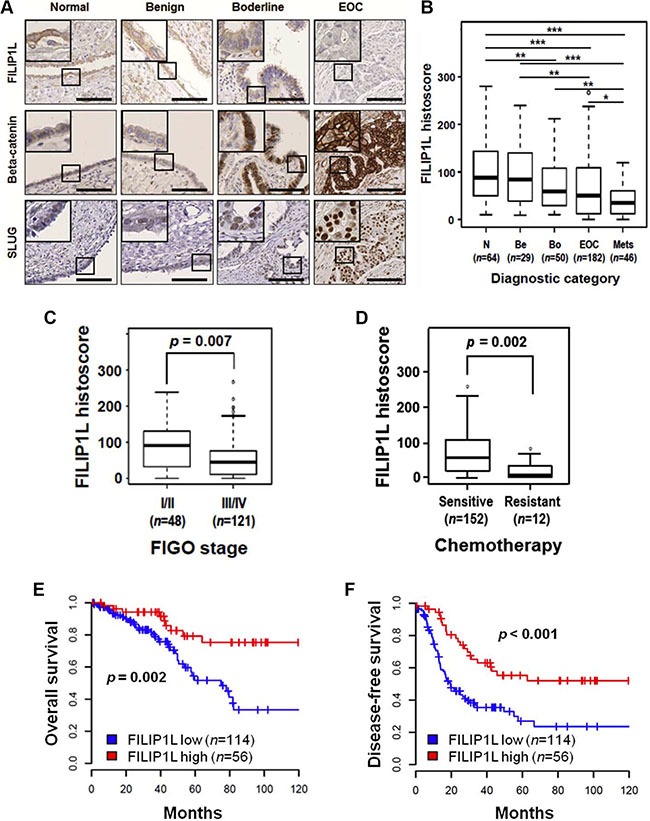
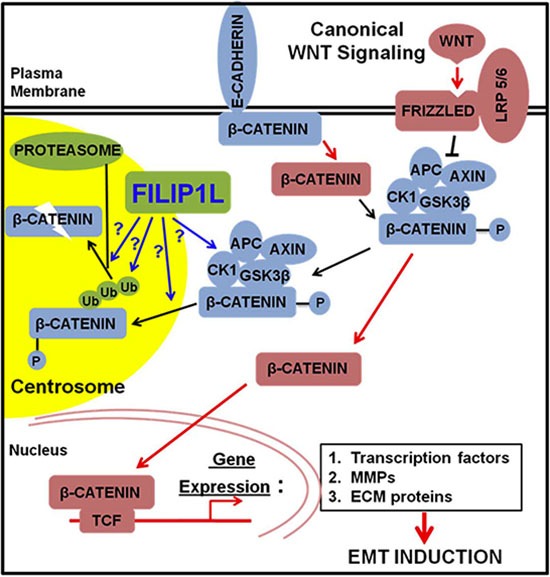
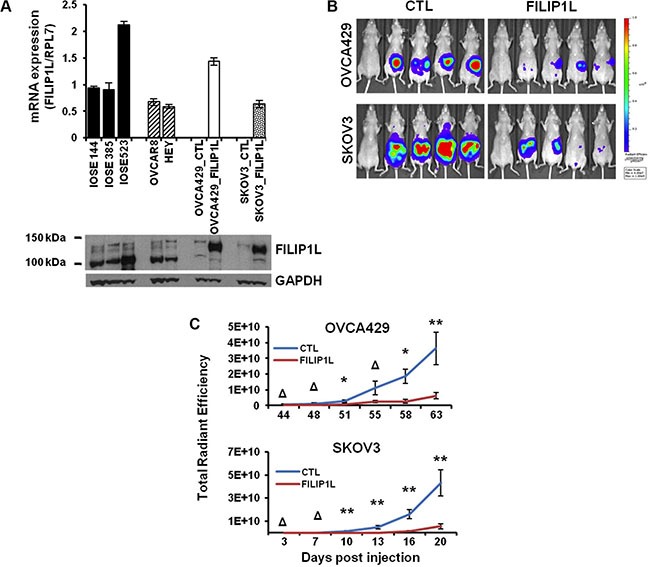
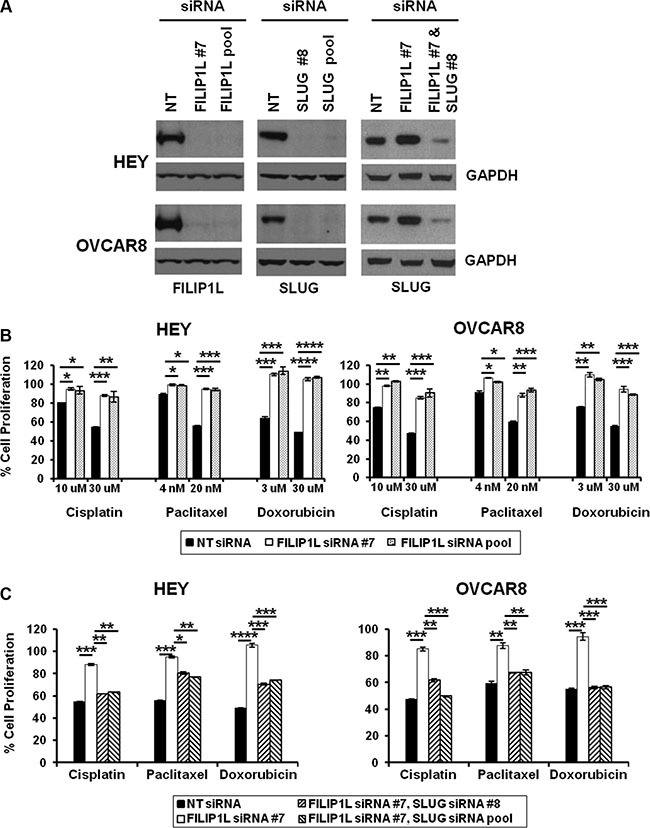
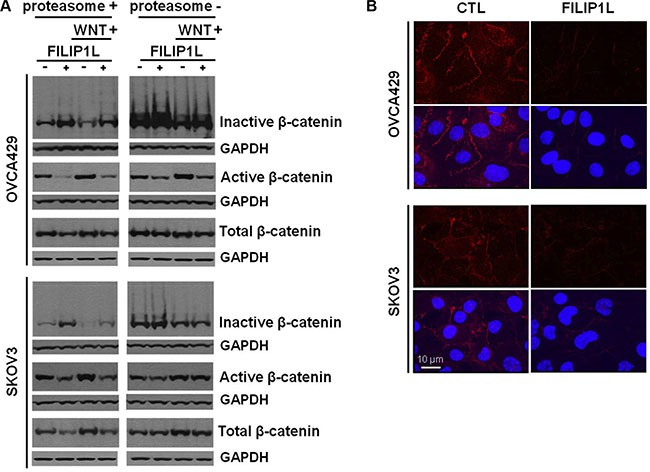
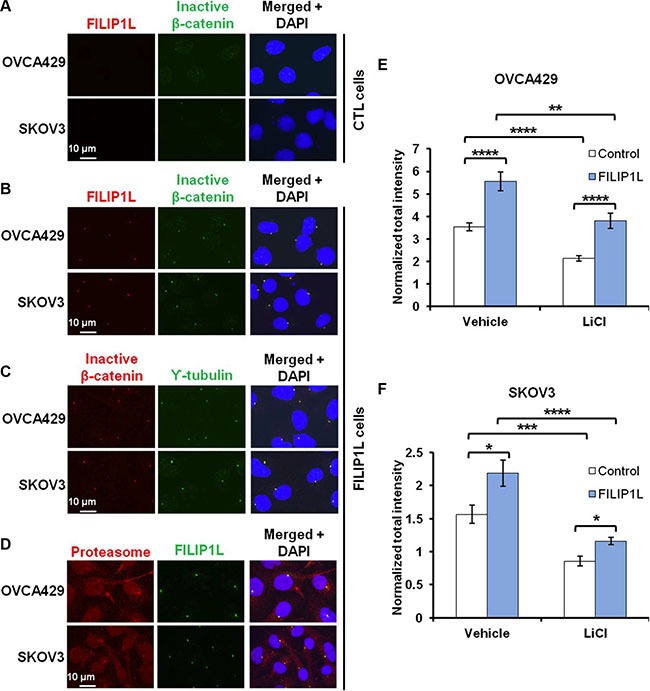
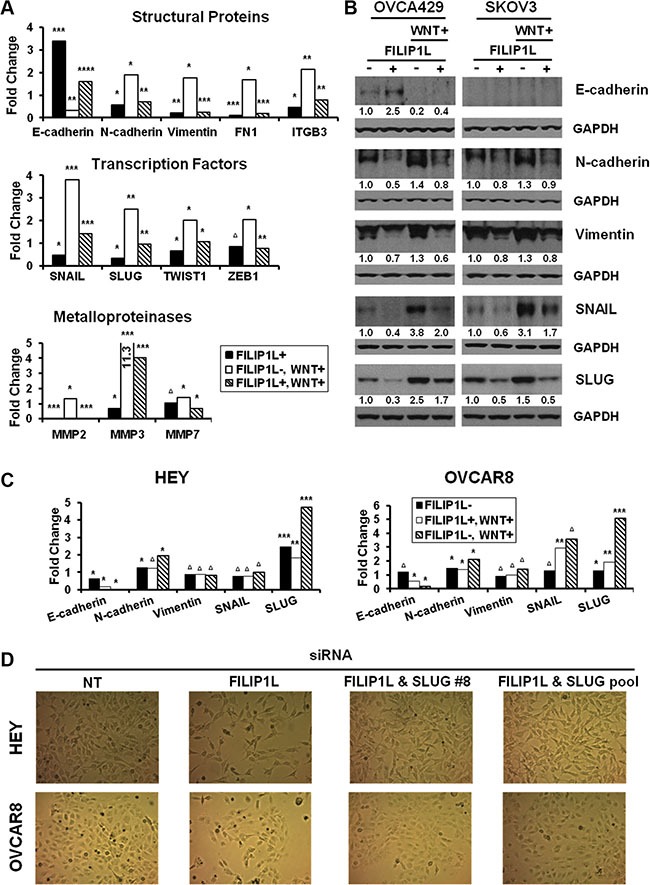
Filamin A interacting protein 1-like (FILIP1L) is an inhibitor of the canonical WNT pathway. WNT/β-catenin signaling and its downstream pathway, epithelial-to-mesenchymal transition (EMT), play a key role in ovarian cancer metastasis and chemoresistance. To study the clinical implications of FILIP1L in regulating the WNT/β-catenin pathway, the expression of FILIP1L, β-catenin, SNAIL and SLUG was analyzed by immunohistochemistry on tissue microarrays of 369 ovarian samples ranging from normal to metastatic. In addition, the results were validated in mouse model and in vitro cell culture. In the present study, we demonstrated that FILIP1L expression was inversely correlated with poor prognosis, stage and chemoresistance in ovarian cancer. Notably, low FILIP1L expression was independent negative prognostic factor with respect to overall and disease-free survival. FILIP1L inhibited peritoneal metastases in orthotopic mouse model. FILIP1L knockdown induced chemoresistance in ovarian cancer cells and this phenotype was rescued by simultaneous knockdown of FILIP1L and SLUG, an EMT activator. We also demonstrated that FILIP1L regulates β-catenin degradation. FILIP1L co-localizes with phospho-β-catenin and increases phospho-β-catenin at the centrosomes, destined for proteosomal degradation. Finally, we showed that FILIP1L regulates EMT. Overall, these findings suggest that FILIP1L promotes β-catenin degradation and suppresses EMT, thereby inhibiting metastases and chemoresistance. Our study provides the first clinical relevance of FILIP1L in human cancer, and suggests that FILIP1L may be a novel prognostic marker for chemotherapy in ovarian cancer patients. Further, the modulation of FILIP1L expression may have the potential to be a target for cancer therapy.
细丝蛋白A相互作用蛋白1样蛋白(FILIP1L)是经典WNT信号通路的抑制剂。WNT/β-连环蛋白信号及其下游通路——上皮-间质转化(EMT),在卵巢癌转移和化疗耐药中起关键作用。为研究FILIP1L在调控WNT/β-连环蛋白通路中的临床意义,采用免疫组化方法分析了369例从正常到转移的卵巢组织样本微阵列中FILIP1L、β-连环蛋白、SNAIL和SLUG的表达。此外,在小鼠模型和体外细胞培养中对结果进行了验证。在本研究中,我们证明FILIP1L表达与卵巢癌的不良预后、分期和化疗耐药呈负相关。值得注意的是,低FILIP1L表达是总生存期和无病生存期的独立负性预后因素。FILIP1L抑制原位小鼠模型中的腹膜转移。FILIP1L基因敲低诱导卵巢癌细胞产生化疗耐药性,而同时敲低FILIP1L和EMT激活剂SLUG可挽救该表型。我们还证明FILIP1L调节β-连环蛋白的降解。FILIP1L与磷酸化β-连环蛋白共定位,并增加中心体处磷酸化β-连环蛋白的水平,使其进入蛋白酶体降解。最后,我们表明FILIP1L调节EMT。总体而言,这些发现表明FILIP1L促进β-连环蛋白降解并抑制EMT,从而抑制转移和化疗耐药。我们的研究首次揭示了FILIP1L在人类癌症中的临床相关性,并表明FILIP1L可能是卵巢癌患者化疗的新型预后标志物。此外,调节FILIP1L表达可能有成为癌症治疗靶点的潜力。