Belant Jerrold L, Bled Florent, Wilton Clay M, Fyumagwa Robert, Mwampeta Stanslaus B, Beyer Dean E
Carnivore Ecology Laboratory, Forest and Wildlife Research Center, Mississippi State University, Mississippi State, Mississippi, United States of America.
Tanzania Wildlife Research Institute, Arusha, United Republic of Tanzania.
Sci Rep. 2016 Oct 27;6:35920. doi: 10.1038/srep35920.
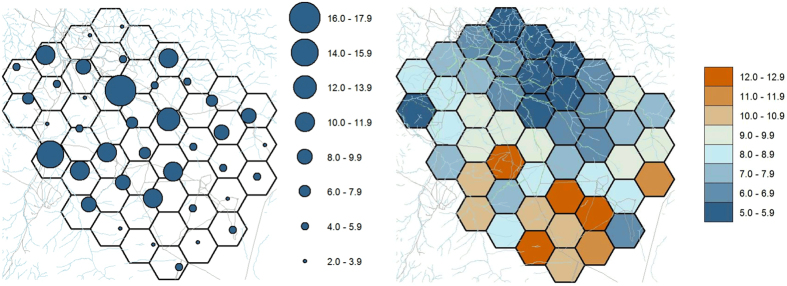
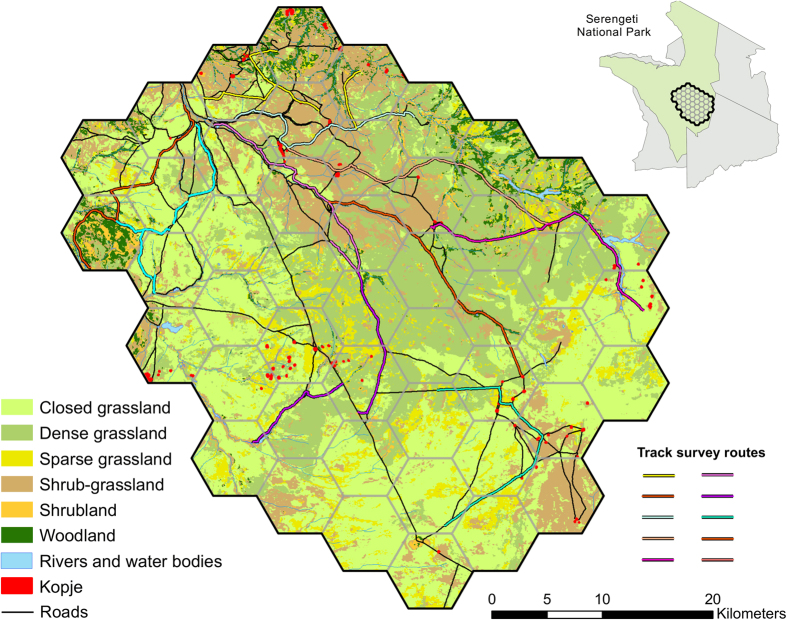
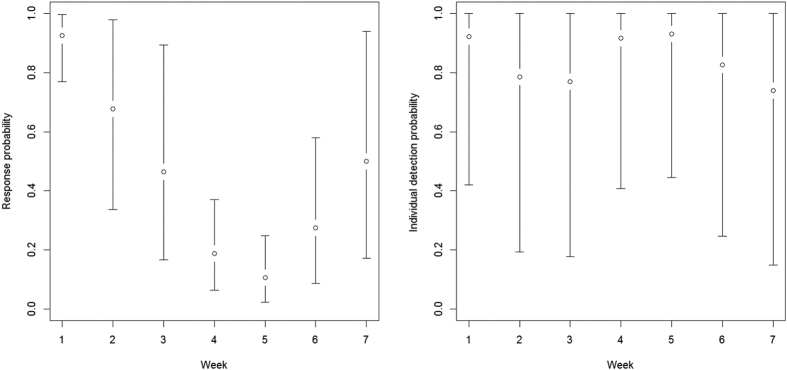
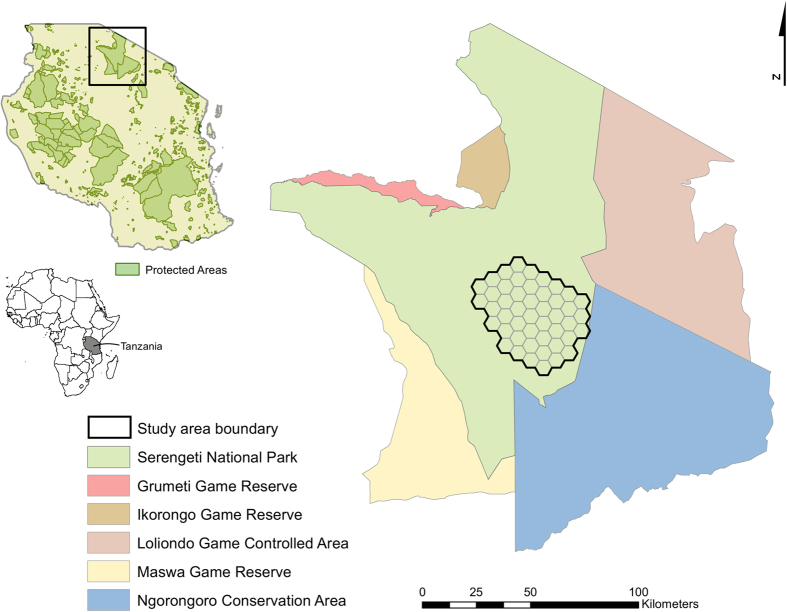
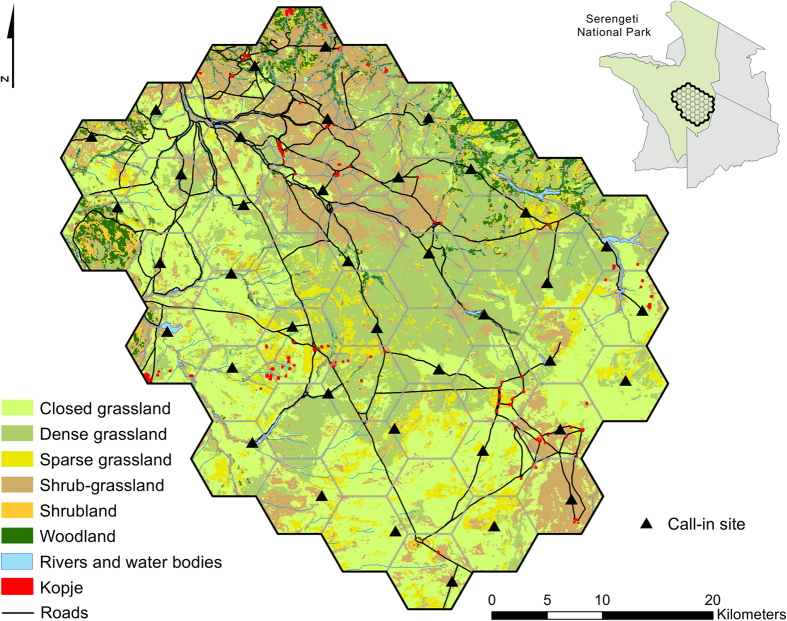
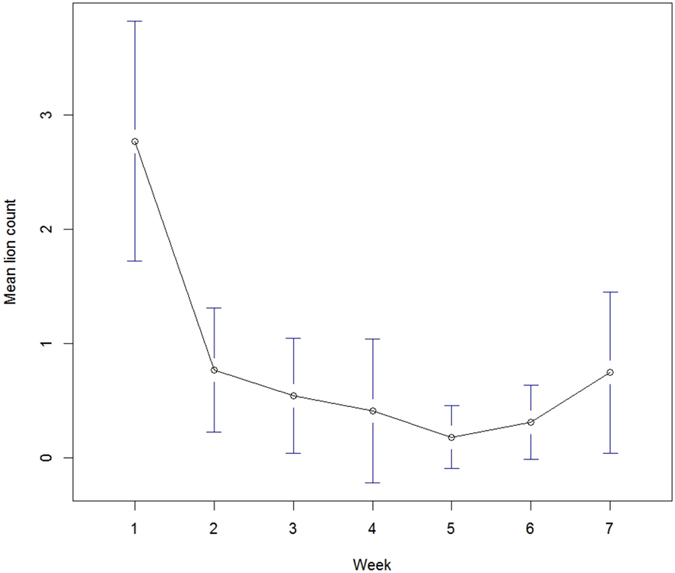
Declining populations of large carnivores worldwide, and the complexities of managing human-carnivore conflicts, require accurate population estimates of large carnivores to promote their long-term persistence through well-informed management We used N-mixture models to estimate lion (Panthera leo) abundance from call-in and track surveys in southeastern Serengeti National Park, Tanzania. Because of potential habituation to broadcasted calls and social behavior, we developed a hierarchical observation process within the N-mixture model conditioning lion detectability on their group response to call-ins and individual detection probabilities. We estimated 270 lions (95% credible interval = 170-551) using call-ins but were unable to estimate lion abundance from track data. We found a weak negative relationship between predicted track density and predicted lion abundance from the call-in surveys. Luminosity was negatively correlated with individual detection probability during call-in surveys. Lion abundance and track density were influenced by landcover, but direction of the corresponding effects were undetermined. N-mixture models allowed us to incorporate multiple parameters (e.g., landcover, luminosity, observer effect) influencing lion abundance and probability of detection directly into abundance estimates. We suggest that N-mixture models employing a hierarchical observation process can be used to estimate abundance of other social, herding, and grouping species.
全球大型食肉动物数量不断减少,以及管理人类与食肉动物冲突的复杂性,都需要对大型食肉动物进行准确的种群估计,以便通过明智的管理促进它们的长期生存。我们使用N-混合模型,根据坦桑尼亚塞伦盖蒂国家公园东南部的呼叫调查和追踪调查来估计狮子(Panthera leo)的数量。由于狮子可能会对广播呼叫产生习惯化以及其具有社会行为,我们在N-混合模型中开发了一个分层观测过程,将狮子的可探测性条件设定为它们对呼叫的群体反应和个体探测概率。我们通过呼叫调查估计出有270头狮子(95%可信区间 = 170 - 551),但无法根据追踪数据估计狮子数量。我们发现预测的追踪密度与呼叫调查中预测的狮子数量之间存在微弱的负相关关系。在呼叫调查期间,亮度与个体探测概率呈负相关。狮子数量和追踪密度受到土地覆盖的影响,但相应影响的方向尚未确定。N-混合模型使我们能够将影响狮子数量和探测概率的多个参数(例如土地覆盖、亮度、观察者效应)直接纳入数量估计中。我们建议采用分层观测过程的N-混合模型可用于估计其他群居、集群和群体物种的数量。