Yang Zhongliang, Chen Yumiao
College of Mechanical Engineering, Donghua University Shanghai, China.
Fashion and Art Design Institute, Donghua University Shanghai, China.
Front Neurosci. 2016 Oct 14;10:445. doi: 10.3389/fnins.2016.00445. eCollection 2016.
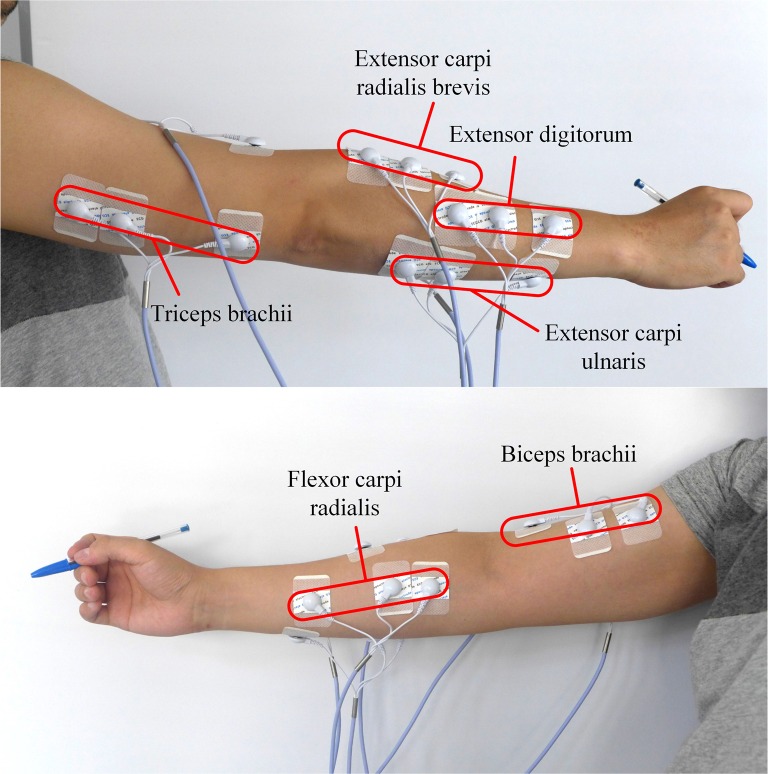
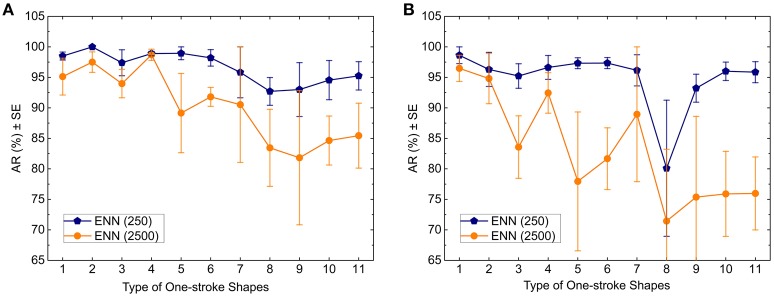
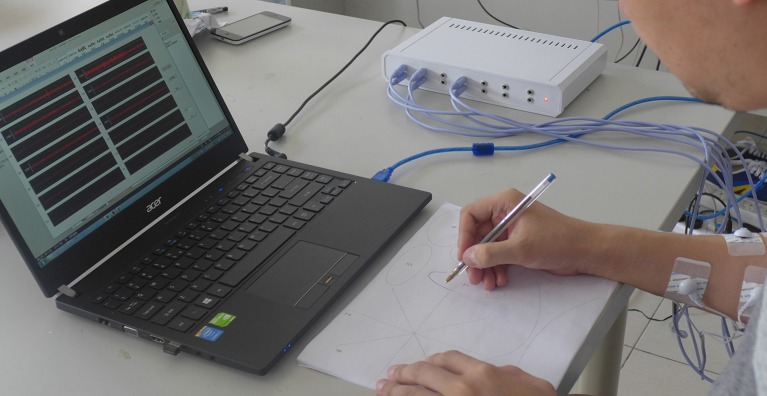
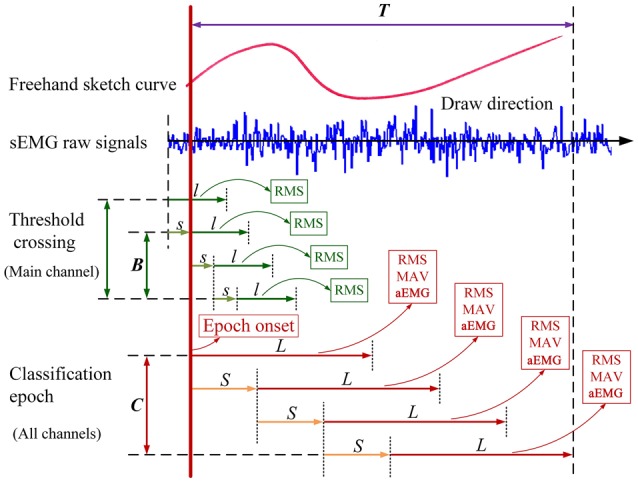
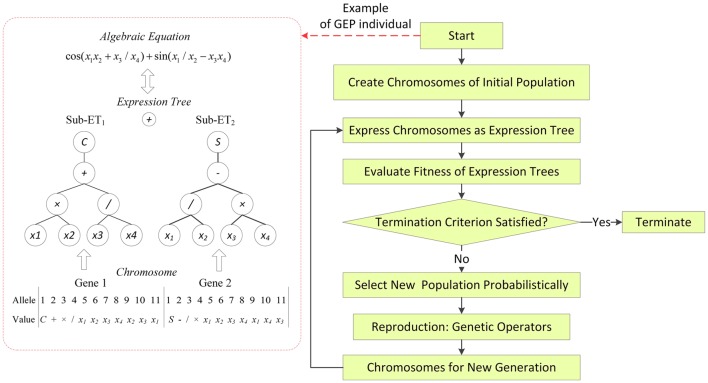
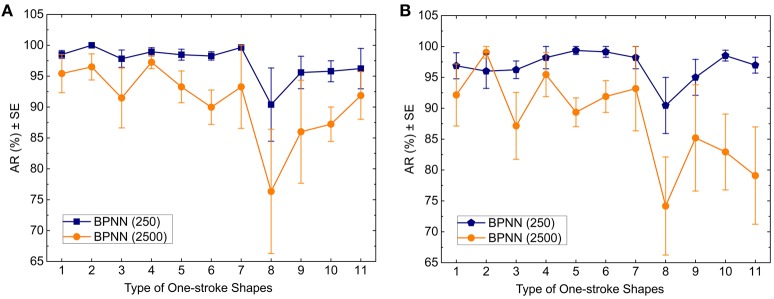
Sketching is one of the most important processes in the conceptual stage of design. Previous studies have relied largely on the analyses of sketching process and outcomes; whereas surface electromyographic (sEMG) signals associated with sketching have received little attention. In this study, we propose a method in which 11 basic one-stroke sketching shapes are identified from the sEMG signals generated by the forearm and upper arm muscles from 4 subjects. Time domain features such as integrated electromyography, root mean square and mean absolute value were extracted with analysis windows of two length conditions for pattern recognition. After reducing data dimensionality using principal component analysis, the shapes were classified using Gene Expression Programming (GEP). The performance of the GEP classifier was compared to the Back Propagation neural network (BPNN) and the Elman neural network (ENN). Feature extraction with the short analysis window (250 ms with a 250 ms increment) improved the recognition rate by around 6.4% averagely compared with the long analysis window (2500 ms with a 2500 ms increment). The average recognition rate for the eleven basic one-stroke sketching patterns achieved by the GEP classifier was 96.26% in the training set and 95.62% in the test set, which was superior to the performance of the BPNN and ENN classifiers. The results show that the GEP classifier is able to perform well with either length of the analysis window. Thus, the proposed GEP model show promise for recognizing sketching based on sEMG signals.
草图绘制是设计概念阶段最重要的过程之一。以往的研究主要依赖于对草图绘制过程和结果的分析;而与草图绘制相关的表面肌电(sEMG)信号却很少受到关注。在本研究中,我们提出了一种方法,从4名受试者的前臂和上臂肌肉产生的sEMG信号中识别出11种基本的一笔草图形状。使用两种长度条件的分析窗口提取诸如积分肌电图、均方根和平均绝对值等时域特征用于模式识别。在使用主成分分析降低数据维度后,使用基因表达式编程(GEP)对形状进行分类。将GEP分类器的性能与反向传播神经网络(BPNN)和埃尔曼神经网络(ENN)进行比较。与长分析窗口(增量为2500 ms的2500 ms)相比,短分析窗口(增量为250 ms的250 ms)进行特征提取平均提高了约6.4%的识别率。GEP分类器对11种基本一笔草图模式的平均识别率在训练集中达到96.26%,在测试集中达到95.62%,优于BPNN和ENN分类器的性能。结果表明,GEP分类器在两种分析窗口长度下均能表现良好。因此,所提出的GEP模型在基于sEMG信号识别草图方面显示出前景。