Chen Tsung-I, Tu Wei-Chia
Center of Physical Education, Office of General and Basic Education, Tzu Chi University Hualien, Taiwan.
Master program in Physiological and Anatomical Medicine, School of Medicine, Tzu Chi University Hualien, Taiwan.
Front Physiol. 2016 Oct 14;7:462. doi: 10.3389/fphys.2016.00462. eCollection 2016.
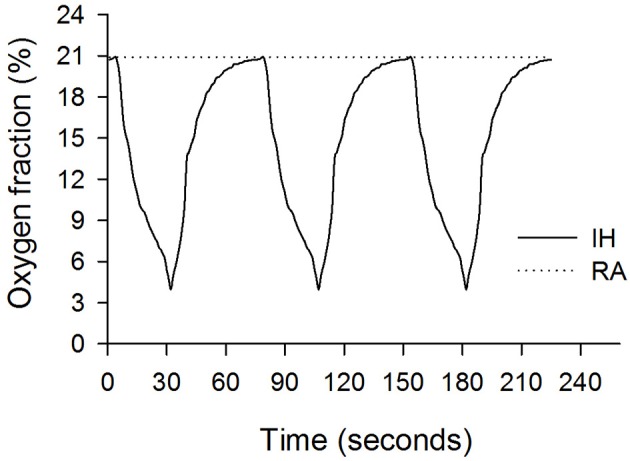
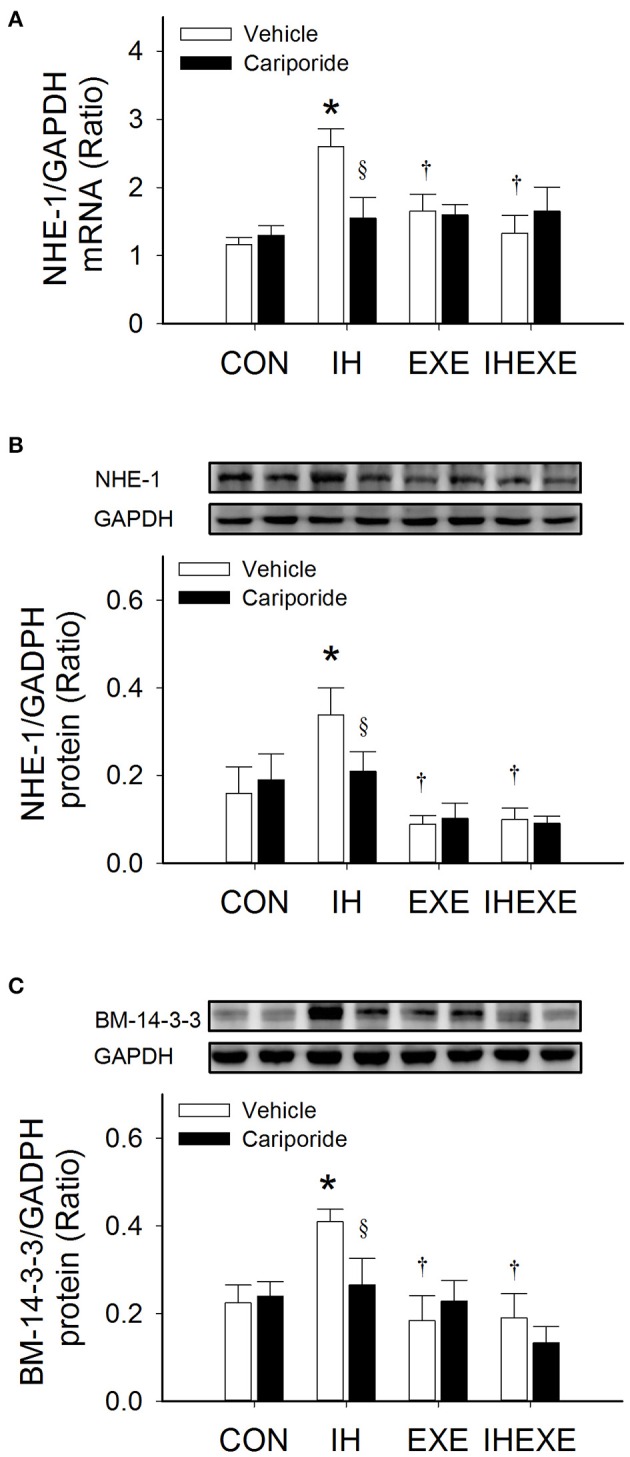
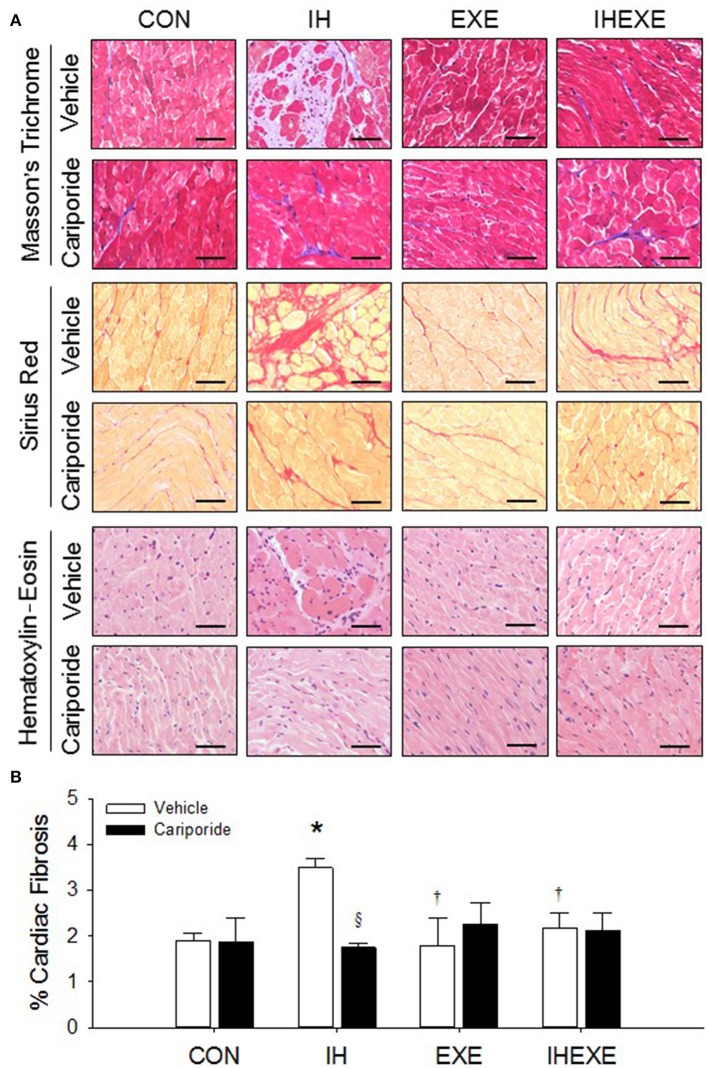
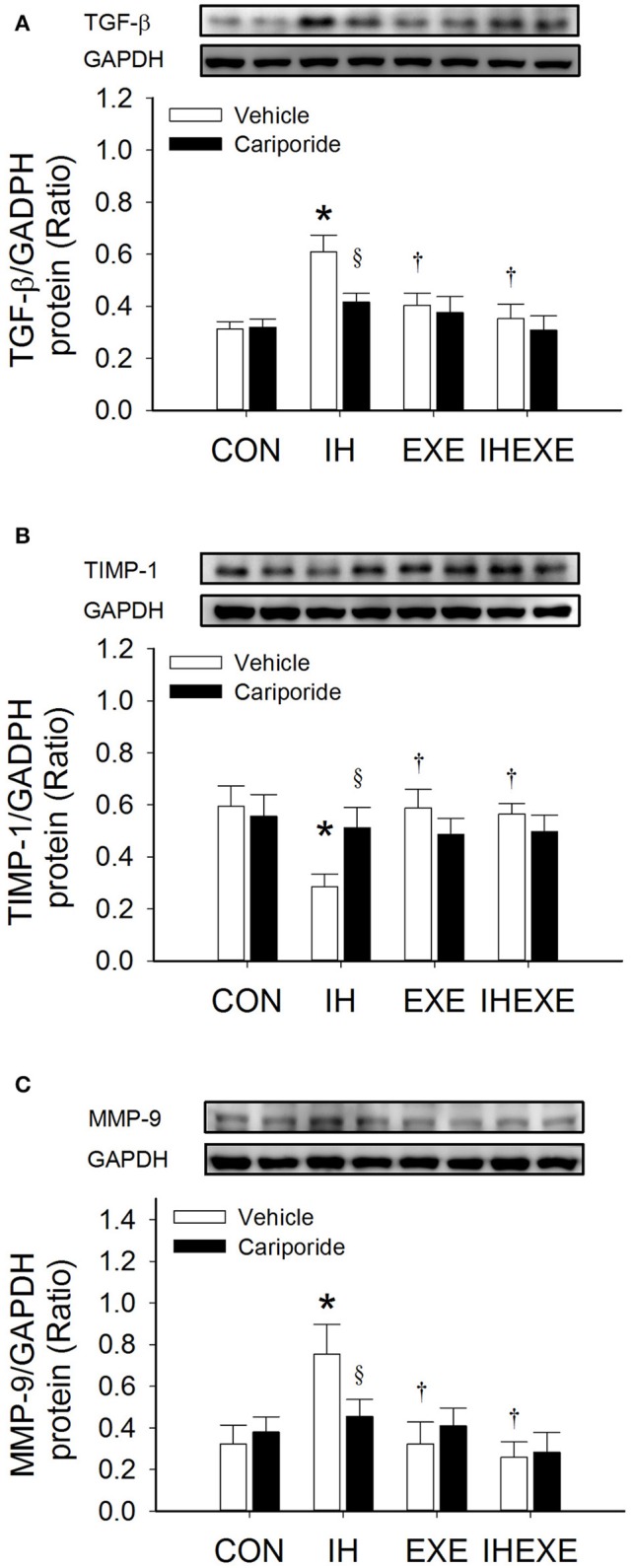
To investigate the role of sodium-hydrogen exchanger-1 (NHE-1) and exercise training on intermittent hypoxia-induced cardiac fibrosis in obstructive sleep apnea (OSA), using an animal model mimicking the intermittent hypoxia of OSA. Eight-week-old male Sprague-Dawley rats were randomly assigned to control (CON), intermittent hypoxia (IH), exercise (EXE), or IH combined with exercise (IHEXE) groups. These groups were randomly assigned to subgroups receiving either a vehicle or the NHE-1 inhibitor cariporide. The EXE and IHEXE rats underwent exercise training on an animal treadmill for 10 weeks (5 days/week, 60 min/day, 24-30 m/min, 2-10% grade). The IH and IHEXE rats were exposed to 14 days of IH (30 s of hypoxia-nadir of 2-6% O-followed by 45 s of normoxia) for 8 h/day. At the end of 10 weeks, rats were sacrificed and then hearts were removed to determine the myocardial levels of fibrosis index, oxidative stress, antioxidant capacity, and NHE-1 activation. Compared to the CON rats, IH induced higher cardiac fibrosis, lower myocardial catalase, and superoxidative dismutase activities, higher myocardial lipid and protein peroxidation and higher NHE-1 activation ( < 0.05 for each), which were all abolished by cariporide. Compared to the IH rats, lower cardiac fibrosis, higher myocardial antioxidant capacity, lower myocardial lipid, and protein peroxidation and lower NHE-1 activation were found in the IHEXE rats ( < 0.05 for each). IH-induced cardiac fibrosis was associated with NHE-1 hyperactivity. However, exercise training and cariporide exerted an inhibitory effect to prevent myocardial NHE-1 hyperactivity, which contributed to reduced IH-induced cardiac fibrosis. Therefore, NHE-1 plays a critical role in the effect of exercise on IH-induced increased cardiac fibrosis.
为研究钠氢交换体-1(NHE-1)及运动训练在阻塞性睡眠呼吸暂停(OSA)间歇性缺氧诱导的心脏纤维化中的作用,采用模拟OSA间歇性缺氧的动物模型。将8周龄雄性Sprague-Dawley大鼠随机分为对照组(CON)、间歇性缺氧组(IH)、运动组(EXE)或间歇性缺氧联合运动组(IHEXE)。这些组再随机分为接受载体或NHE-1抑制剂卡立泊来德的亚组。EXE组和IHEXE组大鼠在动物跑步机上进行10周的运动训练(每周5天,每天60分钟,速度24 - 30米/分钟,坡度2 - 10%)。IH组和IHEXE组大鼠每天暴露于间歇性缺氧环境8小时,持续14天(30秒缺氧 - 氧分压最低点为2 - 6%,随后45秒常氧)。在10周结束时,处死大鼠并取出心脏,以测定心肌纤维化指数、氧化应激、抗氧化能力和NHE-1激活水平。与CON组大鼠相比,IH诱导更高的心脏纤维化、更低的心肌过氧化氢酶和超氧化物歧化酶活性、更高的心肌脂质和蛋白质过氧化以及更高的NHE-1激活水平(每项均P<0.05),这些均被卡立泊来德消除。与IH组大鼠相比,IHEXE组大鼠的心脏纤维化程度更低、心肌抗氧化能力更高、心肌脂质和蛋白质过氧化水平更低以及NHE-1激活水平更低(每项均P<0.05)。IH诱导的心脏纤维化与NHE-1活性过高有关。然而,运动训练和卡立泊来德发挥了抑制作用,以防止心肌NHE-1活性过高,这有助于减轻IH诱导的心脏纤维化。因此,NHE-1在运动对IH诱导的心脏纤维化增加的影响中起关键作用。