Cui Ming, Xiao Huiwen, Luo Dan, Zhang Xin, Zhao Shuyi, Zheng Qisheng, Li Yuan, Zhao Yu, Dong Jiali, Li Hang, Wang Haichao, Fan Saijun
Tianjin Key Laboratory of Radiation Medicine and Molecular Nuclear Medicine, Institute of Radiation Medicine, Chinese Academy of Medical Sciences and Peking Union Medical College, 238 Baidi Road, Tianjin 300192, China.
Department of Emergency Medicine, North Shore University Hospital; Laboratory of Emergency Medicine, the Feinstein Institute for Medical Research, 350 Community Drive, Manhasset, NY 11030, USA.
Int J Mol Sci. 2016 Oct 26;17(11):1786. doi: 10.3390/ijms17111786.
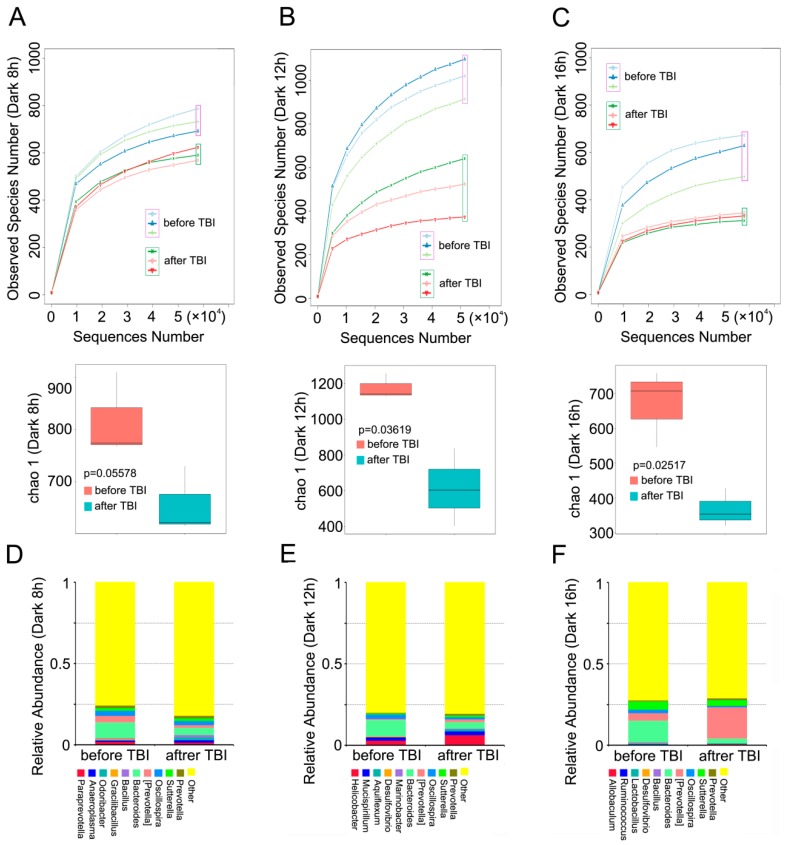
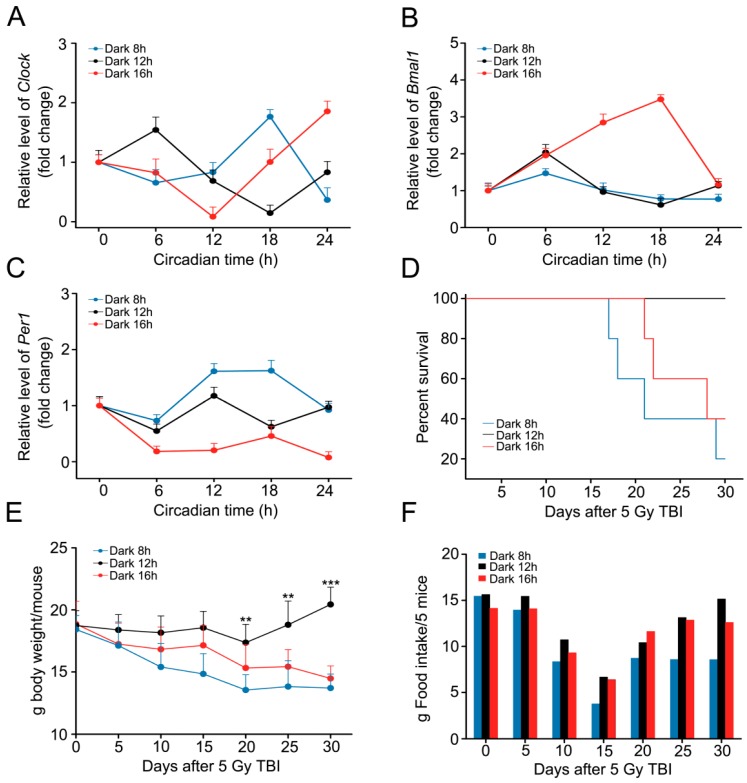
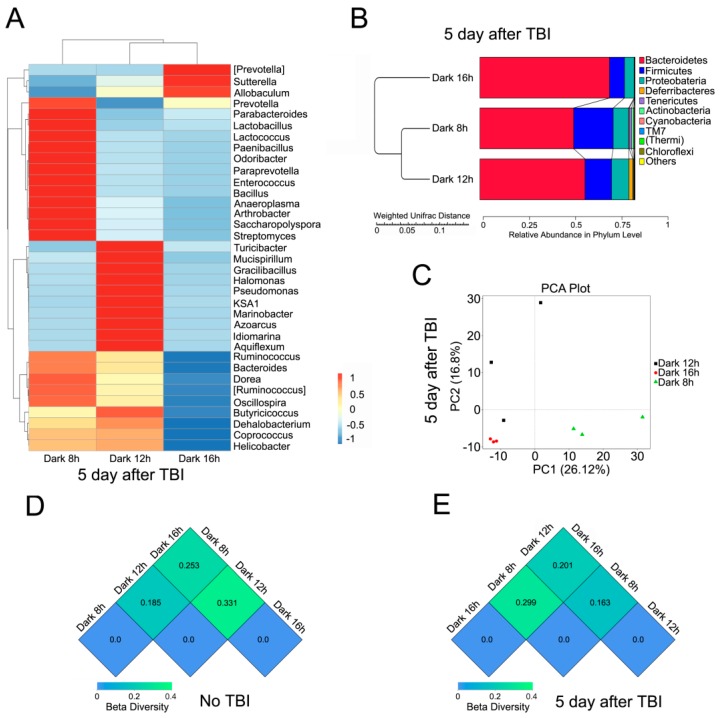
Modern lifestyles, such as shift work, nocturnal social activities, and jet lag, disturb the circadian rhythm. The interaction between mammals and the co-evolved intestinal microbiota modulates host physiopathological processes. Radiotherapy is a cornerstone of modern management of malignancies; however, it was previously unknown whether circadian rhythm disorder impairs prognosis after radiotherapy. To investigate the effect of circadian rhythm on radiotherapy, C57BL/6 mice were housed in different dark/light cycles, and their intestinal bacterial compositions were compared using high throughput sequencing. The survival rate, body weight, and food intake of mice in diverse cohorts were measured following irradiation exposure. Finally, the enteric bacterial composition of irradiated mice that experienced different dark/light cycles was assessed using 16S RNA sequencing. Intriguingly, mice housed in aberrant light cycles harbored a reduction of observed intestinal bacterial species and shifts of gut bacterial composition compared with those of the mice kept under 12 h dark/12 h light cycles, resulting in a decrease of host radioresistance. Moreover, the alteration of enteric bacterial composition of mice in different groups was dissimilar. Our findings provide novel insights into the effects of biological clocks on the gut bacterial composition, and underpin that the circadian rhythm influences the prognosis of patients after radiotherapy in a preclinical setting.
现代生活方式,如轮班工作、夜间社交活动和时差反应,会扰乱昼夜节律。哺乳动物与共同进化的肠道微生物群之间的相互作用调节着宿主的生理病理过程。放射治疗是现代恶性肿瘤治疗的基石;然而,昼夜节律紊乱是否会影响放疗后的预后此前尚不清楚。为了研究昼夜节律对放疗的影响,将C57BL/6小鼠饲养在不同的明暗周期中,并使用高通量测序比较它们的肠道细菌组成。在照射后测量不同组小鼠的存活率、体重和食物摄入量。最后,使用16S RNA测序评估经历不同明暗周期的受照射小鼠的肠道细菌组成。有趣的是,与饲养在12小时黑暗/12小时光照周期下的小鼠相比,饲养在异常光照周期下的小鼠肠道细菌种类减少,肠道细菌组成发生变化,导致宿主放射抗性降低。此外,不同组小鼠肠道细菌组成的变化也不相同。我们的研究结果为生物钟对肠道细菌组成的影响提供了新的见解,并支持昼夜节律在临床前环境中影响放疗患者的预后。