Center for Interdisciplinary Cardiovascular Sciences, Cardiovascular Division, Brigham and Women's Hospital, Harvard Medical School, Boston, Massachusetts 02115, USA.
Channing Division of Network Medicine, Brigham and Women's Hospital, Harvard Medical School, Boston, Massachusetts 02115, USA.
Nat Commun. 2016 Oct 31;7:12849. doi: 10.1038/ncomms12849.
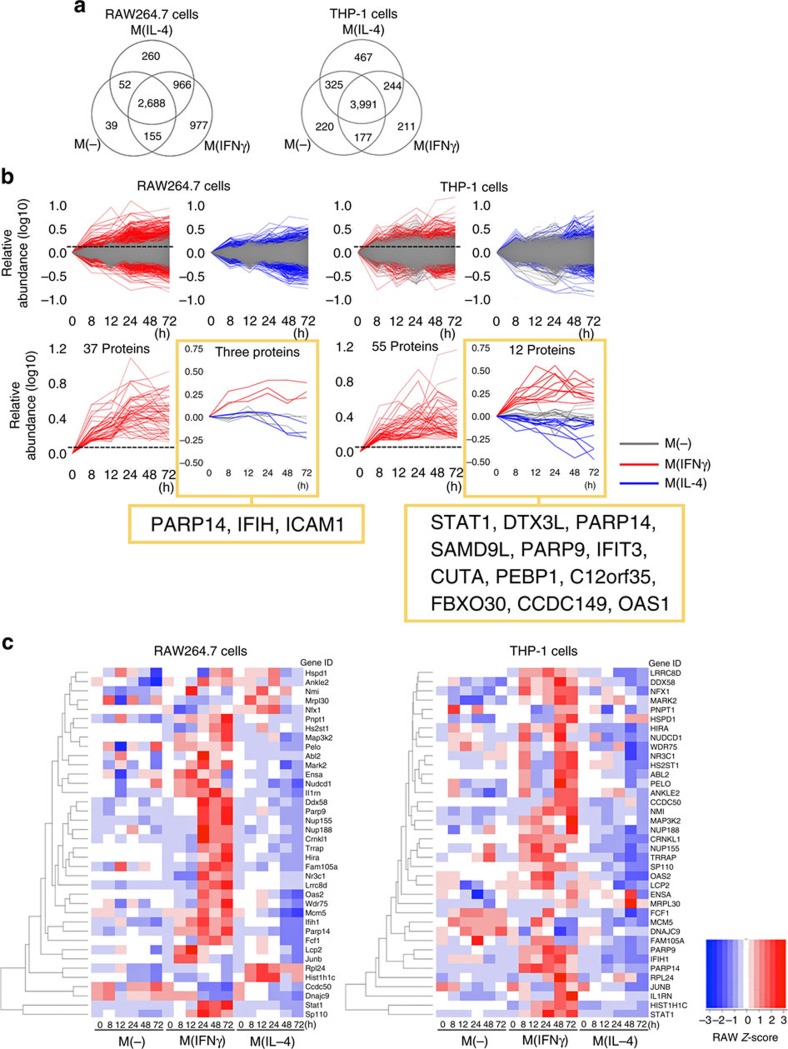
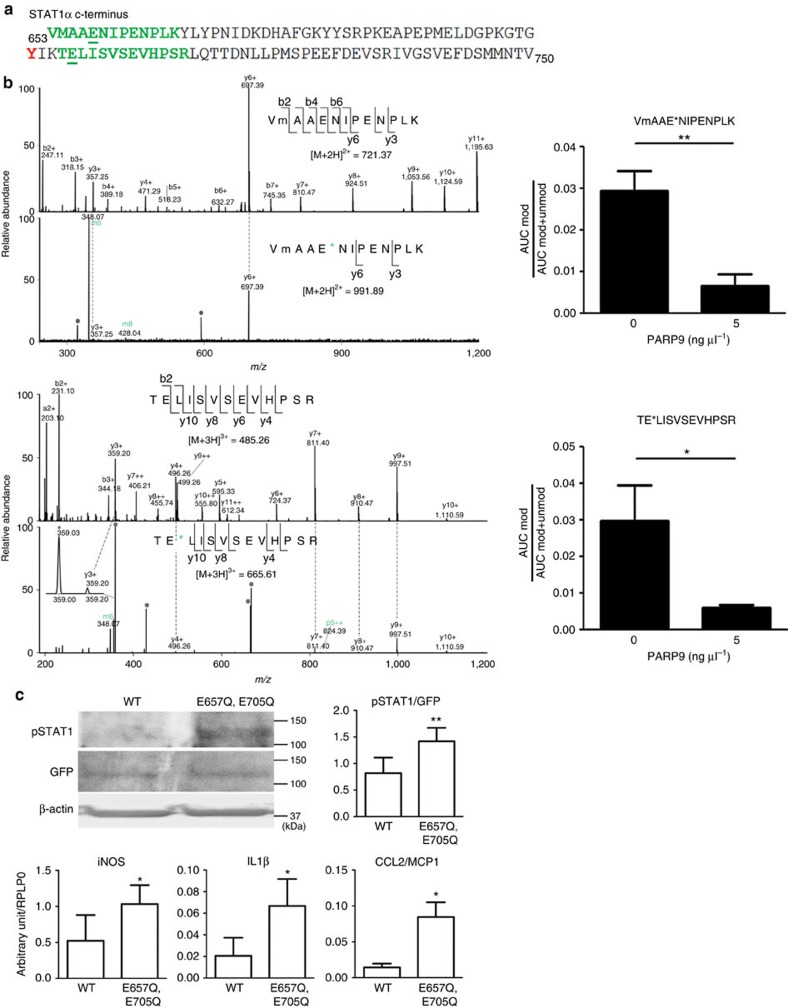
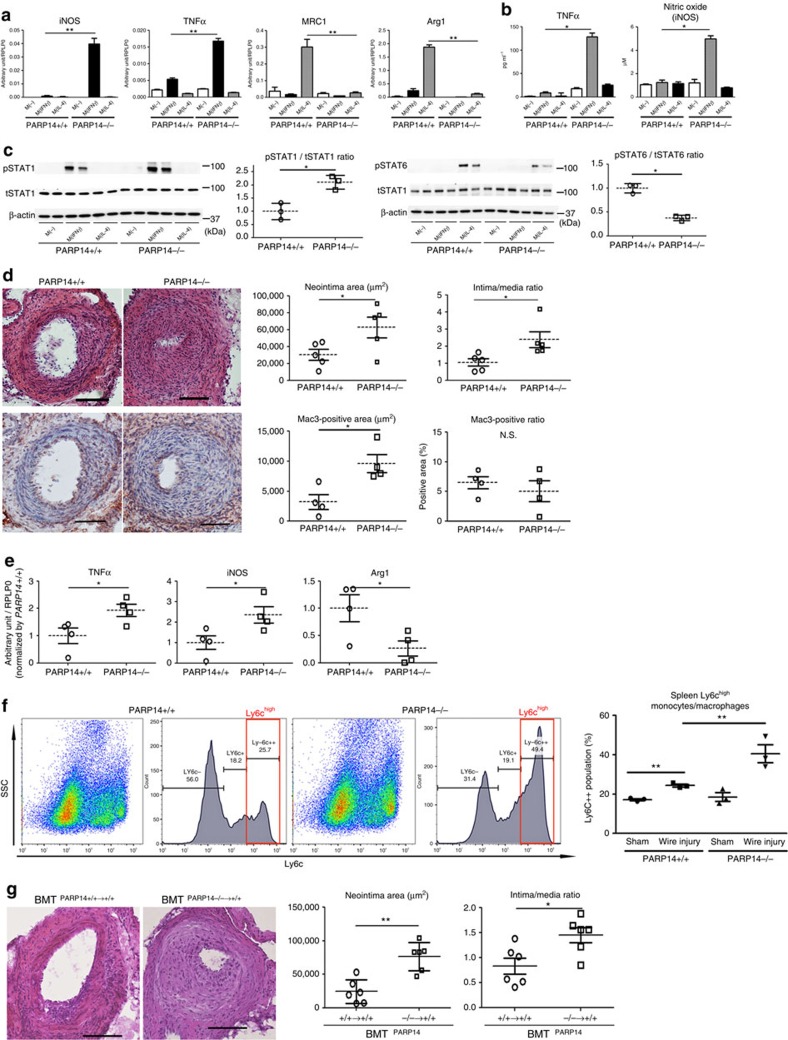
Despite the global impact of macrophage activation in vascular disease, the underlying mechanisms remain obscure. Here we show, with global proteomic analysis of macrophage cell lines treated with either IFNγ or IL-4, that PARP9 and PARP14 regulate macrophage activation. In primary macrophages, PARP9 and PARP14 have opposing roles in macrophage activation. PARP14 silencing induces pro-inflammatory genes and STAT1 phosphorylation in M(IFNγ) cells, whereas it suppresses anti-inflammatory gene expression and STAT6 phosphorylation in M(IL-4) cells. PARP9 silencing suppresses pro-inflammatory genes and STAT1 phosphorylation in M(IFNγ) cells. PARP14 induces ADP-ribosylation of STAT1, which is suppressed by PARP9. Mutations at these ADP-ribosylation sites lead to increased phosphorylation. Network analysis links PARP9-PARP14 with human coronary artery disease. PARP14 deficiency in haematopoietic cells accelerates the development and inflammatory burden of acute and chronic arterial lesions in mice. These findings suggest that PARP9 and PARP14 cross-regulate macrophage activation.
尽管巨噬细胞激活在血管疾病中具有全球影响,但潜在机制仍不清楚。在这里,我们通过用 IFNγ 或 IL-4 处理的巨噬细胞系的全蛋白质组分析表明,PARP9 和 PARP14 调节巨噬细胞激活。在原代巨噬细胞中,PARP9 和 PARP14 在巨噬细胞激活中具有相反的作用。PARP14 沉默诱导 M(IFNγ)细胞中促炎基因和 STAT1 磷酸化,而在 M(IL-4)细胞中抑制抗炎基因表达和 STAT6 磷酸化。PARP9 沉默抑制 M(IFNγ)细胞中促炎基因和 STAT1 磷酸化。PARP14 诱导 STAT1 的 ADP-核糖基化,而 PARP9 抑制其发生。这些 ADP-核糖基化位点的突变导致磷酸化增加。网络分析将 PARP9-PARP14 与人类冠状动脉疾病联系起来。造血细胞中 PARP14 的缺失加速了小鼠急性和慢性动脉病变的发展和炎症负担。这些发现表明,PARP9 和 PARP14 交叉调节巨噬细胞激活。