Zhu Min, Wang Ting, Wang Chengdi, Ji Yulin
Department of Respiratory and Critical Care Medicine, West China Hospital, Sichuan University, Chengdu, Sichuan, People's Republic of China.
Int J Chron Obstruct Pulmon Dis. 2016 Oct 19;11:2597-2607. doi: 10.2147/COPD.S101382. eCollection 2016.
In recent years, the pleiotropic roles of vitamin D have been highlighted in various diseases. However, the association between serum vitamin D and COPD is not well studied. This updated systematic review and meta-analysis aimed to assess the relationship between vitamin D and the risk, severity, and exacerbation of COPD.
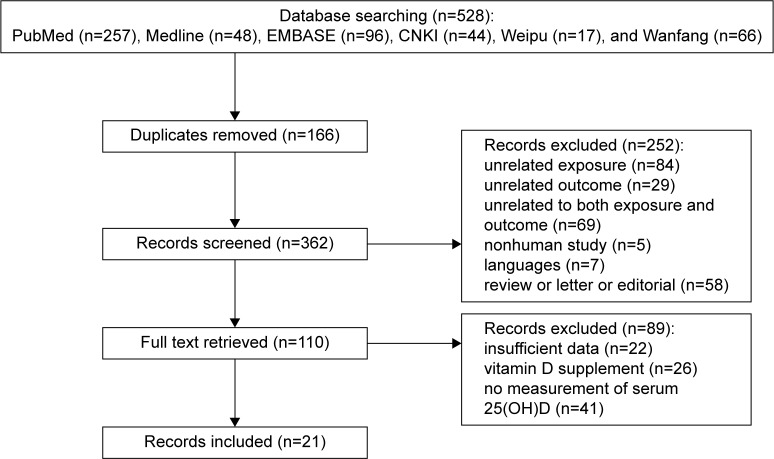
A systematic literature search was conducted in PubMed, Medline, EMBASE, Chinese National Knowledge Infrastructure, Wanfang, and Weipu databases. The pooled risk estimates were standardized mean difference (SMD) with 95% confidence interval (CI) for vitamin D levels and odds ratio (OR) with 95% CI for vitamin D deficiency. Meta-regression and subgroup analyses were performed on latitude, body mass index, and assay method.
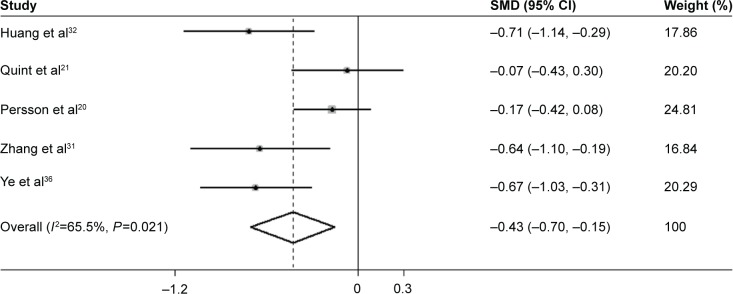
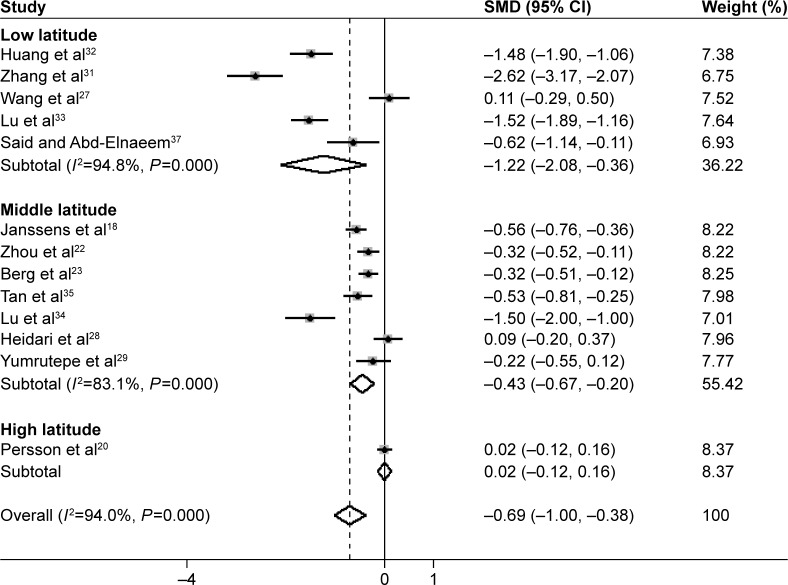
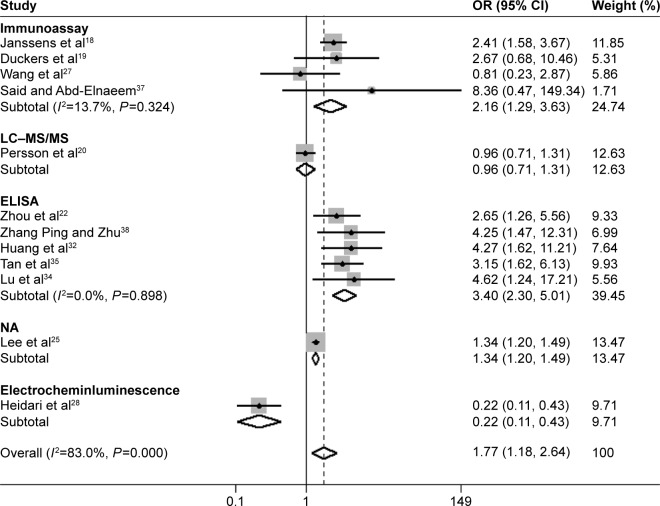
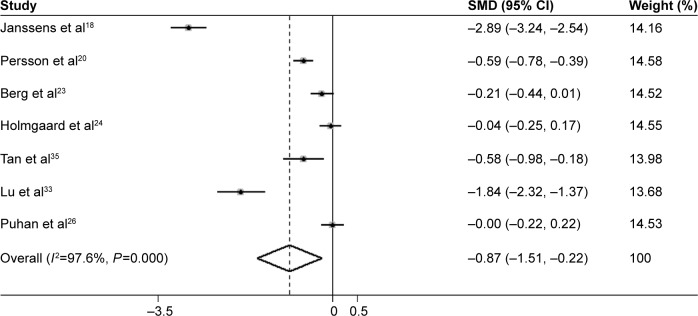
A total of 21 studies, including 4,818 COPD patients and 7,175 controls, were included. Meta-analysis showed that lower serum vitamin D levels were found in COPD patients than in controls (SMD: -0.69, 95% CI: -1.00, -0.38, <0.001), especially in severe COPD (SMD: -0.87, 95% CI: -1.51, -0.22, =0.001) and COPD exacerbation (SMD: -0.43, 95% CI: -0.70, -0.15, =0.002). Vitamin D deficiency was associated with increased risk of COPD (OR: 1.77, 95% CI: 1.18, 2.64, =0.006) and with COPD severity (OR: 2.83, 95% CI: 2.00, 4.00, <0.001) but not with COPD exacerbation (OR: 1.17, 95% CI: 0.86, 1.59, =0.326). Assay methods had significant influence on the heterogeneity of vitamin D deficiency and COPD risk.
Serum vitamin D levels were inversely associated with COPD risk, severity, and exacerbation. Vitamin D deficiency is associated with increased risk of COPD and severe COPD but not with COPD exacerbation. It is worth considering assay methods in the heterogeneity sources analysis of association between vitamin D deficiency and COPD.
近年来,维生素D的多效性作用在各种疾病中得到了凸显。然而,血清维生素D与慢性阻塞性肺疾病(COPD)之间的关联尚未得到充分研究。这项更新的系统评价和荟萃分析旨在评估维生素D与COPD的风险、严重程度及急性加重之间的关系。
在PubMed、Medline、EMBASE、中国知网、万方和维普数据库中进行了系统的文献检索。对于维生素D水平,汇总风险估计值为标准化均数差(SMD)及95%置信区间(CI);对于维生素D缺乏,汇总风险估计值为比值比(OR)及95%CI。对纬度、体重指数和检测方法进行了Meta回归和亚组分析。
共纳入21项研究,包括4818例COPD患者和7175例对照。荟萃分析显示,COPD患者的血清维生素D水平低于对照组(SMD:-0.69,95%CI:-1.00,-0.38,<0.001),尤其是在重度COPD患者中(SMD:-0.87,95%CI:-1.51,-0.22,=0.001)和COPD急性加重患者中(SMD:-0.43,95%CI:-0.70,-0.15,=0.002)。维生素D缺乏与COPD风险增加(OR:1.77,95%CI:1.18,2.64,=0.006)及COPD严重程度相关(OR:2.83,95%CI:2.00,4.00,<0.001),但与COPD急性加重无关(OR:1.17,95%CI:0.86,1.59,=0.326)。检测方法对维生素D缺乏与COPD风险的异质性有显著影响。
血清维生素D水平与COPD风险、严重程度及急性加重呈负相关。维生素D缺乏与COPD及重度COPD风险增加相关,但与COPD急性加重无关。在维生素D缺乏与COPD关联的异质性来源分析中,值得考虑检测方法。