Parsaee Mozhgan, Ghaderi Fereshteh, Alizadehasl Azin, Bakhshandeh Hooman
Echocardiography Research Center, Rajaie Cardiovascular Medical and Research Center, Iran University of Medical Sciences, Tehran, IR Iran.
Department of Cardiovascular Medicine, Echocardiography laboratory, Atherosclerosis Prevention Research Center, School of Medicine, Mashhad University of Medical Sciences, Mashhad, IR Iran.
Res Cardiovasc Med. 2016 Jul 20;5(3):e26494. doi: 10.5812/cardiovascmed.26494. eCollection 2016 Aug.
Echocardiography is a key screening tool in the diagnostic algorithm of pulmonary hypertension (PH). In addition, tissue doppler imaging (TDI) is a promising method for the noninvasive estimation of pulmonary artery pressure (PAP).
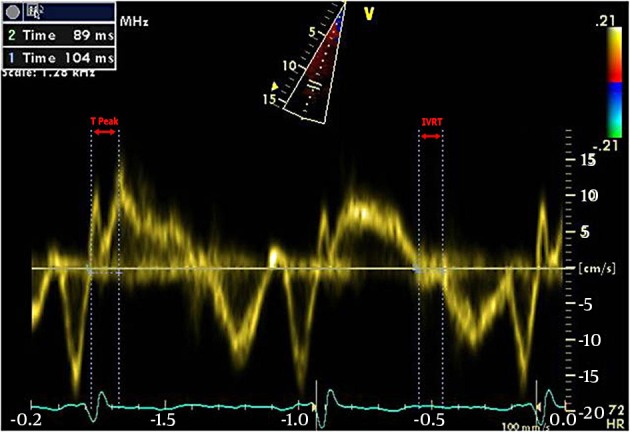
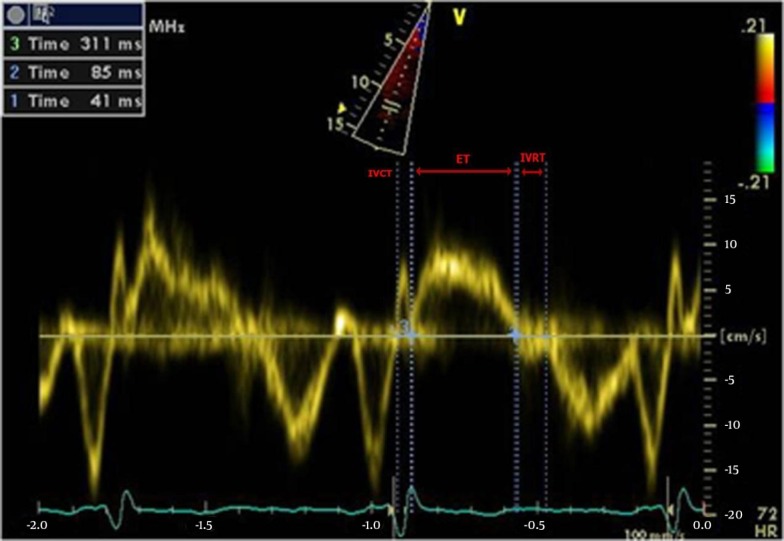
The aim of this study was to validate the accuracy of measuring the time from the beginning of the right ventricular isovolumetric contraction time (RV IVRT) to the peak of the S wave in the TDI of the base of the RV free wall (time to peak or TTP), as an indicator for the non-invasive estimation of pulmonary hypertension.
In this diagnostic test study, 60 consecutive patients referred for right heart catheterization (RHC) were enrolled. A pulse-wave TDI was performed before the cardiac catheterization, with a mean interval of 1 hour between the two measurements. The TDI variables, such as the RV IVRT, myocardial performance index (MPI), and the new "time to peak" parameter, were measured at the lateral basal RV free wall. The patients were divided into two sub-groups according to the RHC findings: no-PH (mean PAP < 25 mmHg) and PH (mean PAP ≥ 25 mmHg) groups. Then, we calculated the specificity and sensitivity of the TDI parameters (including the TTP) for the diagnosis of PH.
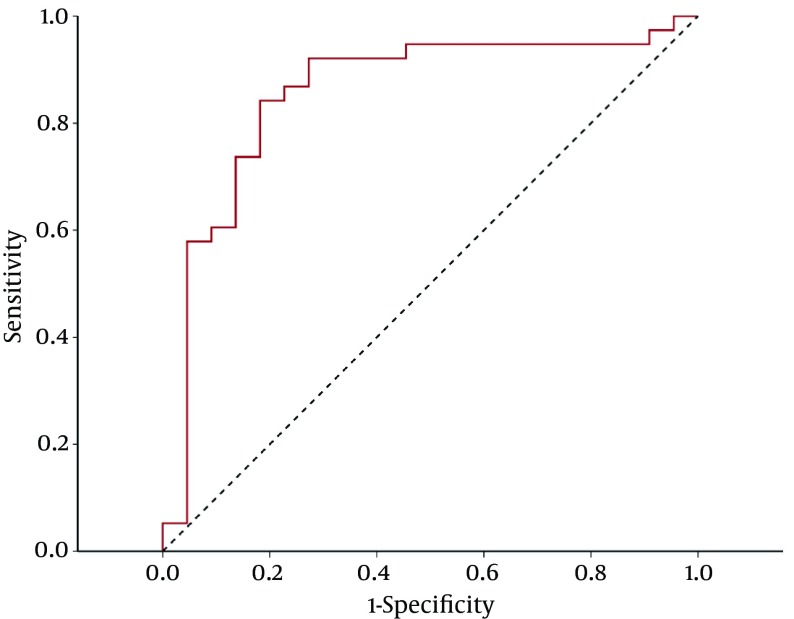
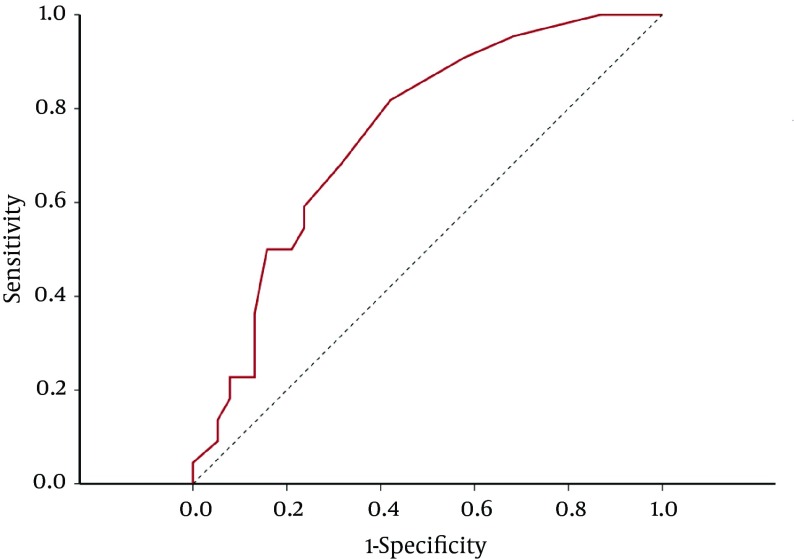
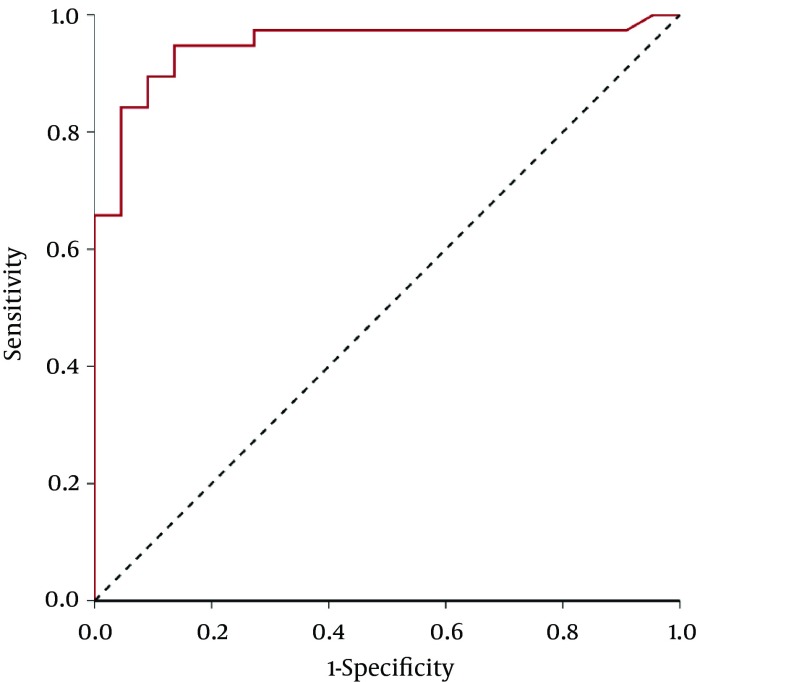
In our study, the TTP showed a significant inverse relationship with the PAP. Based on our results, a TTP of less than 127 ms could be used to predict PH, with a sensitivity and specificity of about 70% (AUC = 0.746 ± 0.064).
Based on the results of this study, we suggest the use of a novel "time from the beginning of isovolumetric contraction to the peak of the S wave" (TTP) parameter in the TDI of the base of the RV free wall to predict PH with acceptable accuracy in comparison with RHC.
超声心动图是肺动脉高压(PH)诊断流程中的关键筛查工具。此外,组织多普勒成像(TDI)是一种用于无创估计肺动脉压(PAP)的有前景的方法。
本研究的目的是验证测量从右心室等容收缩时间(RV IVRT)开始至右心室游离壁基部TDI中S波峰值的时间(达到峰值时间或TTP)作为无创估计肺动脉高压指标的准确性。
在这项诊断性试验研究中,纳入了60例连续接受右心导管检查(RHC)的患者。在心脏导管检查前进行脉冲波TDI,两次测量之间的平均间隔为1小时。在右心室游离壁外侧基部测量TDI变量,如RV IVRT、心肌性能指数(MPI)和新的“达到峰值时间”参数。根据RHC结果将患者分为两个亚组:无PH(平均PAP < 25 mmHg)和PH(平均PAP≥25 mmHg)组。然后,我们计算了TDI参数(包括TTP)对PH诊断的特异性和敏感性。
在我们的研究中,TTP与PAP呈显著负相关。根据我们的结果,TTP小于127 ms可用于预测PH,敏感性和特异性约为70%(AUC = 0.746±0.064)。
基于本研究结果,我们建议在右心室游离壁基部的TDI中使用一种新的“从等容收缩开始至S波峰值的时间”(TTP)参数,与RHC相比,以可接受的准确性预测PH。