Griñan-Ferré Christian, Puigoriol-Illamola Dolors, Palomera-Ávalos Verónica, Pérez-Cáceres David, Companys-Alemany Júlia, Camins Antonio, Ortuño-Sahagún Daniel, Rodrigo M Teresa, Pallàs Mercè
Department of Pharmacology, Toxicology and Therapeutic Chemistry (Pharmacology Section) and Institute of Neuroscience, University of Barcelona Barcelona, Spain.
Animal Experimentation Unit, Faculty of Pharmacy, University of Barcelona Barcelona, Spain.
Front Aging Neurosci. 2016 Oct 18;8:241. doi: 10.3389/fnagi.2016.00241. eCollection 2016.
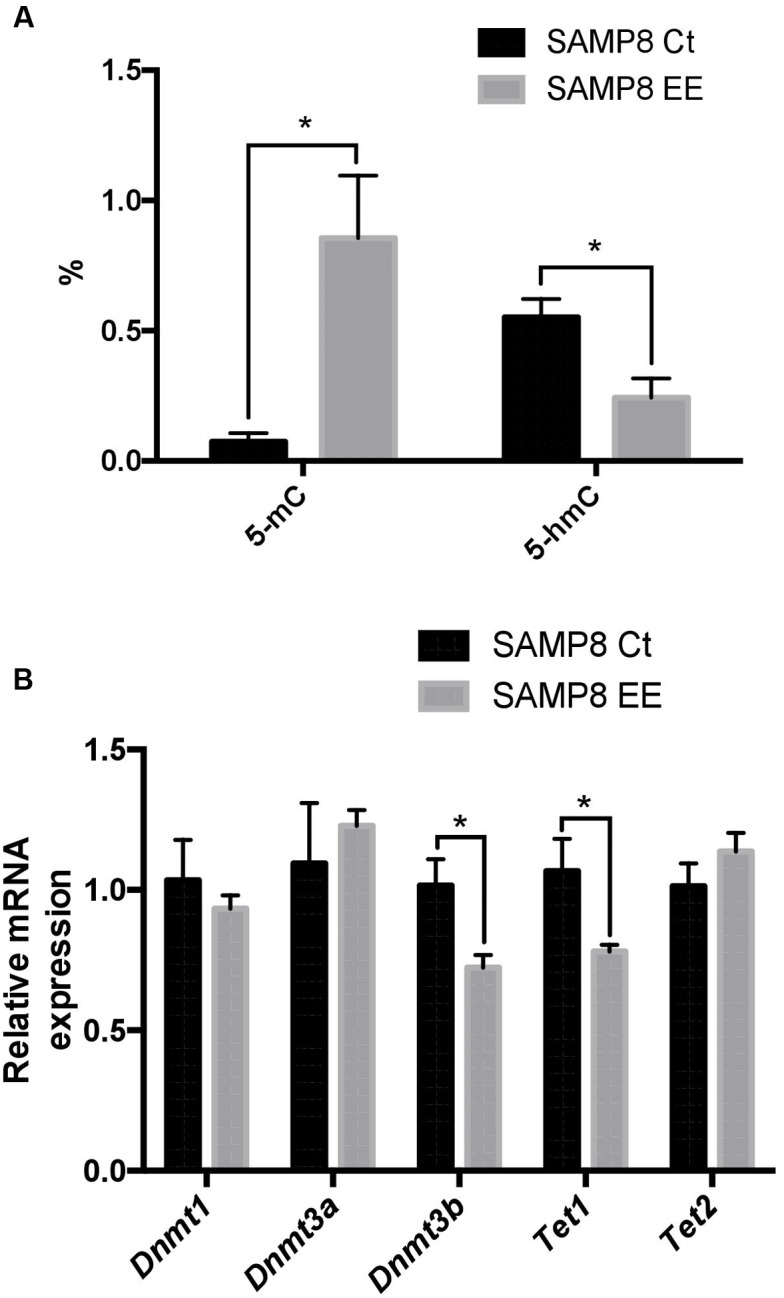
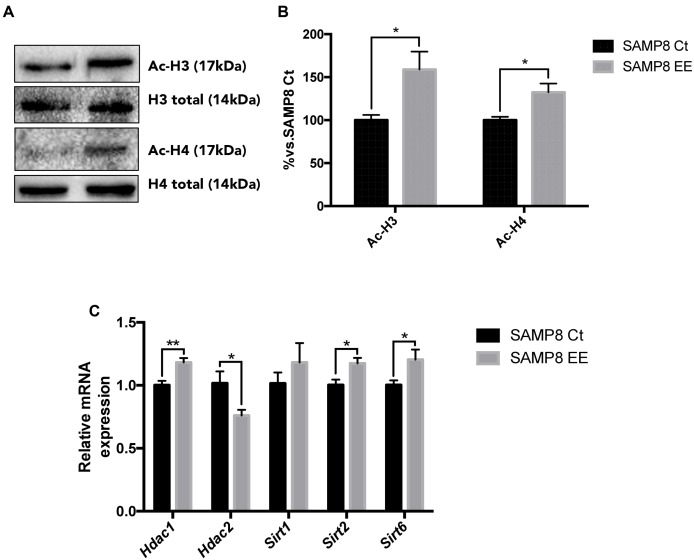
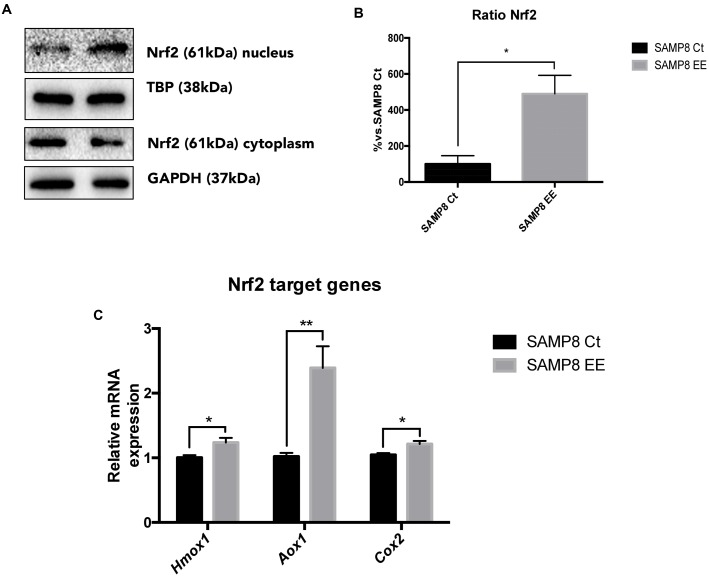
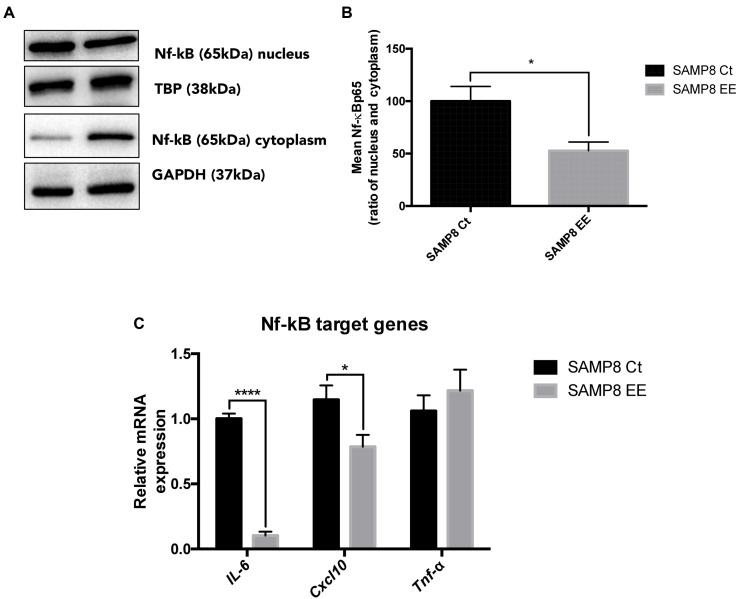
With the increase in life expectancy, aging and age-related cognitive impairments are becoming one of the most important issues for human health. At the same time, it has been shown that epigenetic mechanisms are emerging as universally important factors in life expectancy. The Senescence Accelerated Mouse P8 (SAMP8) strain exhibits age-related deterioration evidenced in learning and memory abilities and is a useful model of neurodegenerative disease. In SAMP8, Environmental Enrichment (EE) increased DNA-methylation levels (5-mC) and reduced hydroxymethylation levels (5-hmC), as well as increased histone H3 and H4 acetylation levels. Likewise, we found changes in the hippocampal gene expression of some chromatin-modifying enzyme genes, such as , and Subsequently, we assessed the effects of EE on neuroprotection-related transcription factors, such as the Nuclear regulatory factor 2 (Nrf2)-Antioxidant Response Element pathway and Nuclear Factor kappa Beta (NF-κB), which play critical roles in inflammation. We found that EE produces an increased expression of antioxidant genes, such as , and , and reduced the expression of inflammatory genes such as and , all of this within the epigenetic context modified by EE. In conclusion, EE prevents epigenetic changes that promote or drive oxidative stress and inflammaging.
随着预期寿命的增加,衰老及与年龄相关的认知障碍正成为人类健康领域最重要的问题之一。与此同时,研究表明表观遗传机制正成为预期寿命中普遍重要的因素。衰老加速小鼠P8(SAMP8)品系表现出与年龄相关的衰退,在学习和记忆能力方面有明显体现,是神经退行性疾病的有用模型。在SAMP8中,环境富集(EE)增加了DNA甲基化水平(5-mC)并降低了羟甲基化水平(5-hmC),同时增加了组蛋白H3和H4的乙酰化水平。同样,我们发现一些染色质修饰酶基因的海马基因表达发生了变化,如 、 和 。随后,我们评估了EE对神经保护相关转录因子的影响,如在炎症中起关键作用的核调节因子2(Nrf2)-抗氧化反应元件途径和核因子κB(NF-κB)。我们发现,在EE改变的表观遗传背景下,EE使抗氧化基因如 、 和 的表达增加,并降低了炎症基因如 和 的表达。总之,EE可防止促进或驱动氧化应激和炎症衰老的表观遗传变化。