Department of Chemistry, Ben-Gurion University of the Negev, Beer-Sheva, 8410501, Israel.
Department of Biological Chemistry and Molecular Pharmacology, Harvard Medical School, 240 Longwood Ave., Boston, Massachusetts 02115, USA.
Sci Rep. 2016 Nov 2;6:36322. doi: 10.1038/srep36322.
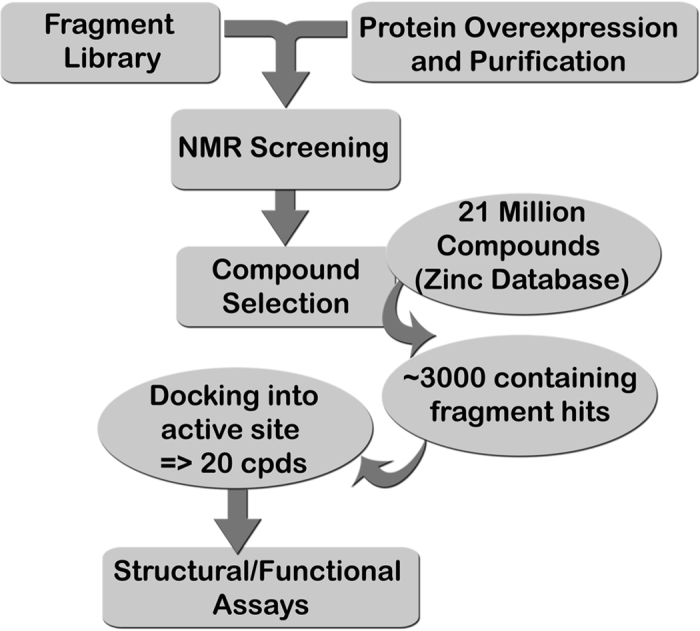
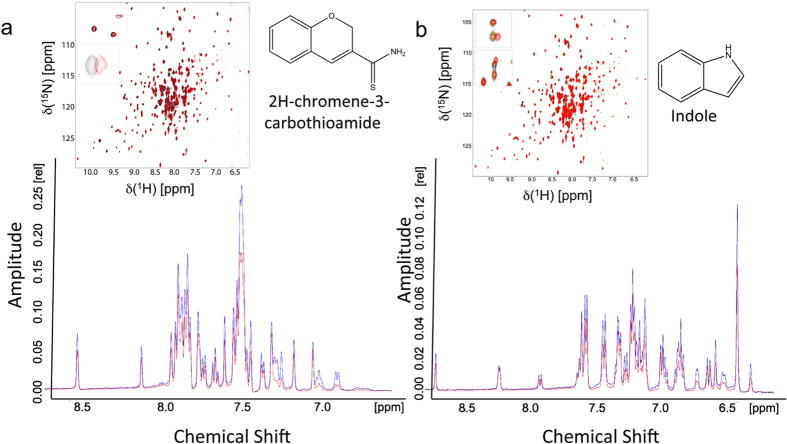
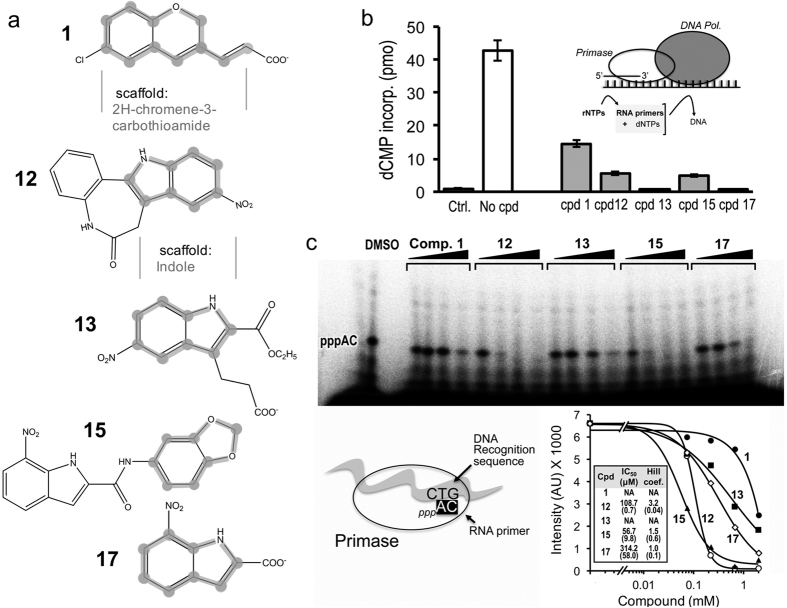
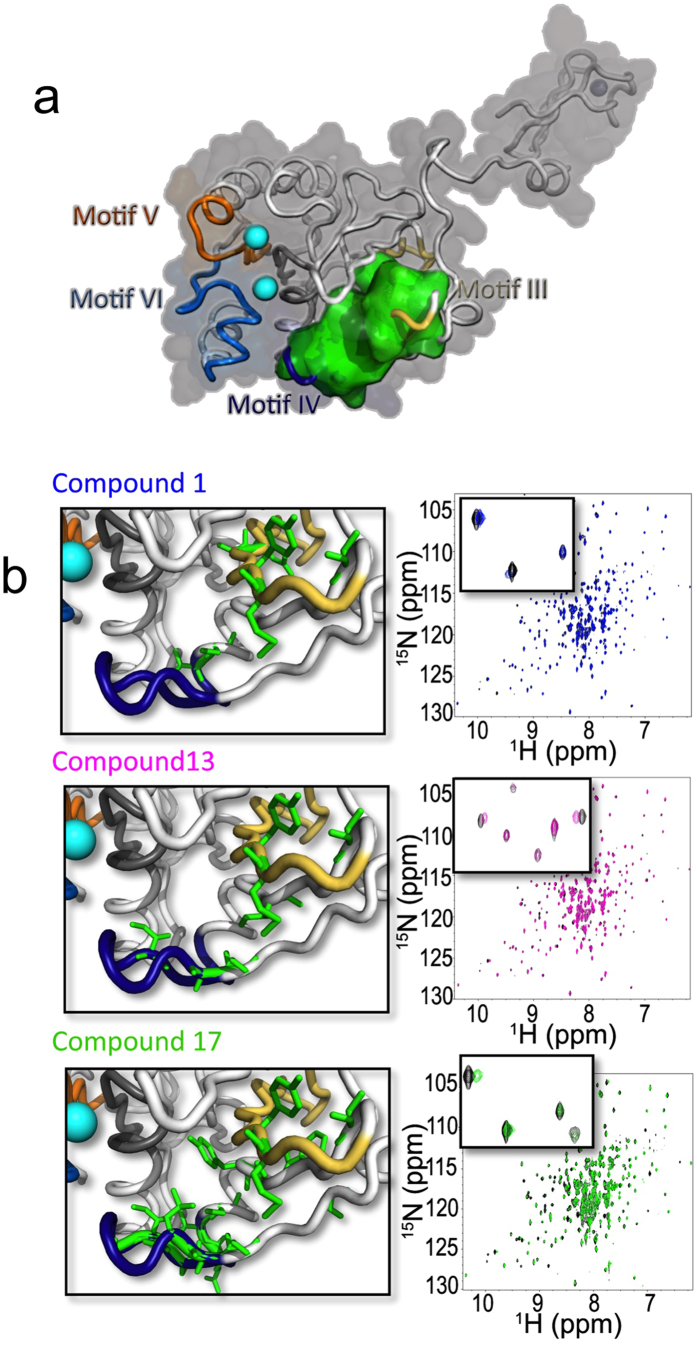
The structural differences between bacterial and human primases render the former an excellent target for drug design. Here we describe a technique for selecting small molecule inhibitors of the activity of T7 DNA primase, an ideal model for bacterial primases due to their common structural and functional features. Using NMR screening, fragment molecules that bind T7 primase were identified and then exploited in virtual filtration to select larger molecules from the ZINC database. The molecules were docked to the primase active site using the available primase crystal structure and ranked based on their predicted binding energies to identify the best candidates for functional and structural investigations. Biochemical assays revealed that some of the molecules inhibit T7 primase-dependent DNA replication. The binding mechanism was delineated via NMR spectroscopy. Our approach, which combines fragment based and virtual screening, is rapid and cost effective and can be applied to other targets.
细菌和人类引物之间的结构差异使得前者成为药物设计的理想目标。在这里,我们描述了一种选择 T7 DNA 引物酶活性的小分子抑制剂的技术,T7 引物酶是细菌引物酶的理想模型,因为它们具有共同的结构和功能特征。使用 NMR 筛选,鉴定了与 T7 引物酶结合的片段分子,然后利用虚拟筛选从 ZINC 数据库中选择更大的分子。利用现有的引物酶晶体结构将分子对接至引物酶活性部位,并根据预测的结合能对其进行排序,以确定用于功能和结构研究的最佳候选物。生化测定表明,一些分子抑制 T7 引物酶依赖性 DNA 复制。通过 NMR 光谱学描绘了结合机制。我们的方法结合了基于片段和虚拟筛选,快速且具有成本效益,可适用于其他靶点。