Conley-LaComb M Katie, Semaan Louie, Singareddy Rajareddy, Li Yanfeng, Heath Elisabeth I, Kim Seongho, Cher Michael L, Chinni Sreenivasa R
Department of Urology, Wayne State University, School of Medicine, 9245 Scott Hall, 540 E. Canfield Avenue, Detroit, MI, 48201, USA.
Department of Oncology, Wayne State University, School of Medicine, 9245 Scott Hall, 540 E. Canfield Avenue, Detroit, MI, 48201, USA.
Mol Cancer. 2016 Nov 3;15(1):68. doi: 10.1186/s12943-016-0552-0.
The CXCL12/CXCR4 axis transactivates HER2 and promotes intraosseous tumor growth. To further explore the transactivation of HER2 by CXCL12, we investigated the role of small GTP protein G in Src and HER2 phosphorylation in lipid raft membrane microdomains and the significance of CXCR4 in prostate cancer bone tumor growth.
We used a variety of methods such as lipid raft isolation, invasion assays, an in vivo model of intratibial tumor growth, bone histomorphometry, and immunohistochemistry to determine the role of CXCR4 signaling in lipid raft membrane microdomains and effects of targeting of CXCR4 for bone tumor growth.
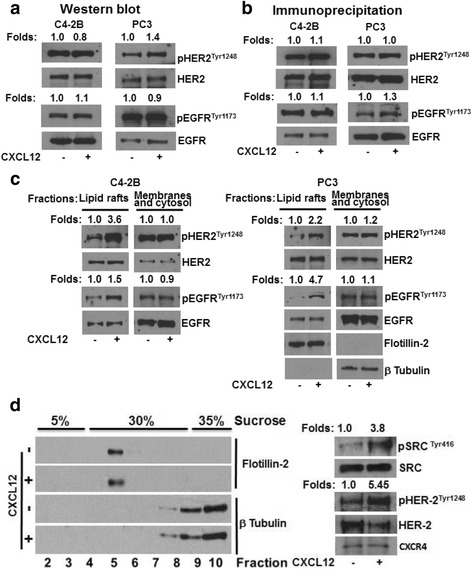
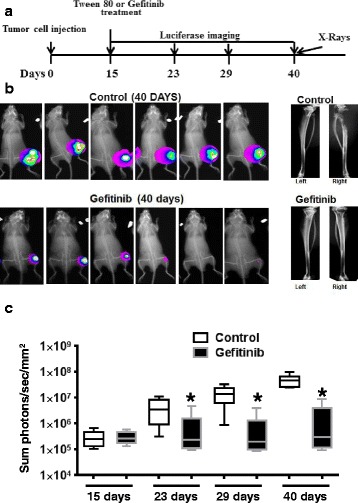
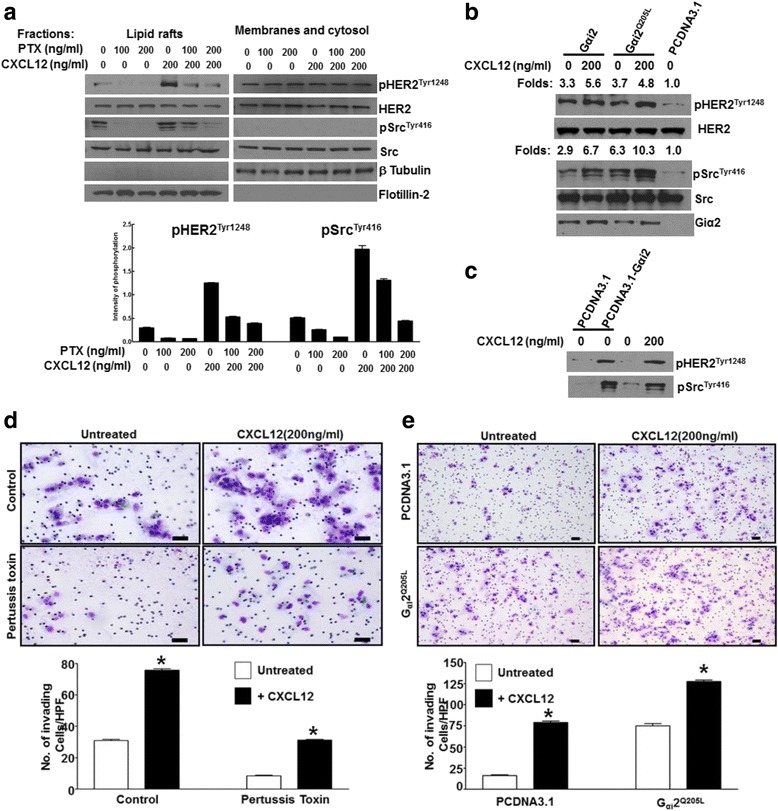
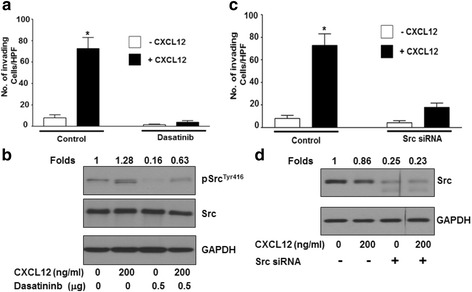
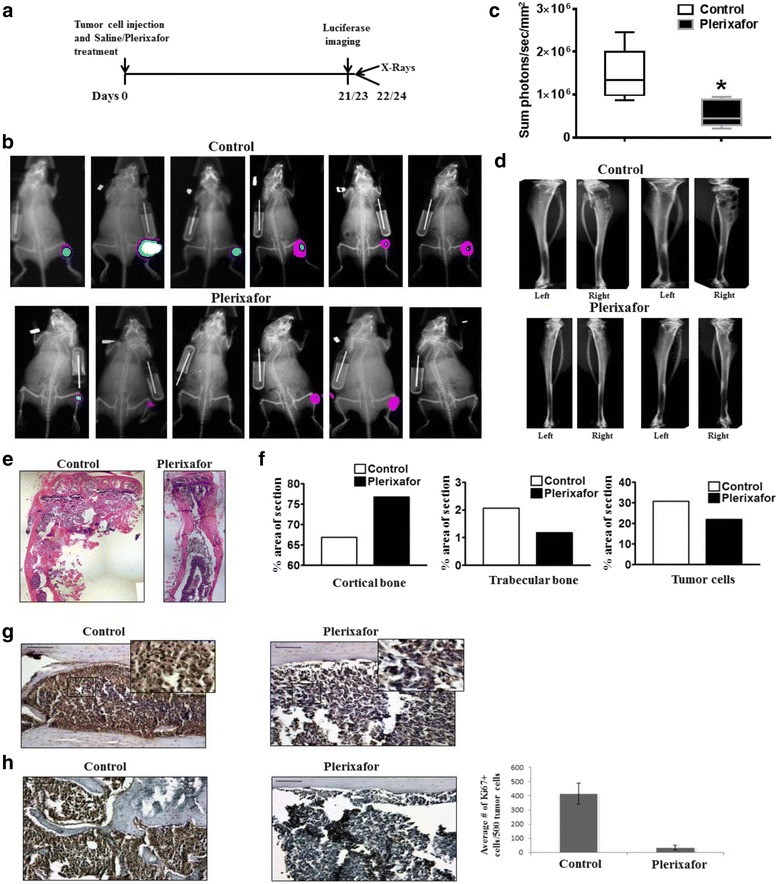
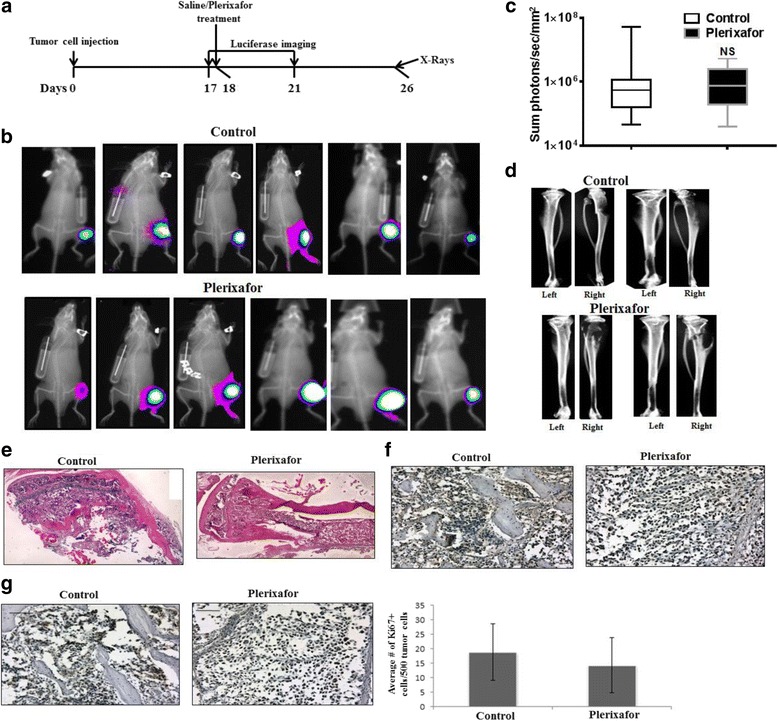
We determined that (a) CXCL12/CXCR4 transactivation of EGFR and HER2 is confined to lipid raft membrane microdomains, (b) CXCL12 activation of HER2 and Src is mediated by small GTP proteins in lipid rafts, (c) inhibition of the CXCL12/CXCR4 axis through plerixafor abrogates the initial establishment of tumor growth without affecting the growth of established bone tumors, and (d) inhibition of EGFR signaling through gefitinib leads to inhibition of established bone tumor growth.
These data suggest that lipid raft membrane microdomains are key sites for CXCL12/CXCR4 transactivation of HER2 via small GTP binding protein G and Src kinase. The initial establishment of prostate cancer is supported by the endosteal niche, and blocking the CXCL12/CXCR4 axis of this niche along with its downstream signaling severely compromises initial establishment of tumors in the bone microenvironment, whereas expanding bone tumors are sensitive only to the members of growth factor receptor inhibition.
CXCL12/CXCR4轴可反式激活HER2并促进骨内肿瘤生长。为进一步探究CXCL12对HER2的反式激活作用,我们研究了小GTP蛋白G在脂筏膜微区中Src和HER2磷酸化过程中的作用,以及CXCR4在前列腺癌骨肿瘤生长中的意义。
我们采用了多种方法,如脂筏分离、侵袭试验、胫骨内肿瘤生长的体内模型、骨组织形态计量学和免疫组织化学,以确定CXCR4信号在脂筏膜微区中的作用以及靶向CXCR4对骨肿瘤生长的影响。
我们确定:(a) CXCL12/CXCR4对EGFR和HER2的反式激活作用局限于脂筏膜微区;(b) CXCL12对HER2和Src的激活作用由脂筏中的小GTP蛋白介导;(c) 通过普乐沙福抑制CXCL12/CXCR4轴可消除肿瘤生长的初始建立,而不影响已形成的骨肿瘤的生长;(d) 通过吉非替尼抑制EGFR信号可导致已形成的骨肿瘤生长受到抑制。
这些数据表明,脂筏膜微区是CXCL12/CXCR4通过小GTP结合蛋白G和Src激酶反式激活HER2的关键位点。前列腺癌的初始建立由骨内膜微环境支持,阻断该微环境的CXCL12/CXCR4轴及其下游信号会严重损害骨微环境中肿瘤的初始建立,而正在生长的骨肿瘤仅对生长因子受体抑制成员敏感。