Valero-Munoz Maria, Li Shanpeng, Wilson Richard M, Boldbaatar Batbold, Iglarz Marc, Sam Flora
From the Whitaker Cardiovascular Institute (M.V.-M., S.L., R.M.W., B.B., F.S.) and Cardiovascular Section and Evans Department of Medicine (F.S.), Boston University School of Medicine, MA; and Actelion Pharmaceuticals Ltd., Allschwil, Switzerland (M.I.).
Circ Heart Fail. 2016 Nov;9(11). doi: 10.1161/CIRCHEARTFAILURE.116.003381.
Despite the increasing prevalence of heart failure with preserved ejection fraction (HFpEF) in humans, there remains no evidence-based therapies for HFpEF. Endothelin-1 (ET-1) antagonists are a possibility because elevated ET-1 levels are associated with adverse cardiovascular effects, such as arterial and pulmonary vasoconstriction, impaired left ventricular (LV) relaxation, and stimulation of LV hypertrophy. LV hypertrophy is a common phenotype in HFpEF, particularly when associated with hypertension.
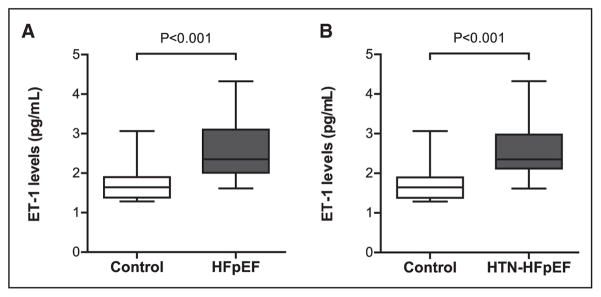
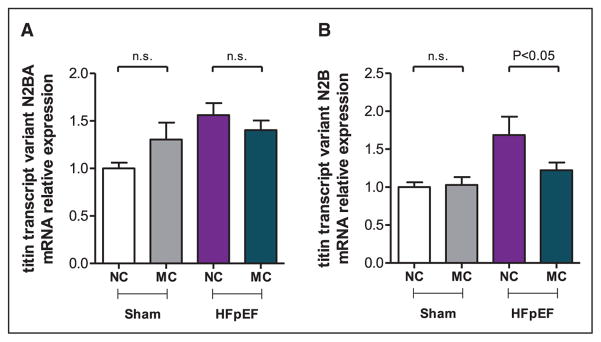
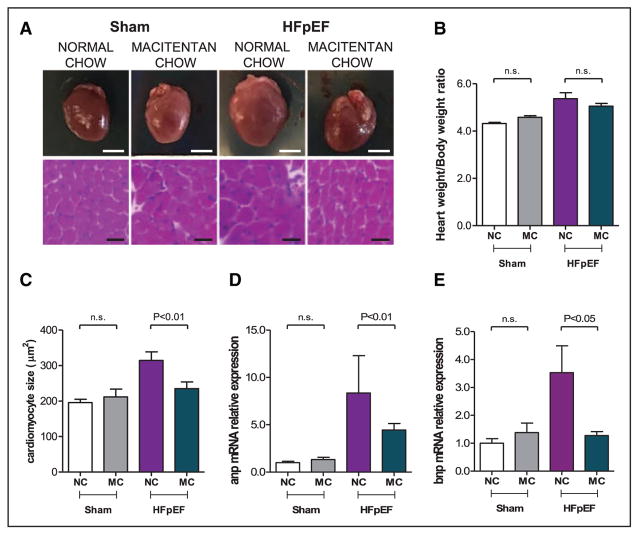
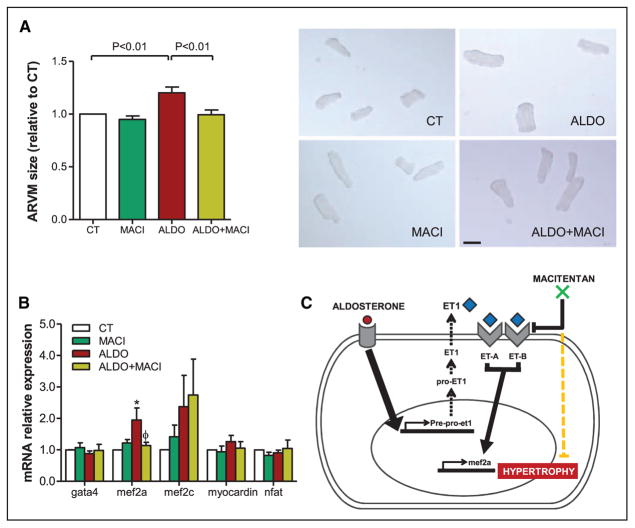
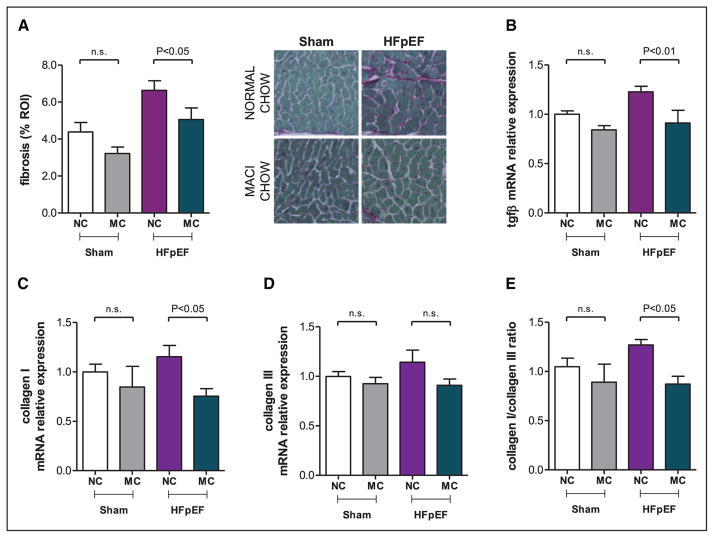
In the present study, we found that ET-1 levels were significantly elevated in patients with chronic stable HFpEF. We then sought to investigate the effects of chronic macitentan, a dual ET-A/ET-B receptor antagonist, on cardiac structure and function in a murine model of HFpEF induced by chronic aldosterone infusion. Macitentan caused LV hypertrophy regression independent of blood pressure changes in HFpEF. Although macitentan did not modulate diastolic dysfunction in HFpEF, it significantly reduced wall thickness and relative wall thickness after 2 weeks of therapy. In vitro studies showed that macitentan decreased the aldosterone-induced cardiomyocyte hypertrophy. These changes were mediated by a reduction in the expression of cardiac myocyte enhancer factor 2a. Moreover, macitentan improved adverse cardiac remodeling, by reducing the stiffer cardiac collagen I and titin n2b expression in the left ventricle of mice with HFpEF.
These findings indicate that dual ET-A/ET-B receptor inhibition improves HFpEF by abrogating adverse cardiac remodeling via antihypertrophic mechanisms and by reducing stiffness. Additional studies are needed to explore the role of dual ET-1 receptor antagonists in patients with HFpEF.
尽管射血分数保留的心力衰竭(HFpEF)在人类中的患病率不断上升,但仍没有基于证据的HFpEF治疗方法。内皮素-1(ET-1)拮抗剂是一种可能的治疗手段,因为ET-1水平升高与不良心血管效应相关,如动脉和肺血管收缩、左心室(LV)舒张功能受损以及刺激LV肥厚。LV肥厚是HFpEF的常见表型,尤其是与高血压相关时。
在本研究中,我们发现慢性稳定HFpEF患者的ET-1水平显著升高。然后,我们试图研究双重ET-A/ET-B受体拮抗剂马西替坦对慢性醛固酮输注诱导的HFpEF小鼠模型心脏结构和功能的影响。马西替坦使HFpEF小鼠的LV肥厚消退,且与血压变化无关。尽管马西替坦并未调节HFpEF的舒张功能障碍,但在治疗2周后,它显著降低了室壁厚度和相对室壁厚度。体外研究表明,马西替坦可减少醛固酮诱导的心肌细胞肥大。这些变化是由心肌细胞增强因子2a表达的减少介导的。此外,马西替坦通过降低HFpEF小鼠左心室中更僵硬的心肌胶原I和肌联蛋白n2b的表达,改善了不良心脏重塑。
这些发现表明,双重ET-A/ET-B受体抑制通过抗肥厚机制消除不良心脏重塑并降低僵硬度,从而改善HFpEF。需要进一步研究来探索双重ET-1受体拮抗剂在HFpEF患者中的作用。