Karlsson Terese, Lundholm Marie, Widmark Anders, Persson Emma
Department of Radiation Sciences, Division of Oncology, Umeå University, Umeå, Sweden.
Department of Medical Biosciences, Division of Pathology, Umeå University, Umeå, Sweden.
PLoS One. 2016 Nov 10;11(11):e0166284. doi: 10.1371/journal.pone.0166284. eCollection 2016.
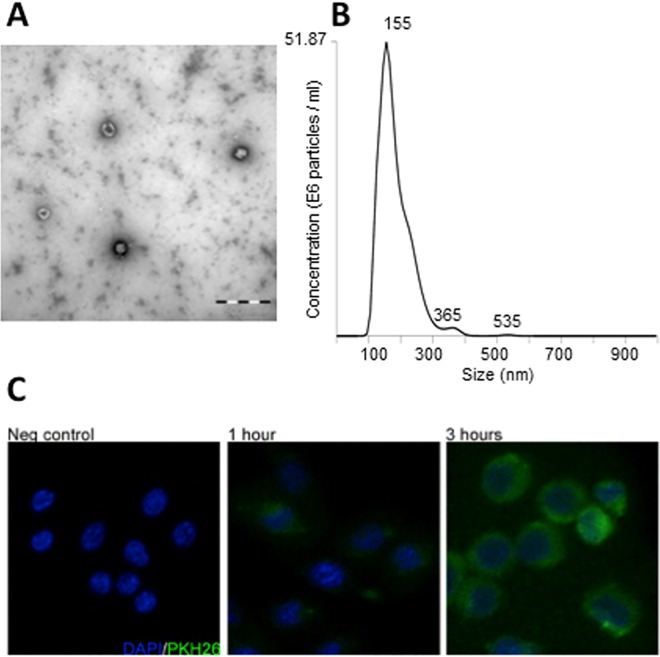
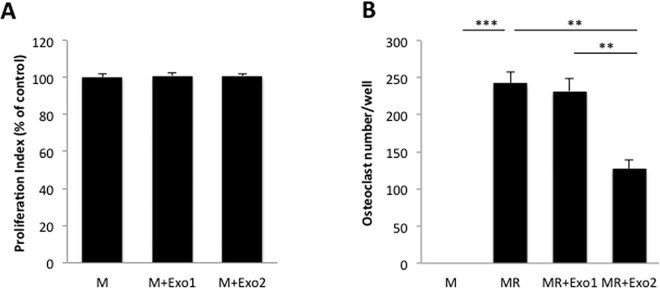
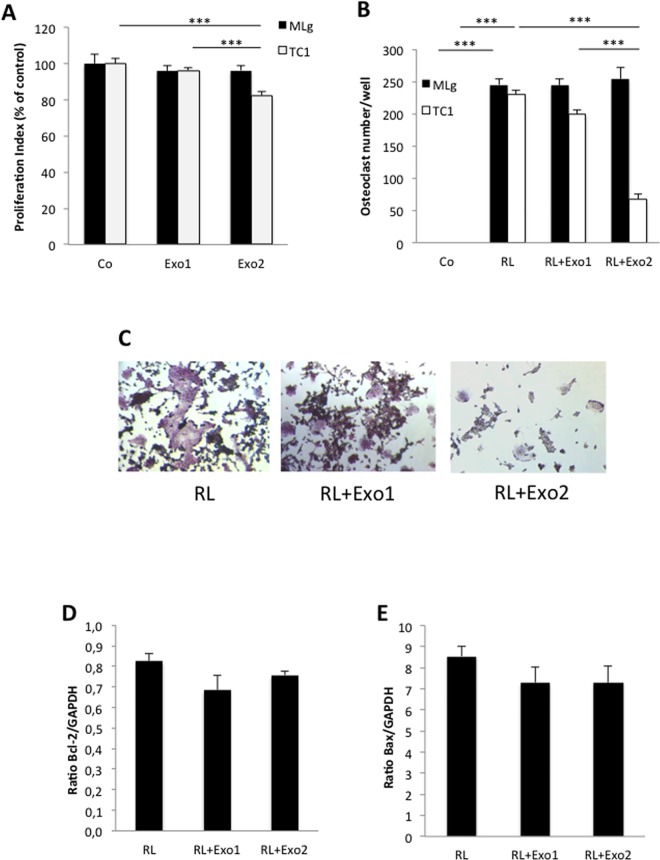
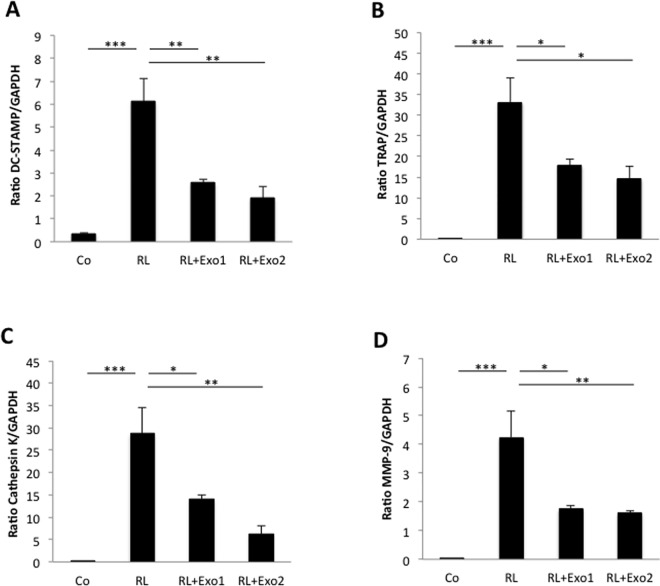
Skeletal metastatic disease is a deleterious consequence of dissemination of tumor cells from numerous primary sites, such as prostate, lung and breast. Skeletal metastases are still incurable, resulting in development of clinical complications and decreased survival for cancer patients with metastatic disease. During the last decade, tumor cell-derived microvesicles have been identified and suggested to be involved in cancer disease progression. Whether cancer exosomes are involved in tumor and bone cell interactions in the metastatic site is still, however, a rather unexplored field. Here we show that exosomes isolated from the murine prostate cancer cell line TRAMP-C1 dramatically decrease fusion and differentiation of monocytic osteoclast precursors to mature, multinucleated osteoclasts. The presence of tumor cell-derived exosomes also clearly decreased the expression of established markers for osteoclast fusion and differentiation, including DC-STAMP, TRAP, cathepsin K, and MMP-9. In contrast, exosomes derived from murine fibroblastic cells did not affect osteoclast formation. Our findings suggest that exosomes released from tumor cells in the tumor-bone interface are involved in pathological regulation of bone cell formation in the metastatic site. This further strengthens the role of tumor cell-derived microvesicles in cancer progression and disease aggressiveness.
骨转移性疾病是肿瘤细胞从众多原发部位(如前列腺、肺和乳腺)播散的有害后果。骨转移仍然无法治愈,会导致临床并发症的发生,并降低转移性疾病癌症患者的生存率。在过去十年中,已鉴定出肿瘤细胞衍生的微泡,并提示其参与癌症疾病进展。然而,癌症外泌体是否参与转移部位的肿瘤与骨细胞相互作用仍是一个尚未充分探索的领域。在此,我们表明,从小鼠前列腺癌细胞系TRAMP-C1中分离出的外泌体显著降低了单核破骨细胞前体向成熟多核破骨细胞的融合和分化。肿瘤细胞衍生的外泌体的存在也明显降低了破骨细胞融合和分化的既定标志物的表达,包括DC-STAMP、TRAP、组织蛋白酶K和MMP-9。相比之下,来自小鼠成纤维细胞的外泌体不影响破骨细胞的形成。我们的研究结果表明,肿瘤-骨界面中肿瘤细胞释放的外泌体参与转移部位骨细胞形成的病理调节。这进一步强化了肿瘤细胞衍生的微泡在癌症进展和疾病侵袭性中的作用。