• 文献检索
  • 文档翻译
  • 深度研究
  • 学术资讯
  • Suppr Zotero 插件Zotero 插件
  • 邀请有礼
  • 套餐&价格
  • 历史记录
应用&插件
Suppr Zotero 插件Zotero 插件浏览器插件Mac 客户端Windows 客户端微信小程序
定价
高级版会员购买积分包购买API积分包
服务
文献检索文档翻译深度研究API 文档MCP 服务
关于我们
关于 Suppr公司介绍联系我们用户协议隐私条款
关注我们

Suppr 超能文献

核心技术专利:CN118964589B侵权必究
粤ICP备2023148730 号-1Suppr @ 2026

文献检索

告别复杂PubMed语法,用中文像聊天一样搜索,搜遍4000万医学文献。AI智能推荐,让科研检索更轻松。

立即免费搜索

文件翻译

保留排版,准确专业,支持PDF/Word/PPT等文件格式,支持 12+语言互译。

免费翻译文档

深度研究

AI帮你快速写综述,25分钟生成高质量综述,智能提取关键信息,辅助科研写作。

立即免费体验

体内小脑核神经元的全细胞特性

Whole-Cell Properties of Cerebellar Nuclei Neurons In Vivo.

作者信息

Canto Cathrin B, Witter Laurens, De Zeeuw Chris I

机构信息

Netherlands Institute for Neuroscience, Royal Dutch Academy of Arts & Sciences, Amsterdam, The Netherlands.

Department of Neuroscience, Erasmus Medical Center, Rotterdam, The Netherlands.

出版信息

PLoS One. 2016 Nov 16;11(11):e0165887. doi: 10.1371/journal.pone.0165887. eCollection 2016.

DOI:10.1371/journal.pone.0165887
PMID:27851801
原文链接:https://pmc.ncbi.nlm.nih.gov/articles/PMC5112928/
Abstract

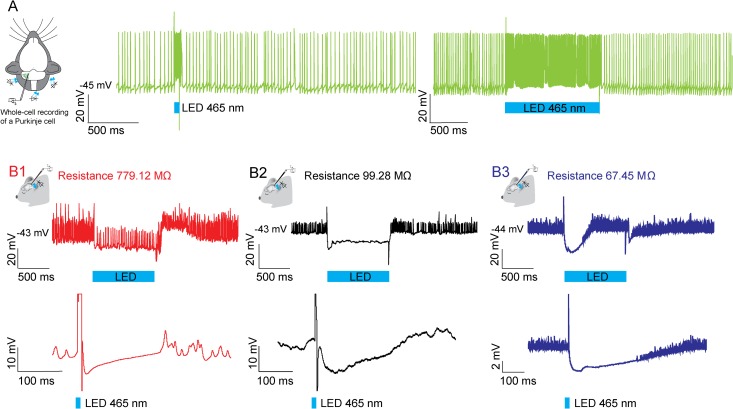
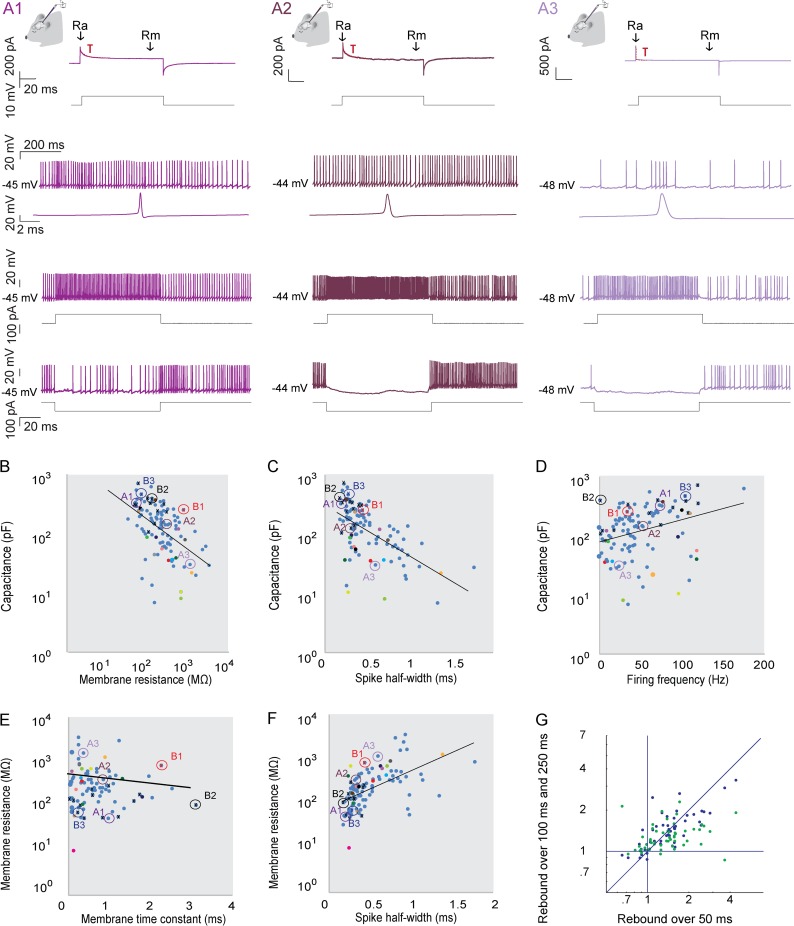
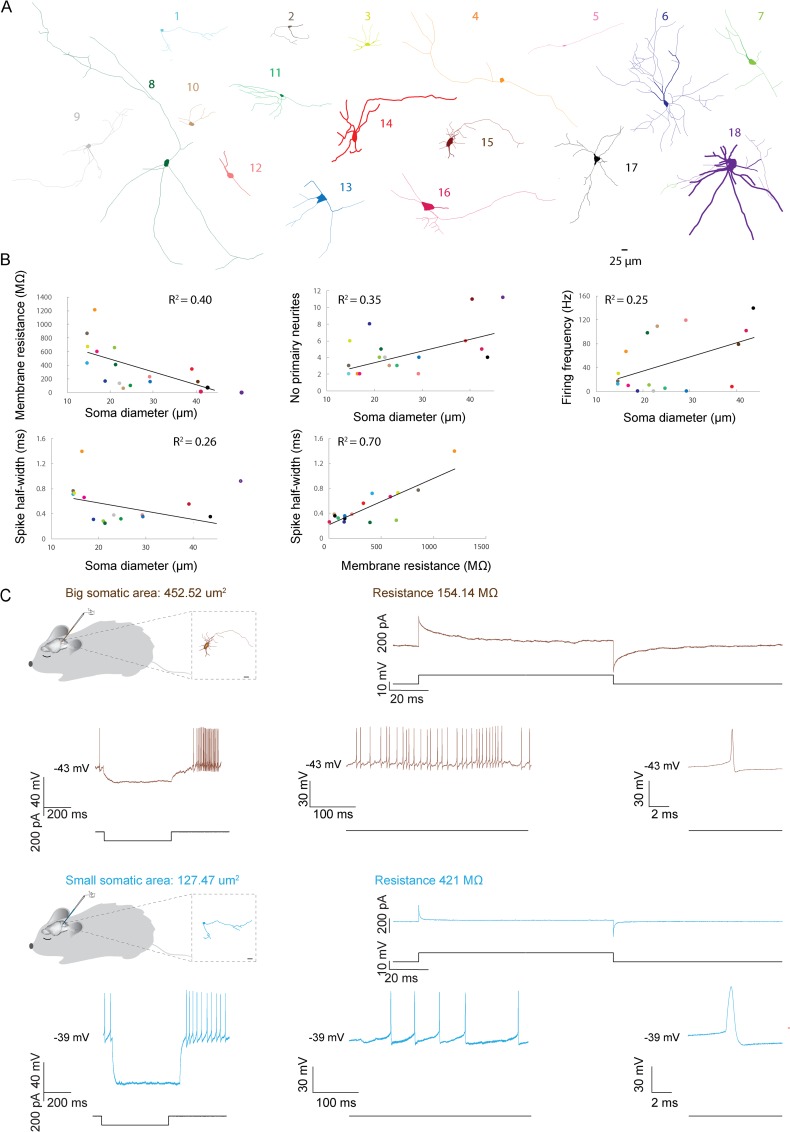
Cerebellar nuclei neurons integrate sensorimotor information and form the final output of the cerebellum, projecting to premotor brainstem targets. This implies that, in contrast to specialized neurons and interneurons in cortical regions, neurons within the nuclei encode and integrate complex information that is most likely reflected in a large variation of intrinsic membrane properties and integrative capacities of individual neurons. Yet, whether this large variation in properties is reflected in a heterogeneous physiological cell population of cerebellar nuclei neurons with well or poorly defined cell types remains to be determined. Indeed, the cell electrophysiological properties of cerebellar nuclei neurons have been identified in vitro in young rodents, but whether these properties are similar to the in vivo adult situation has not been shown. In this comprehensive study we present and compare the in vivo properties of 144 cerebellar nuclei neurons in adult ketamine-xylazine anesthetized mice. We found regularly firing (N = 88) and spontaneously bursting (N = 56) neurons. Membrane-resistance, capacitance, spike half-width and firing frequency all widely varied as a continuum, ranging from 9.63 to 3352.1 MΩ, from 6.7 to 772.57 pF, from 0.178 to 1.98 ms, and from 0 to 176.6 Hz, respectively. At the same time, several of these parameters were correlated with each other. Capacitance decreased with membrane resistance (R2 = 0.12, P<0.001), intensity of rebound spiking increased with membrane resistance (for 100 ms duration R2 = 0.1503, P = 0.0011), membrane resistance decreased with membrane time constant (R2 = 0.045, P = 0.031) and increased with spike half-width (R2 = 0.023, P<0.001), while capacitance increased with firing frequency (R2 = 0.29, P<0.001). However, classes of neuron subtypes could not be identified using merely k-clustering of their intrinsic firing properties and/or integrative properties following activation of their Purkinje cell input. Instead, using whole-cell parameters in combination with morphological criteria revealed by intracellular labelling with Neurobiotin (N = 18) allowed for electrophysiological identification of larger (29.3-50 μm soma diameter) and smaller (< 21.2 μm) cerebellar nuclei neurons with significant differences in membrane properties. Larger cells had a lower membrane resistance and a shorter spike, with a tendency for higher capacitance. Thus, in general cerebellar nuclei neurons appear to offer a rich and wide continuum of physiological properties that stand in contrast to neurons in most cortical regions such as those of the cerebral and cerebellar cortex, in which different classes of neurons operate in a narrower territory of electrophysiological parameter space. The current dataset will help computational modelers of the cerebellar nuclei to update and improve their cerebellar motor learning and performance models by incorporating the large variation of the in vivo properties of cerebellar nuclei neurons. The cellular complexity of cerebellar nuclei neurons may endow the nuclei to perform the intricate computations required for sensorimotor coordination.
https://cdn.ncbi.nlm.nih.gov/pmc/blobs/e4b9/5112928/99fc05cbbd1b/pone.0165887.g003.jpg
https://cdn.ncbi.nlm.nih.gov/pmc/blobs/e4b9/5112928/ffa27f45c8c9/pone.0165887.g001.jpg
https://cdn.ncbi.nlm.nih.gov/pmc/blobs/e4b9/5112928/40fd12b0169c/pone.0165887.g002.jpg
https://cdn.ncbi.nlm.nih.gov/pmc/blobs/e4b9/5112928/99fc05cbbd1b/pone.0165887.g003.jpg
https://cdn.ncbi.nlm.nih.gov/pmc/blobs/e4b9/5112928/ffa27f45c8c9/pone.0165887.g001.jpg
https://cdn.ncbi.nlm.nih.gov/pmc/blobs/e4b9/5112928/40fd12b0169c/pone.0165887.g002.jpg
https://cdn.ncbi.nlm.nih.gov/pmc/blobs/e4b9/5112928/99fc05cbbd1b/pone.0165887.g003.jpg
摘要

小脑核神经元整合感觉运动信息,形成小脑的最终输出,并投射到运动前脑干靶点。这意味着,与皮质区域的特化神经元和中间神经元不同,核内神经元编码和整合复杂信息,这很可能反映在单个神经元内在膜特性和整合能力的巨大差异上。然而,这种特性的巨大差异是否反映在具有明确或不明确细胞类型的小脑核神经元异质生理细胞群中,仍有待确定。事实上,小脑核神经元的细胞电生理特性已在幼年啮齿动物的体外实验中得到鉴定,但这些特性是否与成年动物体内的情况相似尚未得到证实。在这项全面的研究中,我们展示并比较了成年氯胺酮-赛拉嗪麻醉小鼠中144个小脑核神经元的体内特性。我们发现了规则放电(N = 88)和自发放电(N = 56)的神经元。膜电阻、电容、动作电位半宽度和放电频率均呈连续的广泛变化,范围分别为9.63至3352.1 MΩ、6.7至772.57 pF、0.178至1.98 ms和0至176.6 Hz。同时,这些参数中的几个相互关联。电容随膜电阻降低(R2 = 0.12,P<0.001),反弹放电强度随膜电阻增加(持续100 ms时R2 = 0.1503,P = 0.0011),膜电阻随膜时间常数降低(R2 = 0.045,P = 0.031)且随动作电位半宽度增加(R2 = 0.023,P<0.001),而电容随放电频率增加(R2 = 0.29,P<0.001)。然而,仅通过对其固有放电特性和/或浦肯野细胞输入激活后的整合特性进行k聚类,无法识别神经元亚型类别。相反,结合全细胞参数和用神经生物素进行细胞内标记所揭示的形态学标准(N = 18),可以对较大(胞体直径29.3 - 五十微米)和较小(< 21.2微米)的小脑核神经元进行电生理鉴定,它们在膜特性上有显著差异。较大的细胞具有较低的膜电阻和较短的动作电位,电容有升高的趋势。因此,一般来说,小脑核神经元似乎具有丰富而广泛的生理特性连续体,这与大多数皮质区域(如大脑和小脑皮质)的神经元形成对比,在这些皮质区域中,不同类别的神经元在较窄的电生理参数空间范围内运作。当前的数据集将有助于小脑核的计算建模者通过纳入小脑核神经元体内特性的巨大差异来更新和改进他们的小脑运动学习和性能模型。小脑核神经元的细胞复杂性可能使核能够执行感觉运动协调所需的复杂计算。

相似文献

1
Whole-Cell Properties of Cerebellar Nuclei Neurons In Vivo.体内小脑核神经元的全细胞特性
PLoS One. 2016 Nov 16;11(11):e0165887. doi: 10.1371/journal.pone.0165887. eCollection 2016.
2
Differential Coding Strategies in Glutamatergic and GABAergic Neurons in the Medial Cerebellar Nucleus.中脑小脑核内谷氨酸能和 GABA 能神经元的差异编码策略。
J Neurosci. 2020 Jan 2;40(1):159-170. doi: 10.1523/JNEUROSCI.0806-19.2019. Epub 2019 Nov 6.
3
Mechanisms supporting transfer of inhibitory signals into the spike output of spontaneously firing cerebellar nuclear neurons in vitro.支持体外自发放电小脑核神经元的尖峰输出中抑制信号传递的机制。
Cerebellum. 2010 Mar;9(1):67-76. doi: 10.1007/s12311-009-0153-1.
4
Determinants of rebound burst responses in rat cerebellar nuclear neurons to physiological stimuli.大鼠小脑核神经元对生理刺激的反弹爆发反应的决定因素。
J Physiol. 2016 Feb 15;594(4):985-1003. doi: 10.1113/JP271894. Epub 2016 Jan 18.
5
Purkinje neuron synchrony elicits time-locked spiking in the cerebellar nuclei.浦肯野神经元同步会在小脑核中引发时间锁定的尖峰。
Nature. 2011 Dec 25;481(7382):502-5. doi: 10.1038/nature10732.
6
Unusually Slow Spike Frequency Adaptation in Deep Cerebellar Nuclei Neurons Preserves Linear Transformations on the Subsecond Timescale.小脑深部核神经元异常缓慢的尖峰频率适应在亚秒时间尺度上保持线性变换。
J Neurosci. 2022 Oct 5;42(40):7581-7593. doi: 10.1523/JNEUROSCI.1869-21.2022. Epub 2022 Aug 22.
7
Differential olivo-cerebellar cortical control of rebound activity in the cerebellar nuclei.橄榄小脑皮质对小脑核内反弹活动的差异控制。
Proc Natl Acad Sci U S A. 2010 May 4;107(18):8410-5. doi: 10.1073/pnas.0907118107. Epub 2010 Apr 15.
8
Synaptic excitation by climbing fibre collaterals in the cerebellar nuclei of juvenile and adult mice.幼年和成年小鼠小脑核中 climbing fibre 侧支的突触兴奋。
J Physiol. 2017 Nov 1;595(21):6703-6718. doi: 10.1113/JP274598. Epub 2017 Sep 20.
9
Cerebellar Nuclear Neurons Use Time and Rate Coding to Transmit Purkinje Neuron Pauses.小脑核神经元利用时间和频率编码来传递浦肯野神经元的暂停信号。
PLoS Comput Biol. 2015 Dec 2;11(12):e1004641. doi: 10.1371/journal.pcbi.1004641. eCollection 2015 Dec.
10
Facilitation of mossy fibre-driven spiking in the cerebellar nuclei by the synchrony of inhibition.抑制同步促进小脑核中苔藓纤维驱动的动作电位发放
J Physiol. 2017 Aug 1;595(15):5245-5264. doi: 10.1113/JP274321. Epub 2017 Jun 11.

引用本文的文献

1
Purkinje Cell spike patterns do not correlate with nuclei cell spike patterns in mouse models for cerebellar disease.在小鼠小脑疾病模型中,浦肯野细胞的放电模式与核细胞的放电模式不相关。
bioRxiv. 2025 May 21:2025.05.19.654856. doi: 10.1101/2025.05.19.654856.
2
Cerebellar nuclei cells produce distinct pathogenic spike signatures in mouse models of ataxia, dystonia, and tremor.小脑核细胞在共济失调、肌张力障碍和震颤的小鼠模型中产生独特的致病棘波特征。
Elife. 2024 Jul 29;12:RP91483. doi: 10.7554/eLife.91483.
3
Climbing fibers provide essential instructive signals for associative learning.

本文引用的文献

1
Purkinje Cell Collaterals Enable Output Signals from the Cerebellar Cortex to Feed Back to Purkinje Cells and Interneurons.浦肯野细胞侧支使小脑皮质的输出信号能够反馈至浦肯野细胞和中间神经元。
Neuron. 2016 Jul 20;91(2):312-9. doi: 10.1016/j.neuron.2016.05.037. Epub 2016 Jun 23.
2
Excitatory Cerebellar Nucleocortical Circuit Provides Internal Amplification during Associative Conditioning.兴奋性小脑核皮质回路在联合条件反射过程中提供内部放大作用。
Neuron. 2016 Feb 3;89(3):645-57. doi: 10.1016/j.neuron.2016.01.008.
3
Consensus Paper: Cerebellar Development.
climbing fibers 为联想学习提供了必不可少的指导信号。
Nat Neurosci. 2024 May;27(5):940-951. doi: 10.1038/s41593-024-01594-7. Epub 2024 Apr 2.
4
Synaptic mechanisms for associative learning in the cerebellar nuclei.小脑核中联想学习的突触机制。
Nat Commun. 2023 Nov 20;14(1):7459. doi: 10.1038/s41467-023-43227-w.
5
Cerebellum Lecture: the Cerebellar Nuclei-Core of the Cerebellum.小脑讲座:小脑核-小脑的核心。
Cerebellum. 2024 Apr;23(2):620-677. doi: 10.1007/s12311-022-01506-0. Epub 2023 Feb 13.
6
Influence of data sampling methods on the representation of neural spiking activity .数据采样方法对神经放电活动表征的影响
iScience. 2022 Oct 22;25(11):105429. doi: 10.1016/j.isci.2022.105429. eCollection 2022 Nov 18.
7
Cerebellar stimulation prevents Levodopa-induced dyskinesia in mice and normalizes activity in a motor network.小脑刺激可预防小鼠左旋多巴诱导的运动障碍,并使运动网络中的活动正常化。
Nat Commun. 2022 Jun 9;13(1):3211. doi: 10.1038/s41467-022-30844-0.
8
Discovering Microcircuit Secrets With Multi-Spot Imaging and Electrophysiological Recordings: The Example of Cerebellar Network Dynamics.利用多点成像和电生理记录揭示微电路奥秘:以小脑网络动力学为例。
Front Cell Neurosci. 2022 Mar 18;16:805670. doi: 10.3389/fncel.2022.805670. eCollection 2022.
9
Cerebellar Coordination of Neuronal Communication in Cerebral Cortex.小脑对大脑皮质神经元通讯的协调作用
Front Syst Neurosci. 2022 Jan 11;15:781527. doi: 10.3389/fnsys.2021.781527. eCollection 2021.
10
Recent Advances in the Understanding of Specific Efferent Pathways Emerging From the Cerebellum.小脑传出特定通路认识的最新进展
Front Neuroanat. 2021 Dec 16;15:759948. doi: 10.3389/fnana.2021.759948. eCollection 2021.
共识文件:小脑发育
Cerebellum. 2016 Dec;15(6):789-828. doi: 10.1007/s12311-015-0724-2.
4
Motor Learning and the Cerebellum.运动学习与小脑
Cold Spring Harb Perspect Biol. 2015 Sep 1;7(9):a021683. doi: 10.1101/cshperspect.a021683.
5
Distributed Circuit Plasticity: New Clues for the Cerebellar Mechanisms of Learning.分布式电路可塑性:学习的小脑机制的新线索
Cerebellum. 2016 Apr;15(2):139-51. doi: 10.1007/s12311-015-0711-7.
6
Twitch-related and rhythmic activation of the developing cerebellar cortex.发育中小脑皮质的抽搐相关及节律性激活。
J Neurophysiol. 2015 Sep;114(3):1746-56. doi: 10.1152/jn.00284.2015. Epub 2015 Jul 8.
7
Integrated plasticity at inhibitory and excitatory synapses in the cerebellar circuit.小脑回路中抑制性和兴奋性突触的整合可塑性。
Front Cell Neurosci. 2015 May 5;9:169. doi: 10.3389/fncel.2015.00169. eCollection 2015.
8
A novel inhibitory nucleo-cortical circuit controls cerebellar Golgi cell activity.一种新型抑制性核-皮质回路控制小脑高尔基细胞活动。
Elife. 2015 May 12;4:e06262. doi: 10.7554/eLife.06262.
9
Cerebellar Premotor Output Neurons Collateralize to Innervate the Cerebellar Cortex.小脑运动前输出神经元发出侧支支配小脑皮质。
J Comp Neurol. 2015 Oct 15;523(15):2254-71. doi: 10.1002/cne.23787. Epub 2015 May 12.
10
In vivo differences in inputs and spiking between neurons in lobules VI/VII of neocerebellum and lobule X of archaeocerebellum.新小脑小叶VI/VII和古小脑小叶X中神经元之间输入和放电的体内差异。
Cerebellum. 2015 Oct;14(5):506-15. doi: 10.1007/s12311-015-0654-z.