Bélteky Johan, Agnvall Beatrix, Johnsson Martin, Wright Dominic, Jensen Per
AVIAN Behavioural Genomics and Physiology group, IFM Biology , Linköping University , 58183 Linköping , Sweden.
R Soc Open Sci. 2016 Aug 3;3(8):160033. doi: 10.1098/rsos.160033. eCollection 2016 Aug.
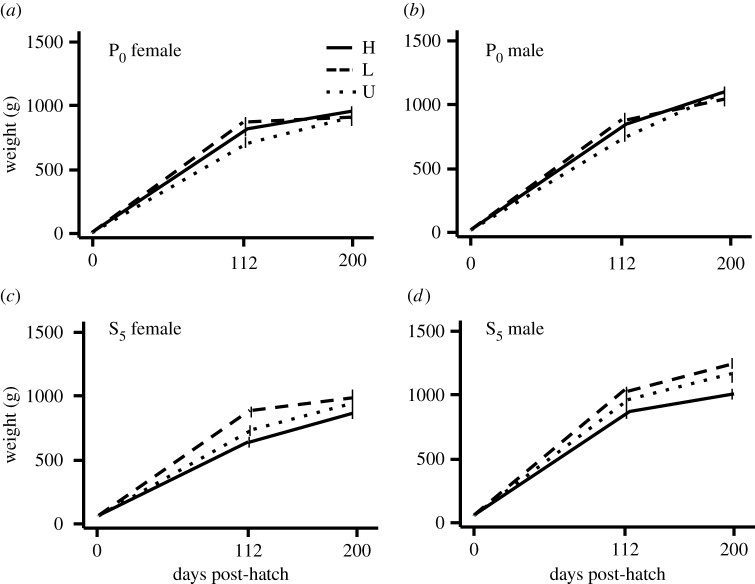
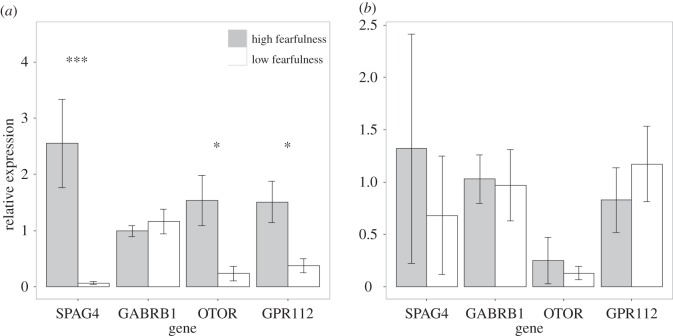
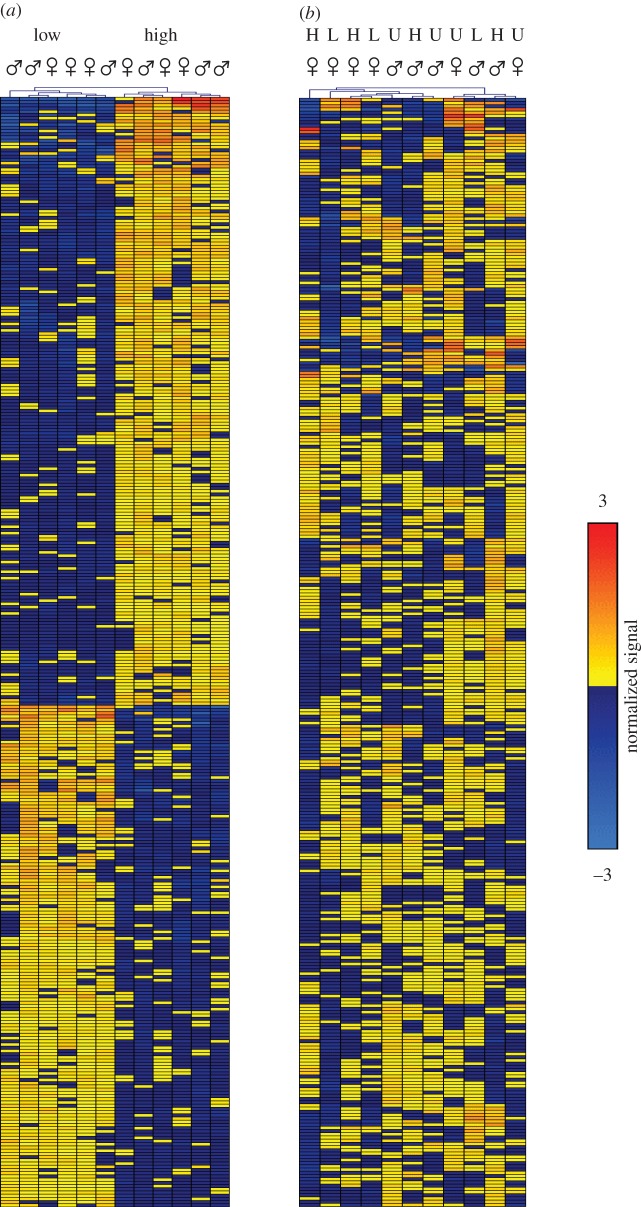
The domestication of animals has generated a set of phenotypic modifications, affecting behaviour, appearance, physiology and reproduction, which are consistent across a range of species. We hypothesized that some of these phenotypes could have evolved because of genetic correlation to tameness, an essential trait for successful domestication. Starting from an outbred population of red junglefowl, ancestor of all domestic chickens, we selected birds for either high or low fear of humans for five generations. Birds from the fifth selected generation (S) showed a divergent pattern of growth and reproduction, where low fear chickens grew larger and produced larger offspring. To examine underlying genetic mechanisms, we used microarrays to study gene expression in thalamus/hypothalamus, a brain region involved in fear and stress, in both the parental generation and the S. While parents of the selection lines did not show any differentially expressed genes, there were a total of 33 genes with adjusted -values below 0.1 in S. These were mainly related to sperm-function, immunological functions, with only a few known to be relevant to behaviour. Hence, five generations of divergent selection for fear of humans produced changes in hypothalamic gene expression profiles related to pathways associated with male reproduction and to immunology. This may be linked to the effects seen on growth and size of offspring. These results support the hypothesis that domesticated phenotypes may evolve because of correlated effects related to reduced fear of humans.
动物的驯化产生了一系列表型变化,影响行为、外观、生理和繁殖,这些变化在一系列物种中都是一致的。我们假设,其中一些表型可能是由于与温顺性存在遗传相关性而进化而来的,温顺性是成功驯化的一个关键特征。从所有家鸡的祖先红原鸡的一个远交群体开始,我们对鸟类进行了五代的选择,选择对人类恐惧程度高或低的个体。来自第五代选择群体(S)的鸟类表现出不同的生长和繁殖模式,其中对人类恐惧程度低的鸡长得更大,后代也更大。为了研究潜在的遗传机制,我们使用微阵列研究亲代和S代中丘脑/下丘脑(一个参与恐惧和应激的脑区)的基因表达。虽然选择品系的亲代没有显示出任何差异表达基因,但在S代中有总共33个校正值低于0.1的基因。这些基因主要与精子功能、免疫功能相关,只有少数已知与行为有关。因此,对人类恐惧的五代差异选择导致了下丘脑基因表达谱的变化,这些变化与雄性繁殖和免疫相关的途径有关。这可能与对后代生长和大小的影响有关。这些结果支持了这样一种假设,即驯化表型可能由于与减少对人类的恐惧相关的关联效应而进化。