van Beek Jasper J P, Gorris Mark A J, Sköld Annette E, Hatipoglu Ibrahim, Van Acker Heleen H, Smits Evelien L, de Vries I Jolanda M, Bakdash Ghaith
Department of Tumor Immunology, Radboud University Medical Center, Radboud Institute for Molecular Life Sciences , Nijmegen, the Netherlands.
Department of Tumor Immunology, Radboud University Medical Center, Radboud Institute for Molecular Life Sciences, Nijmegen, the Netherlands; Department of Oncology-Pathology, Karolinska University Hospital Solna, Karolinska Institutet, Stockholm, Sweden.
Oncoimmunology. 2016 Sep 2;5(10):e1227902. doi: 10.1080/2162402X.2016.1227902. eCollection 2016.
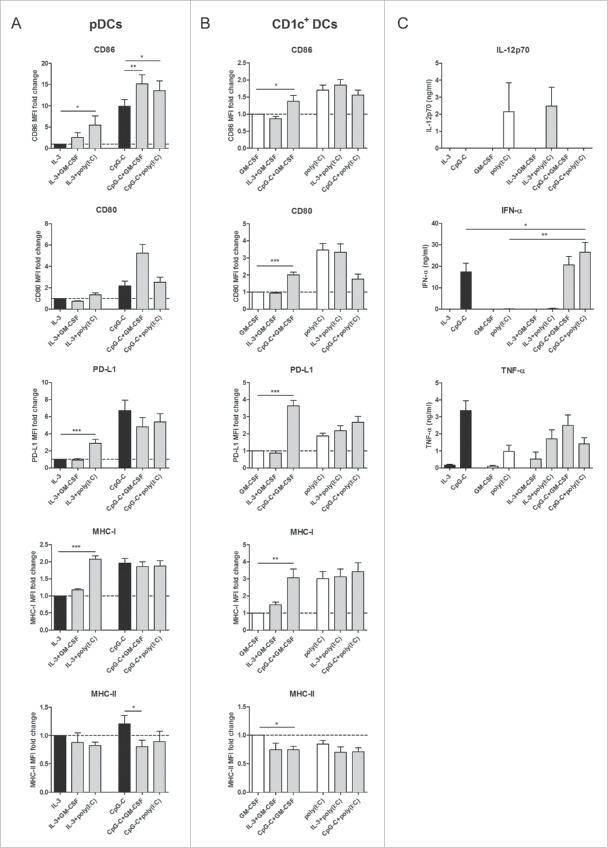
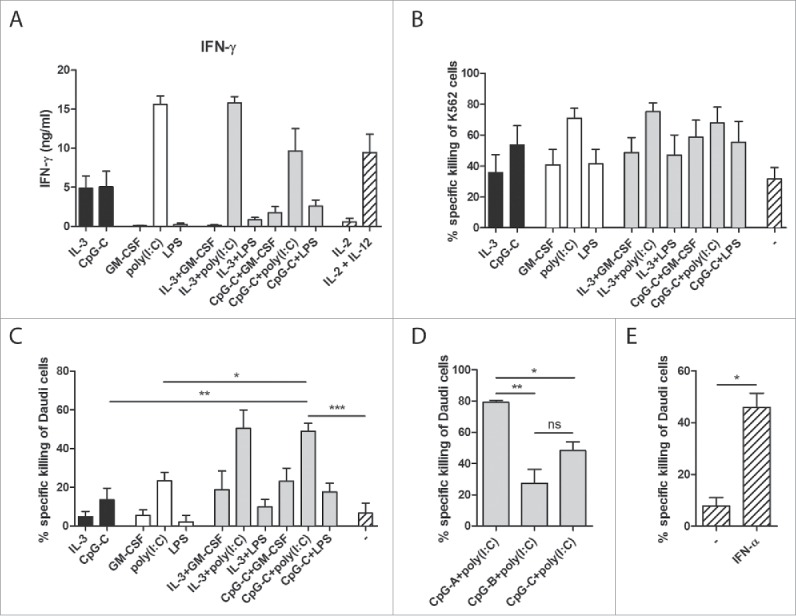
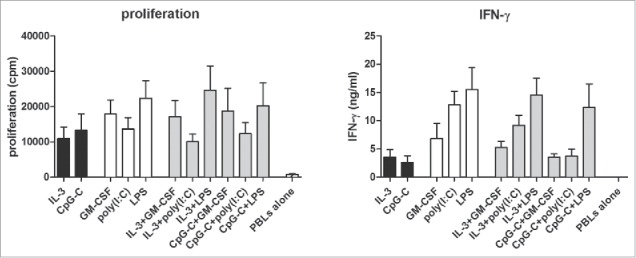
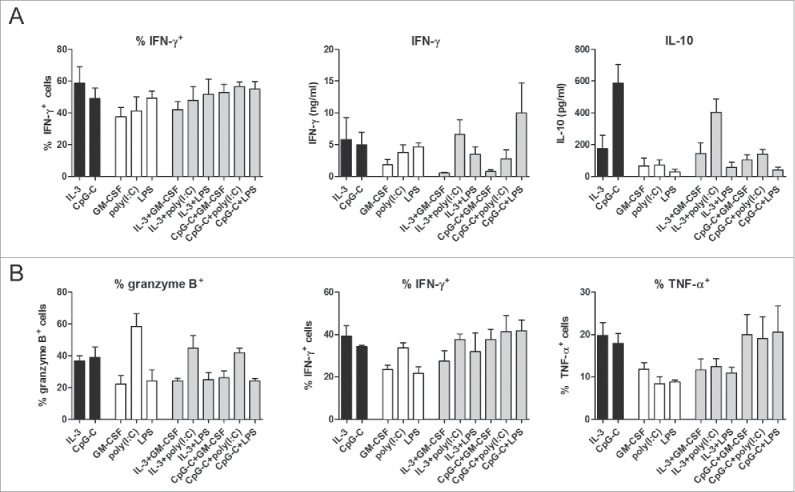
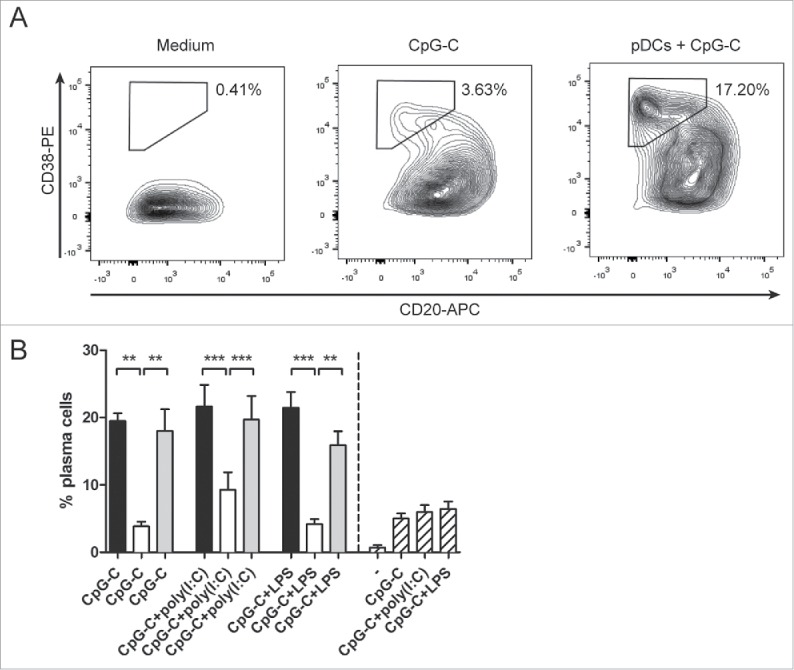
Human blood dendritic cells (DCs) hold great potential for use in anticancer immunotherapies. CD1c myeloid DCs and plasmacytoid DCs (pDCs) have been successfully utilized in clinical vaccination trials against melanoma. We hypothesize that combining both DC subsets in a single vaccine can further improve vaccine efficacy. Here, we have determined the potential synergy between the two subsets on the level of maturation, cytokine expression, and effector cell induction. Toll-like receptor (TLR) stimulation of CD1c DCs induced cross-activation of immature pDCs and vice versa. When both subsets were stimulated together using TLR agonists, CD86 expression on pDCs was increased and higher levels of interferon (IFN)-α were produced by DC co-cultures. Although the two subsets did not display any synergistic effect on naive CD4 and CD8 T cell polarization, CD1c DCs and pDCs were able to complement each other's induction of other immune effector cells. The mere presence of pDCs in DC co-cultures promoted plasma cell differentiation from activated autologous B cells. Similarly, CD1c DCs, alone or in co-cultures, induced high levels of IFN-γ from allogeneic peripheral blood lymphocytes or activated autologous natural killer (NK) cells. Both CD1c DCs and pDCs could enhance NK cell cytotoxicity, and interestingly DC co-cultures further enhanced NK cell-mediated killing of an NK-resistant tumor cell line. These results indicate that co-application of human blood DC subsets could render DC-based anticancer vaccines more efficacious.
人血树突状细胞(DCs)在抗癌免疫治疗中具有巨大的应用潜力。CD1c髓样DCs和浆细胞样DCs(pDCs)已成功应用于针对黑色素瘤的临床疫苗试验。我们假设在单一疫苗中联合这两种DC亚群可进一步提高疫苗疗效。在此,我们确定了这两个亚群在成熟水平、细胞因子表达和效应细胞诱导方面的潜在协同作用。用 Toll 样受体(TLR)刺激CD1c DCs可诱导未成熟pDCs的交叉激活,反之亦然。当使用TLR激动剂同时刺激这两个亚群时,pDCs上CD86的表达增加,并且DC共培养物产生更高水平的干扰素(IFN)-α。尽管这两个亚群对初始CD4和CD8 T细胞极化未显示出任何协同作用,但CD1c DCs和pDCs能够相互补充对其他免疫效应细胞的诱导作用。DC共培养物中pDCs的存在促进了活化的自体B细胞向浆细胞的分化。同样,CD1c DCs单独或在共培养物中,可诱导来自异体外周血淋巴细胞或活化的自体自然杀伤(NK)细胞产生高水平的IFN-γ。CD1c DCs和pDCs均可增强NK细胞的细胞毒性,有趣的是,DC共培养物进一步增强了NK细胞介导的对NK抗性肿瘤细胞系的杀伤作用。这些结果表明,联合应用人血DC亚群可使基于DC的抗癌疫苗更有效。