Boucher-Lalonde Véronique, Currie David J
Department of Biology, University of Ottawa, Ottawa, Ontario, Canada.
PLoS One. 2016 Nov 17;11(11):e0166243. doi: 10.1371/journal.pone.0166243. eCollection 2016.
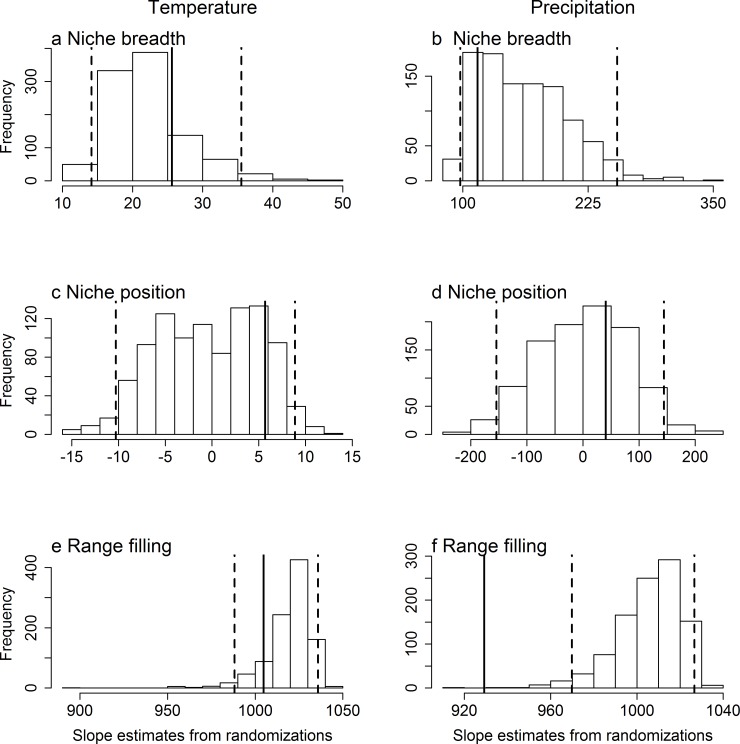
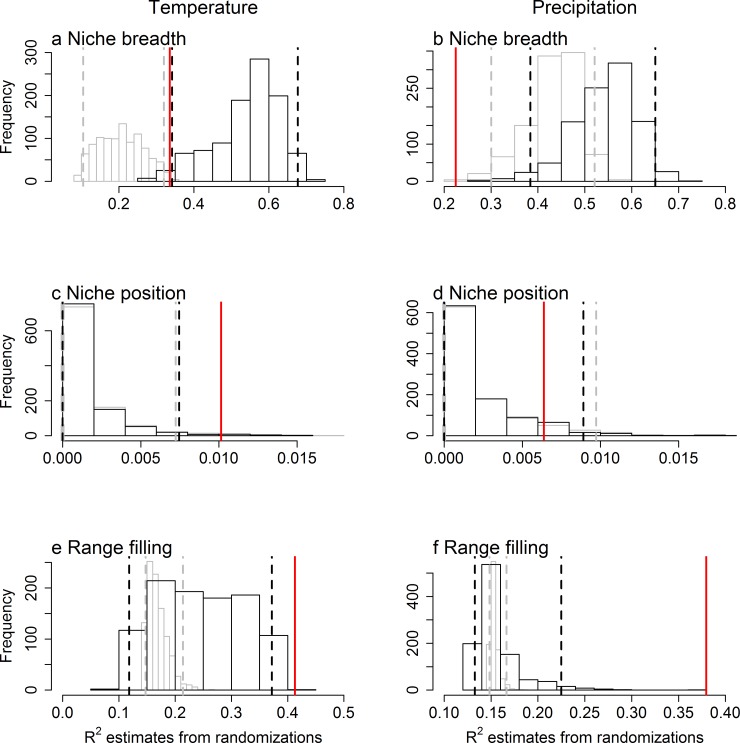
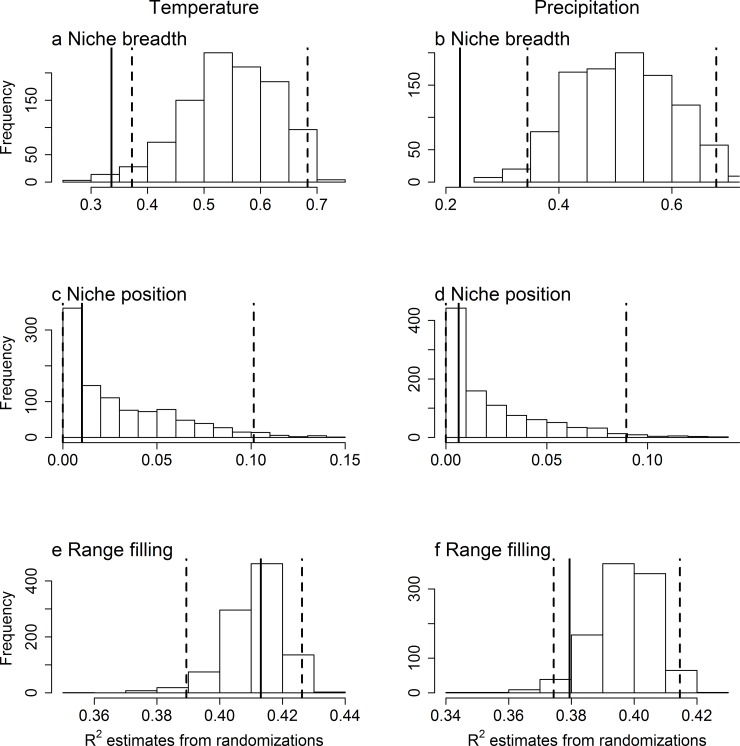
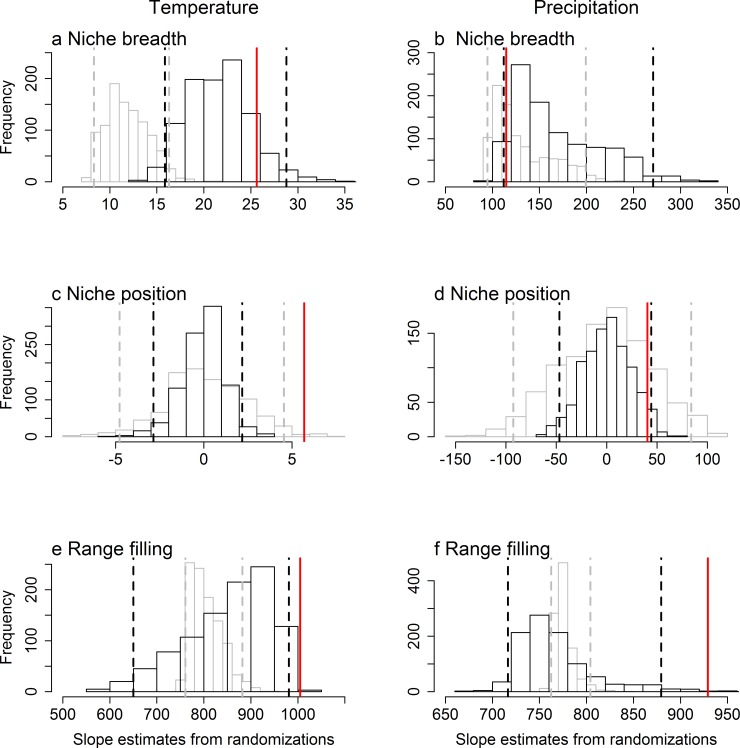
Species' geographic ranges could primarily be physiological tolerances drawn in space. Alternatively, geographic ranges could be only broadly constrained by physiological climatic tolerances: there could generally be much more proximate constraints on species' ranges (dispersal limitation, biotic interactions, etc.) such that species often occupy a small and unpredictable subset of tolerable climates. In the literature, species' climatic tolerances are typically estimated from the set of conditions observed within their geographic range. Using this method, studies have concluded that broader climatic niches permit larger ranges. Similarly, other studies have investigated the biological causes of incomplete range filling. But, when climatic constraints are measured directly from species' ranges, are correlations between species' range size and climate necessarily consistent with a causal link? We evaluated the extent to which variation in range size among 3277 bird and 1659 mammal species occurring in the Americas is statistically related to characteristics of species' realized climatic niches. We then compared how these relationships differed from the ones expected in the absence of a causal link. We used a null model that randomizes the predictor variables (climate), while retaining their broad spatial autocorrelation structure, thereby removing any causal relationship between range size and climate. We found that, although range size is strongly positively related to climatic niche breadth, range filling and, to a lesser extent, niche position in nature, the observed relationships are not always stronger than expected from spatial autocorrelation alone. Thus, we conclude that equally strong relationships between range size and climate would result from any processes causing ranges to be highly spatially autocorrelated.
物种的地理分布范围可能主要是在空间上划定的生理耐受性范围。或者,地理分布范围可能仅在大致上受到生理气候耐受性的限制:通常可能存在对物种分布范围更为直接的限制因素(扩散限制、生物相互作用等),以至于物种常常占据可耐受气候中一个小的且不可预测的子集。在文献中,物种的气候耐受性通常是根据在其地理分布范围内观察到的一组条件来估计的。使用这种方法,研究得出结论,更广泛的气候生态位允许更大的分布范围。同样,其他研究调查了分布范围未完全填满的生物学原因。但是,当直接从物种分布范围测量气候限制时,物种分布范围大小与气候之间的相关性必然与因果联系一致吗?我们评估了在美洲出现的3277种鸟类和1659种哺乳动物物种中,分布范围大小的变化在多大程度上与物种实际气候生态位的特征存在统计关联。然后,我们比较了这些关系与在不存在因果联系时预期的关系有何不同。我们使用了一个零模型,该模型对预测变量(气候)进行随机化处理,同时保留其广泛的空间自相关结构,从而消除分布范围大小与气候之间的任何因果关系。我们发现,尽管分布范围大小与气候生态位宽度、分布范围填充以及在较小程度上与自然生态位位置呈强烈正相关,但观察到的关系并不总是比仅由空间自相关预期的更强。因此,我们得出结论,任何导致分布范围高度空间自相关的过程都会使分布范围大小与气候之间产生同样强的关系。