Tse Amanda, Verkhivker Gennady M
Department of Computational and Data Sciences, Schmid College of Science and Technology, Chapman University, Orange, California, United States of America.
Chapman University School of Pharmacy, Irvine, California, United States of America.
PLoS One. 2016 Nov 18;11(11):e0166583. doi: 10.1371/journal.pone.0166583. eCollection 2016.
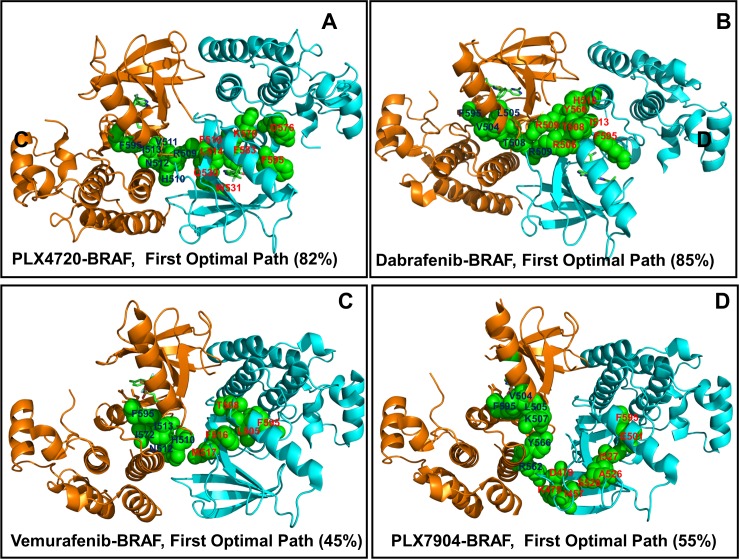
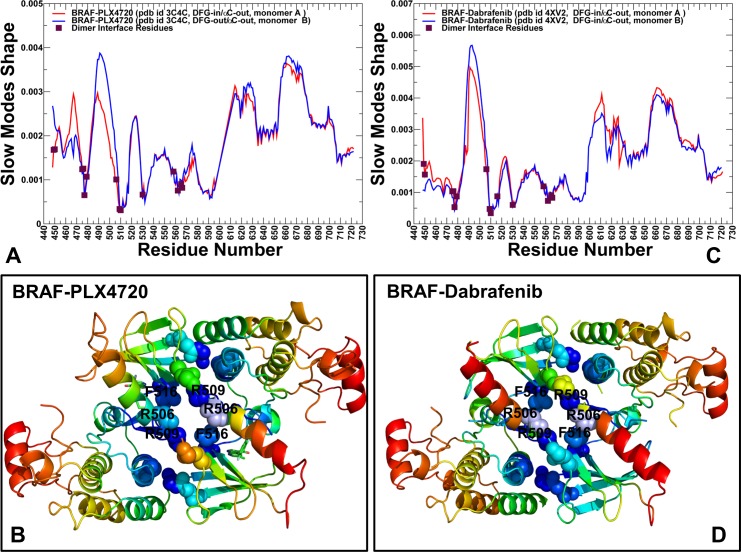
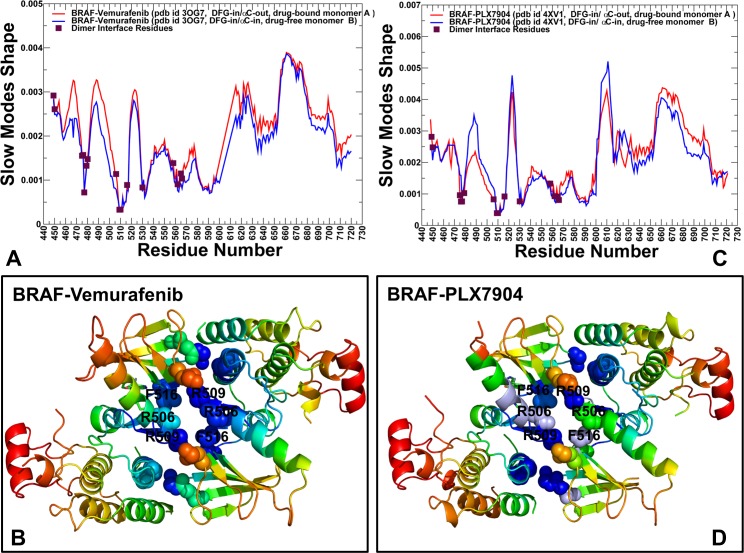
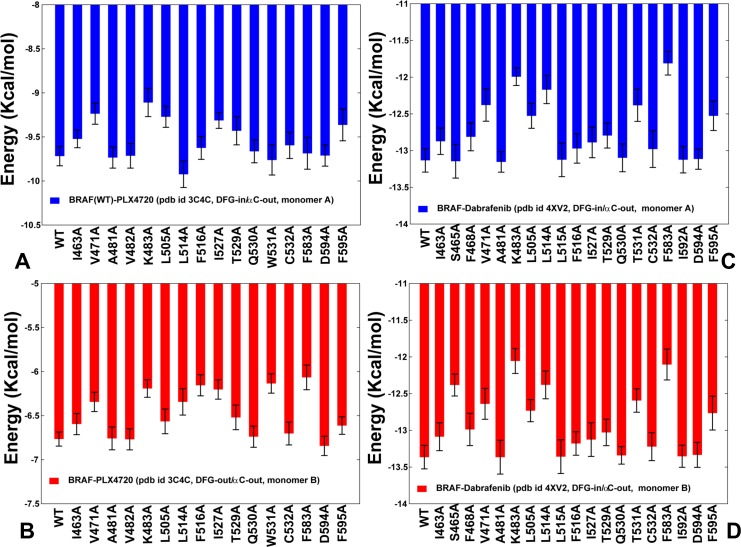
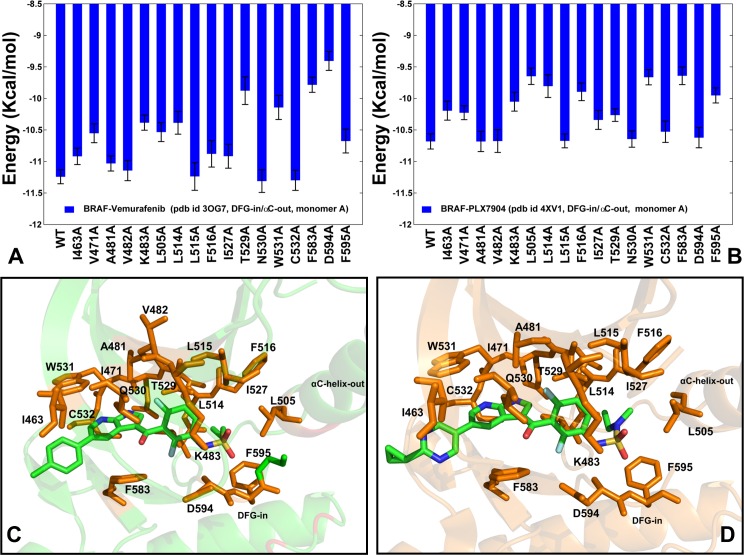
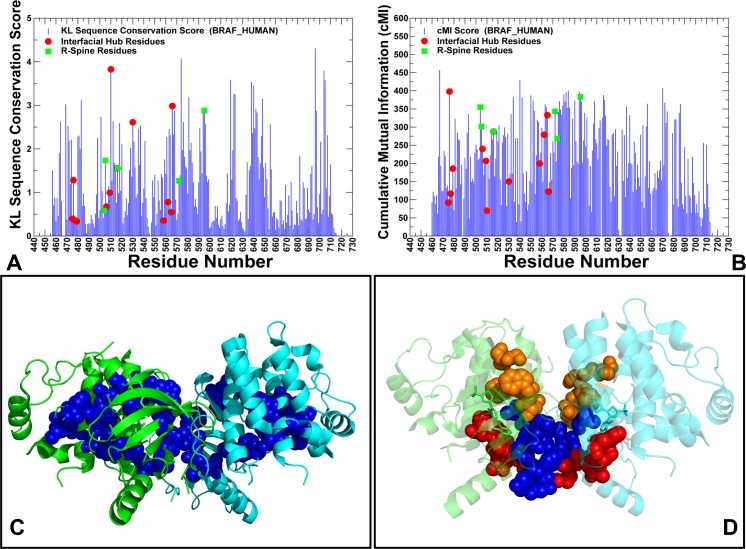
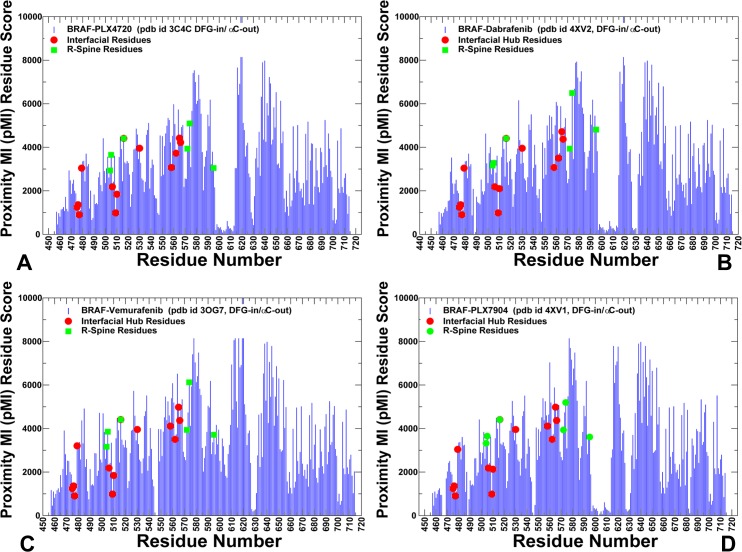
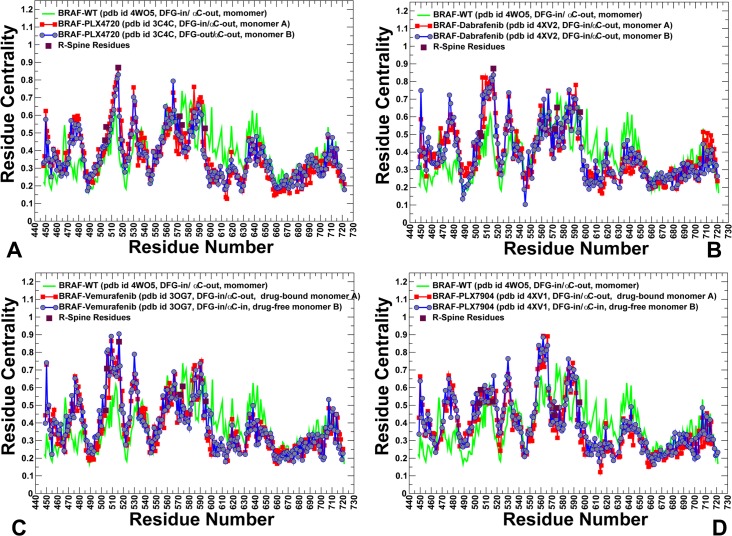
The recent studies have revealed that most BRAF inhibitors can paradoxically induce kinase activation by promoting dimerization and enzyme transactivation. Despite rapidly growing number of structural and functional studies about the BRAF dimer complexes, the molecular basis of paradoxical activation phenomenon is poorly understood and remains largely hypothetical. In this work, we have explored the relationships between inhibitor binding, protein dynamics and allosteric signaling in the BRAF dimers using a network-centric approach. Using this theoretical framework, we have combined molecular dynamics simulations with coevolutionary analysis and modeling of the residue interaction networks to determine molecular determinants of paradoxical activation. We have investigated functional effects produced by paradox inducer inhibitors PLX4720, Dabrafenib, Vemurafenib and a paradox breaker inhibitor PLX7904. Functional dynamics and binding free energy analyses of the BRAF dimer complexes have suggested that negative cooperativity effect and dimer-promoting potential of the inhibitors could be important drivers of paradoxical activation. We have introduced a protein structure network model in which coevolutionary residue dependencies and dynamic maps of residue correlations are integrated in the construction and analysis of the residue interaction networks. The results have shown that coevolutionary residues in the BRAF structures could assemble into independent structural modules and form a global interaction network that may promote dimerization. We have also found that BRAF inhibitors could modulate centrality and communication propensities of global mediating centers in the residue interaction networks. By simulating allosteric communication pathways in the BRAF structures, we have determined that paradox inducer and breaker inhibitors may activate specific signaling routes that correlate with the extent of paradoxical activation. While paradox inducer inhibitors may facilitate a rapid and efficient communication via an optimal single pathway, the paradox breaker may induce a broader ensemble of suboptimal and less efficient communication routes. The central finding of our study is that paradox breaker PLX7904 could mimic structural, dynamic and network features of the inactive BRAF-WT monomer that may be required for evading paradoxical activation. The results of this study rationalize the existing structure-functional experiments by offering a network-centric rationale of the paradoxical activation phenomenon. We argue that BRAF inhibitors that amplify dynamic features of the inactive BRAF-WT monomer and intervene with the allosteric interaction networks may serve as effective paradox breakers in cellular environment.
最近的研究表明,大多数BRAF抑制剂反而可通过促进二聚化和酶反式激活来诱导激酶活化。尽管关于BRAF二聚体复合物的结构和功能研究数量迅速增加,但反常激活现象的分子基础仍知之甚少,且很大程度上仍属假设。在这项工作中,我们使用以网络为中心的方法探索了BRAF二聚体中抑制剂结合、蛋白质动力学和变构信号之间的关系。利用这一理论框架,我们将分子动力学模拟与共进化分析以及残基相互作用网络建模相结合,以确定反常激活的分子决定因素。我们研究了反常诱导剂抑制剂PLX4720、达拉非尼、维莫非尼和一种反常阻断剂抑制剂PLX7904产生的功能效应。BRAF二聚体复合物的功能动力学和结合自由能分析表明,抑制剂的负协同效应和促进二聚化的潜力可能是反常激活的重要驱动因素。我们引入了一种蛋白质结构网络模型,其中共进化残基依赖性和残基相关性动态图谱被整合到残基相互作用网络的构建和分析中。结果表明,BRAF结构中的共进化残基可组装成独立的结构模块,并形成一个可能促进二聚化的全局相互作用网络。我们还发现,BRAF抑制剂可调节残基相互作用网络中全局介导中心的中心性和通信倾向。通过模拟BRAF结构中的变构通信途径,我们确定反常诱导剂和阻断剂抑制剂可能激活与反常激活程度相关的特定信号通路。虽然反常诱导剂抑制剂可能通过一条最佳单一途径促进快速有效的通信,但反常阻断剂可能诱导更广泛的次优和低效通信途径组合。我们研究的核心发现是,反常阻断剂PLX7904可模拟非活性BRAF-WT单体的结构、动力学和网络特征,这可能是逃避反常激活所必需的。这项研究的结果通过提供以网络为中心的反常激活现象原理,使现有的结构-功能实验合理化。我们认为,放大非活性BRAF-WT单体动态特征并干预变构相互作用网络的BRAF抑制剂可能在细胞环境中作为有效的反常阻断剂。