Wilkinson Holly N, McBain Andrew J, Stephenson Christian, Hardman Matthew J
Faculty of Life Sciences, The Healing Foundation Center, The University of Manchester , United Kingdom .
Faculty of Medical and Human Sciences, Manchester Pharmacy School, The University of Manchester , United Kingdom .
Adv Wound Care (New Rochelle). 2016 Nov 1;5(11):475-485. doi: 10.1089/wound.2015.0683.
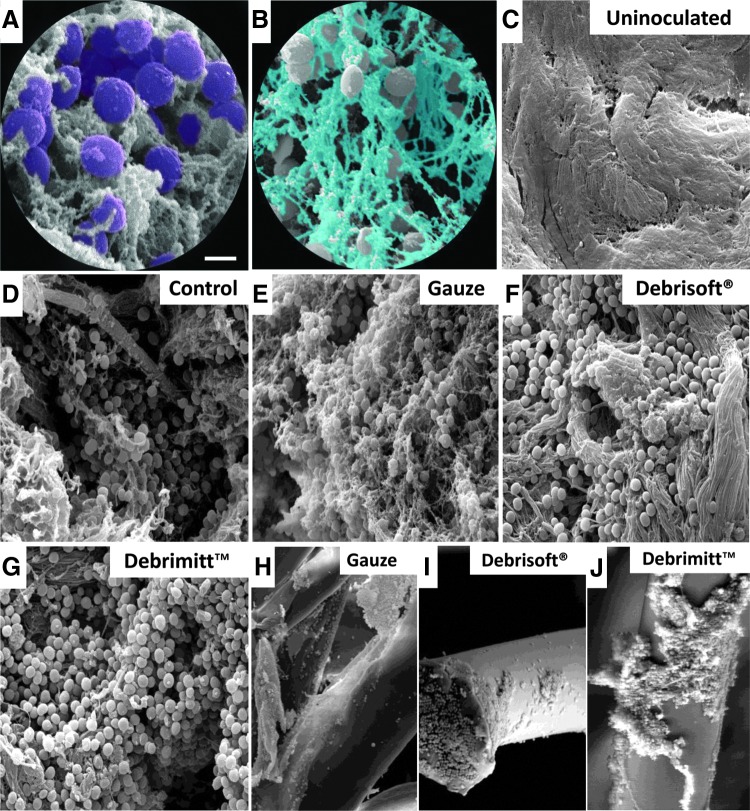
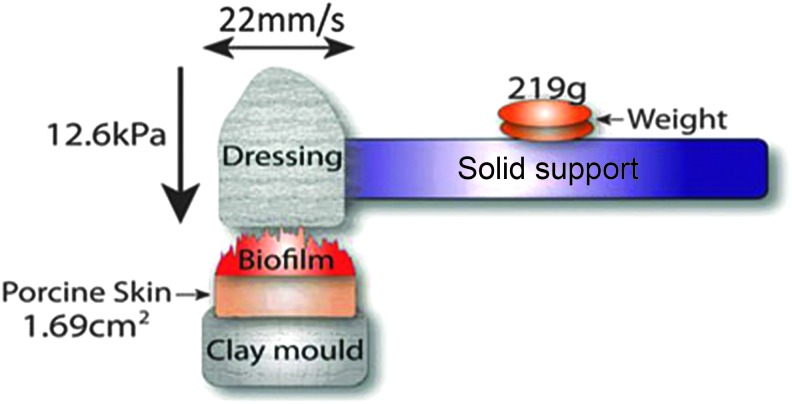
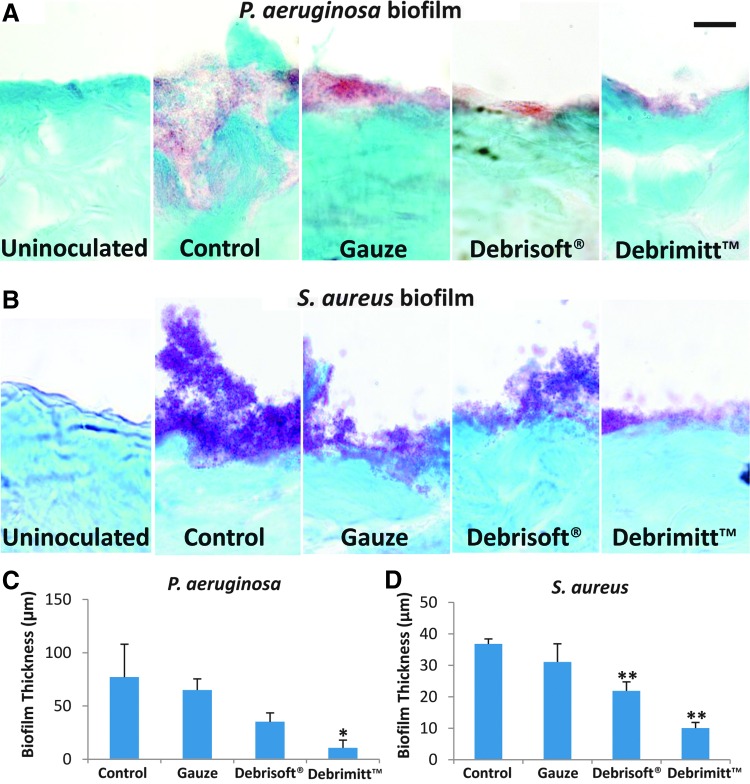
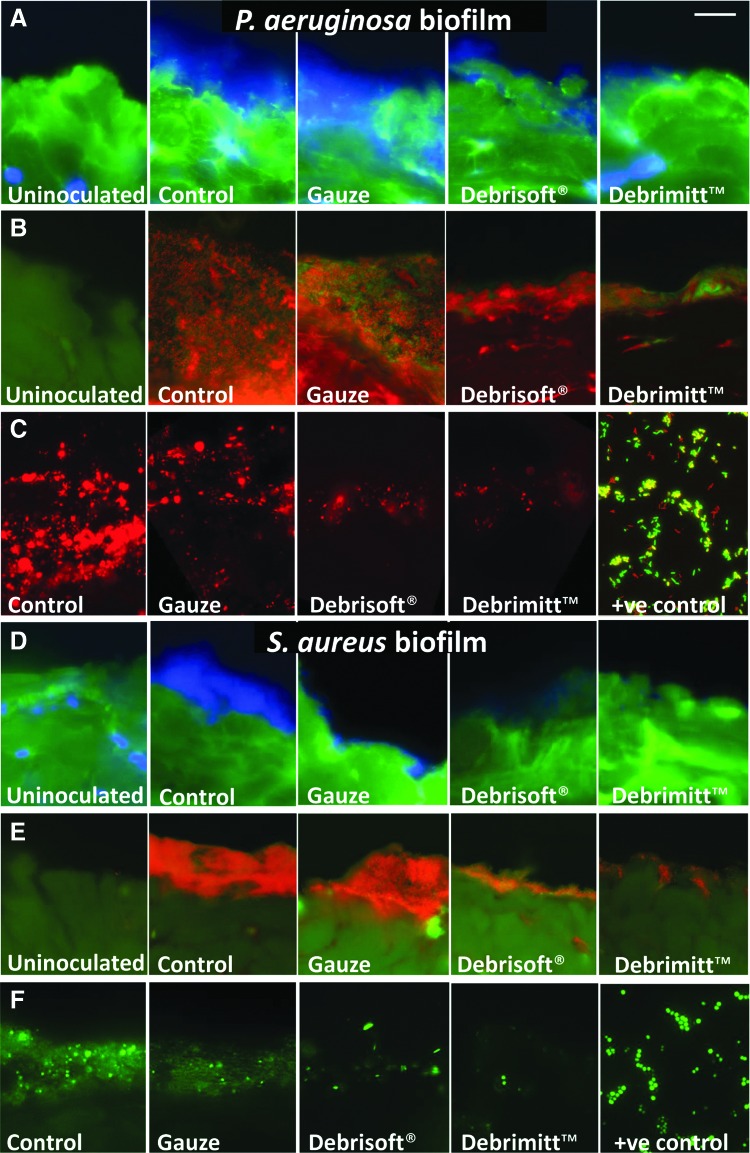
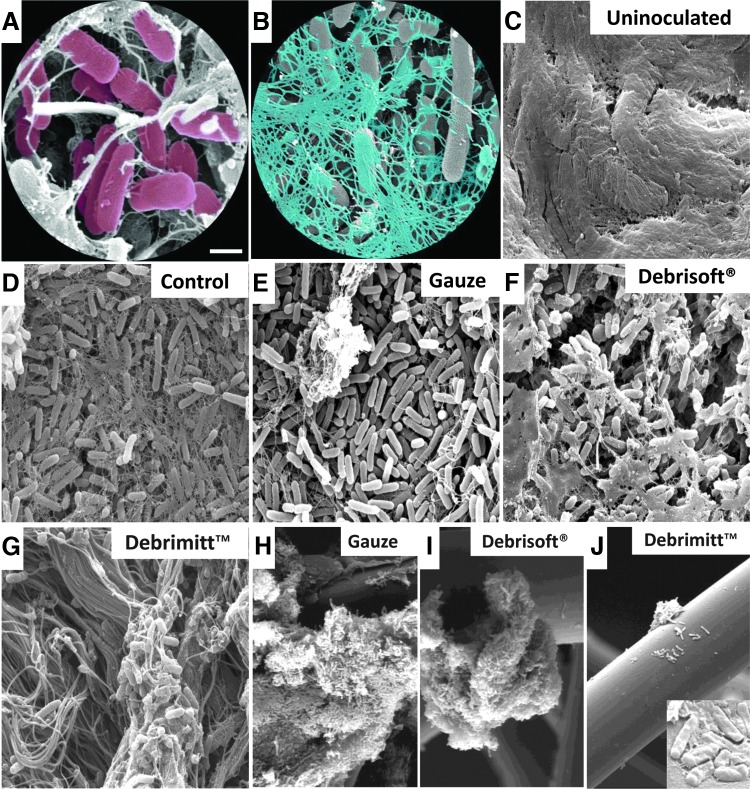
Debridement to remove necrotic and/or infected tissue and promote active healing remains a cornerstone of contemporary chronic wound management. While there has been a recent shift toward less invasive polymer-based debriding devices, their efficacy requires rigorous evaluation. This study was designed to directly compare monofilament debriding devices to traditional gauze using a wounded porcine skin biofilm model with standardized application parameters. Biofilm removal was determined using a surface viability assay, bacterial counts, histological assessment, and scanning electron microscopy (SEM). Quantitative analysis revealed that monofilament debriding devices outperformed the standard gauze, resulting in up to 100-fold greater reduction in bacterial counts. Interestingly, histological and morphological analyses suggested that debridement not only removed bacteria, but also differentially disrupted the bacterially-derived extracellular polymeric substance. Finally, SEM of post-debridement monofilaments showed structural changes in attached bacteria, implying a negative impact on viability. This is the first study to combine controlled and defined debridement application with a biologically relevant biofilm model to directly compare monofilament debriding devices. These data support the use of monofilament debriding devices for the removal of established wound biofilms and suggest variable efficacy towards biofilms composed of different species of bacteria.
清创以清除坏死和/或感染组织并促进积极愈合仍然是当代慢性伤口管理的基石。尽管最近已转向使用侵入性较小的基于聚合物的清创设备,但其疗效仍需严格评估。本研究旨在使用具有标准化应用参数的受伤猪皮肤生物膜模型,将单丝清创设备与传统纱布进行直接比较。使用表面活力测定、细菌计数、组织学评估和扫描电子显微镜(SEM)来确定生物膜的清除情况。定量分析表明,单丝清创设备的性能优于标准纱布,细菌计数最多可减少100倍。有趣的是,组织学和形态学分析表明,清创不仅能清除细菌,还能不同程度地破坏细菌衍生的细胞外聚合物。最后,清创后单丝的SEM显示附着细菌的结构变化,这意味着对其活力有负面影响。这是第一项将可控且明确的清创应用与具有生物学相关性的生物膜模型相结合,以直接比较单丝清创设备的研究。这些数据支持使用单丝清创设备来清除已形成的伤口生物膜,并表明其对由不同细菌种类组成的生物膜的疗效存在差异。