Tako Elad, Bar Haim, Glahn Raymond P
USDA-ARS Robert Holley Center for Agriculture and Health, Ithaca, NY 14853, USA.
Department of Statistics, University of Connecticut, Storrs, CT 06269-4120, USA.
Nutrients. 2016 Nov 18;8(11):732. doi: 10.3390/nu8110732.
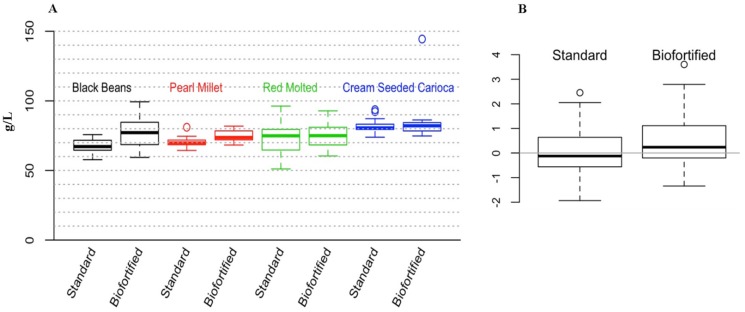
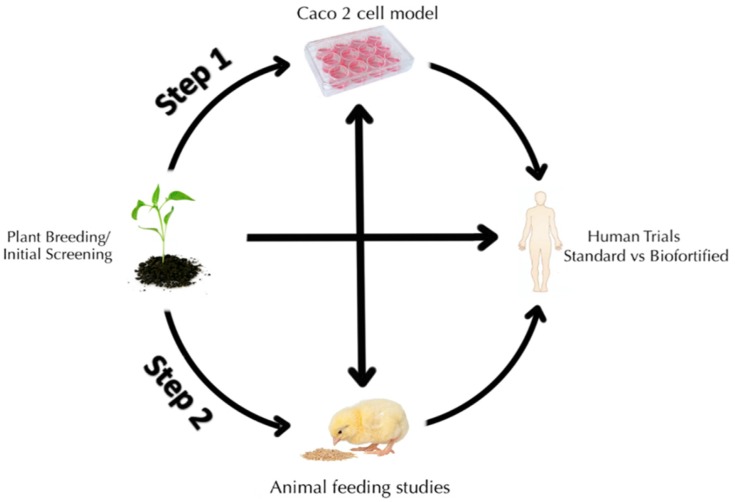
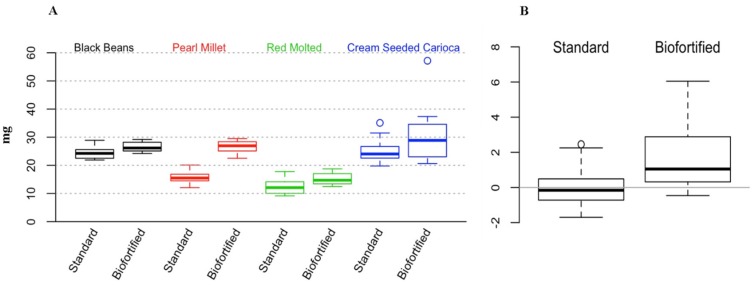
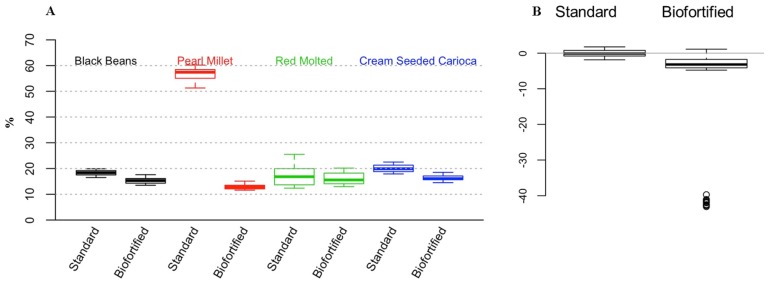
Research methods that predict Fe bioavailability for humans can be extremely useful in evaluating food fortification strategies, developing Fe-biofortified enhanced staple food crops and assessing the Fe bioavailability of meal plans that include such crops. In this review, research from four recent poultry () feeding trials coupled with in vitro analyses of Fe-biofortified crops will be compared to the parallel human efficacy studies which used the same varieties and harvests of the Fe-biofortified crops. Similar to the human studies, these trials were aimed to assess the potential effects of regular consumption of these enhanced staple crops on maintenance or improvement of iron status. The results demonstrate a strong agreement between the in vitro/in vivo screening approach and the parallel human studies. These observations therefore indicate that the in vitro/Caco-2 cell and models can be integral tools to develop varieties of staple food crops and predict their effect on iron status in humans. The cost-effectiveness of this approach also means that it can be used to monitor the nutritional stability of the Fe-biofortified crop once a variety has released and integrated into the food system. These screening tools therefore represent a significant advancement to the field for crop development and can be applied to ensure the sustainability of the biofortification approach.
预测人体铁生物利用率的研究方法,对于评估食物强化策略、培育铁生物强化的主粮作物以及评估包含此类作物的膳食计划中铁的生物利用率极为有用。在本综述中,将四项近期家禽饲养试验的研究结果与铁生物强化作物的体外分析结果,同使用相同品种和收获期的铁生物强化作物的平行人体功效研究结果进行比较。与人体研究相似,这些试验旨在评估经常食用这些强化主粮作物对维持或改善铁状态的潜在影响。结果表明,体外/体内筛选方法与平行人体研究结果高度一致。因此,这些观察结果表明,体外/Caco-2细胞模型可成为培育各类主粮作物品种并预测其对人体铁状态影响的重要工具。这种方法的成本效益还意味着,一旦某个品种已发布并融入食品系统,它可用于监测铁生物强化作物的营养稳定性。因此,这些筛选工具代表了作物开发领域的重大进展,可用于确保生物强化方法的可持续性。