Cui Yan, Guo Gang
Department of Biochemistry and Molecular Biology, Cancer Immunology, Inflammation & Tolerance Program, Georgia Cancer Center, Augusta University, Augusta, GA 30912, USA.
Int J Mol Sci. 2016 Nov 19;17(11):1942. doi: 10.3390/ijms17111942.
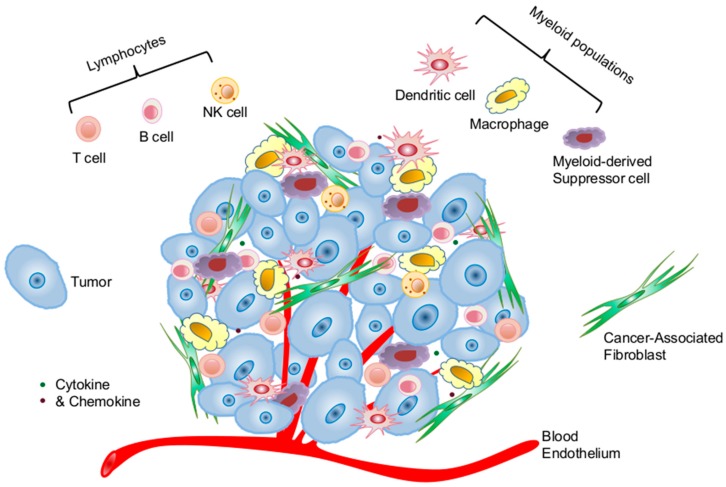
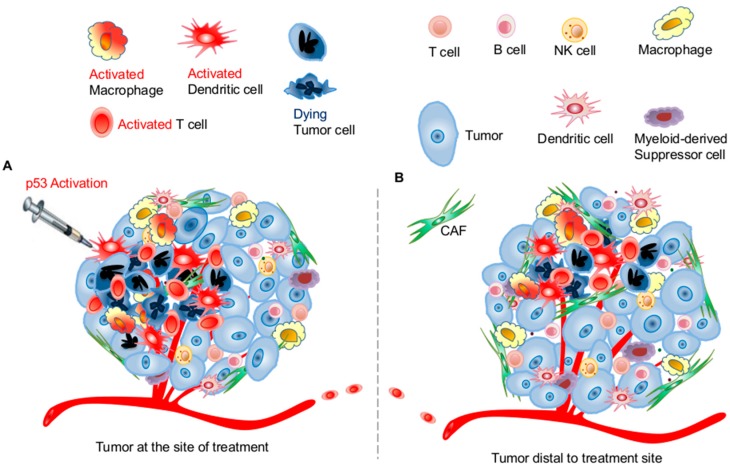
The tumor suppressor is the most frequently mutated gene in human cancers. Most of the mutations are missense leading to loss of p53 function in inducing apoptosis and senescence. In addition to these autonomous effects of inactivation/dysfunction on tumorigenesis, compelling evidence suggests that mutation/inactivation also leads to gain-of-function or activation of non-autonomous pathways, which either directly or indirectly promote tumorigenesis. Experimental and clinical results suggest that dysfunction fuels pro-tumor inflammation and serves as an immunological gain-of-function driver of tumorigenesis via skewing immune landscape of the tumor microenvironment (TME). It is now increasingly appreciated that dysfunction in various cellular compartments of the TME leads to immunosuppression and immune evasion. Although our understanding of the cellular and molecular processes that link p53 activity to host immune regulation is still incomplete, it is clear that activating/reactivating the p53 pathway in the TME also represents a compelling immunological strategy to reverse immunosuppression and enhance antitumor immunity. Here, we review our current understanding of the potential cellular and molecular mechanisms by which p53 participates in immune regulation and discuss how targeting the p53 pathway can be exploited to alter the immunological landscape of tumors for maximizing therapeutic outcome.
肿瘤抑制因子是人类癌症中最常发生突变的基因。大多数突变是错义突变,导致p53在诱导细胞凋亡和衰老方面的功能丧失。除了失活/功能障碍对肿瘤发生的这些自主效应外,有力证据表明,p53突变/失活还会导致非自主途径的功能获得或激活,直接或间接促进肿瘤发生。实验和临床结果表明,p53功能障碍会加剧促肿瘤炎症,并通过改变肿瘤微环境(TME)的免疫格局,成为肿瘤发生的免疫功能获得性驱动因素。现在人们越来越认识到,TME各个细胞区室中的p53功能障碍会导致免疫抑制和免疫逃逸。尽管我们对将p53活性与宿主免疫调节联系起来的细胞和分子过程的理解仍不完整,但很明显,在TME中激活/重新激活p53途径也是一种令人信服的免疫策略,可逆转免疫抑制并增强抗肿瘤免疫力。在这里,我们综述了目前对p53参与免疫调节的潜在细胞和分子机制的理解,并讨论了如何利用靶向p53途径来改变肿瘤的免疫格局,以实现最佳治疗效果。