Guo Gang, Yu Miao, Xiao Wei, Celis Esteban, Cui Yan
Cancer Immunology, Inflammation and Tolerance Program, Georgia Cancer Center, Department of Biochemistry and Molecular Biology, Medical College of Georgia, Augusta University, Augusta, Georgia.
Cancer Res. 2017 May 1;77(9):2292-2305. doi: 10.1158/0008-5472.CAN-16-2832. Epub 2017 Mar 9.
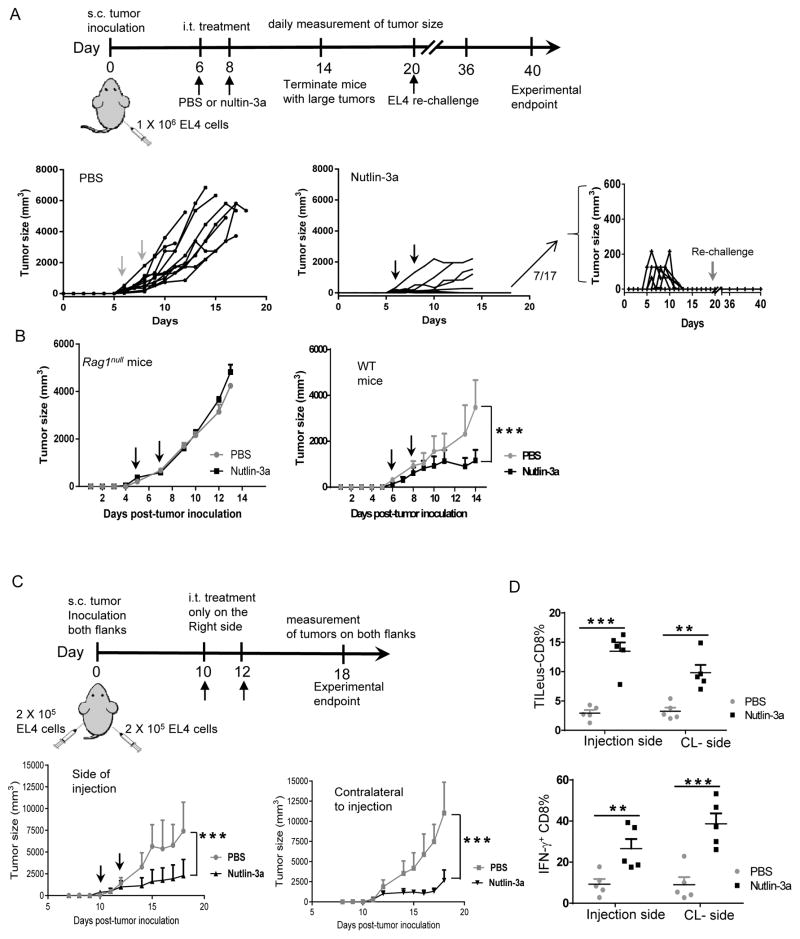
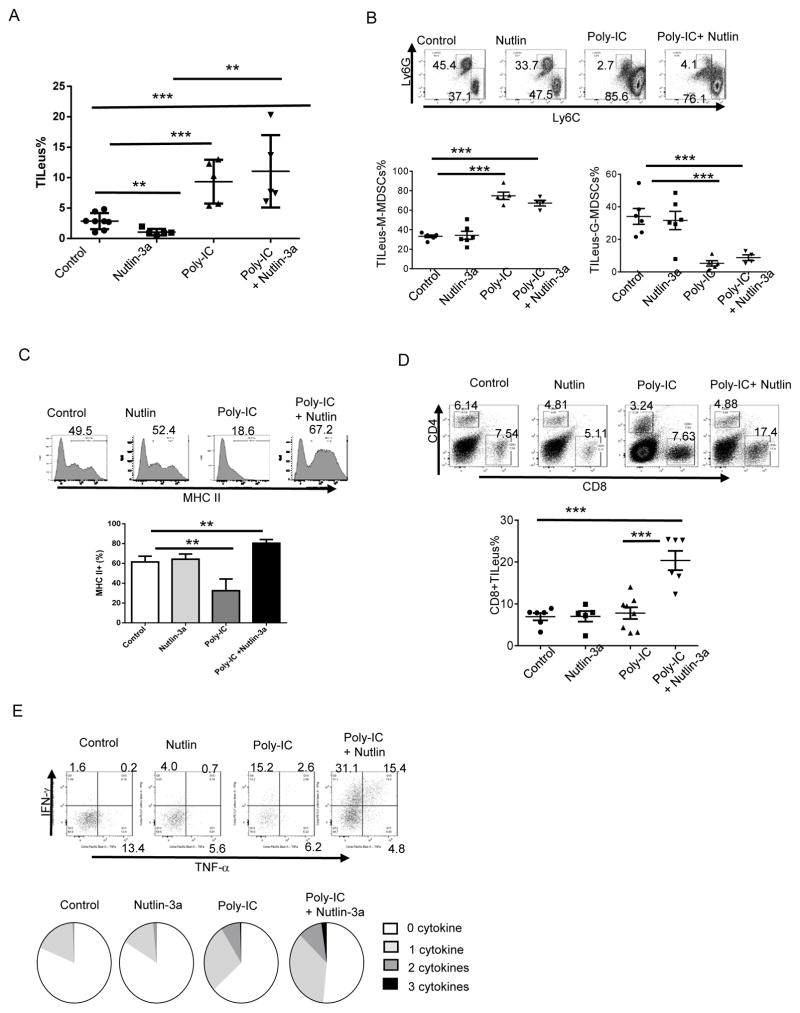
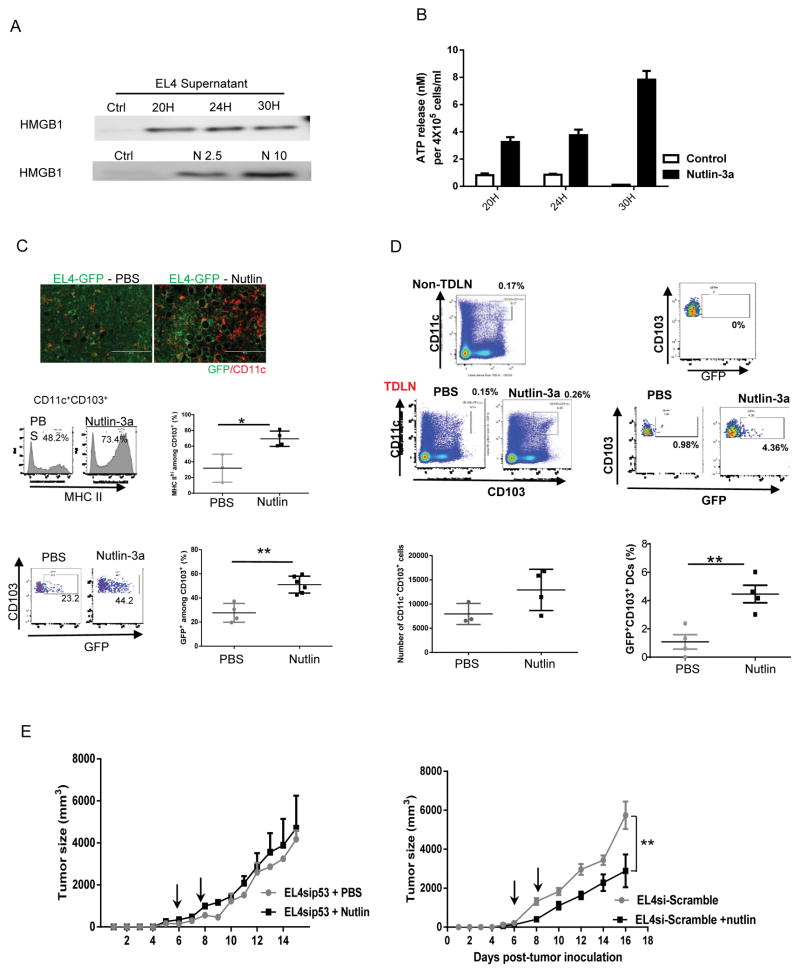
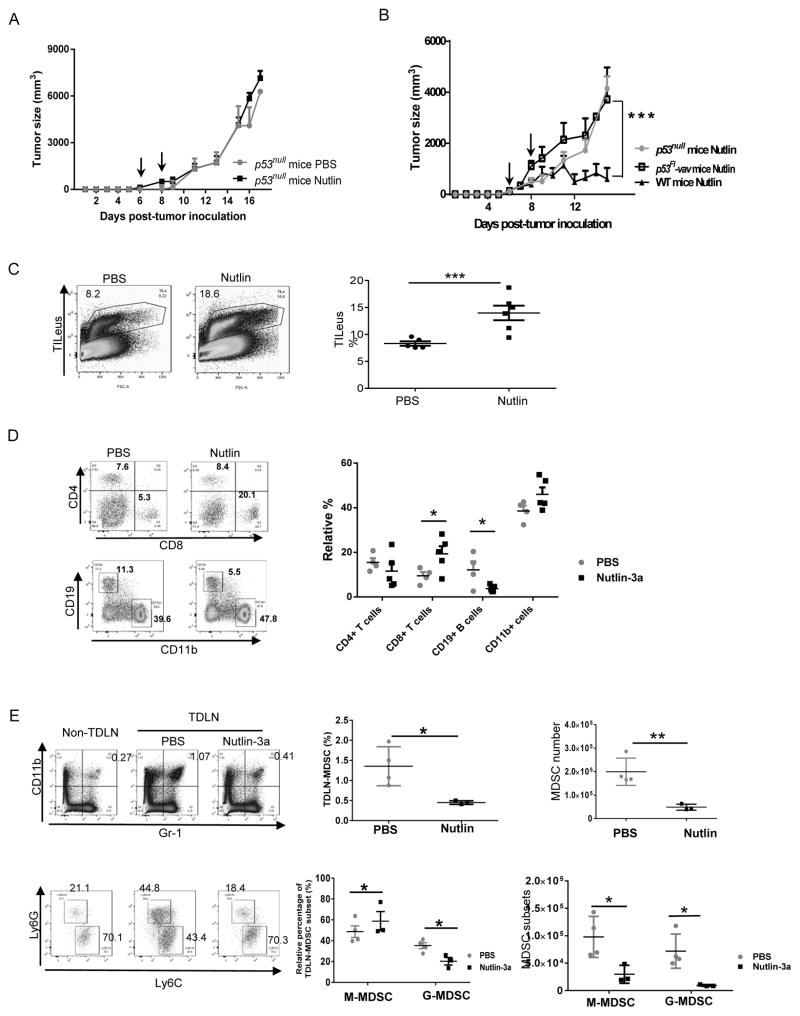
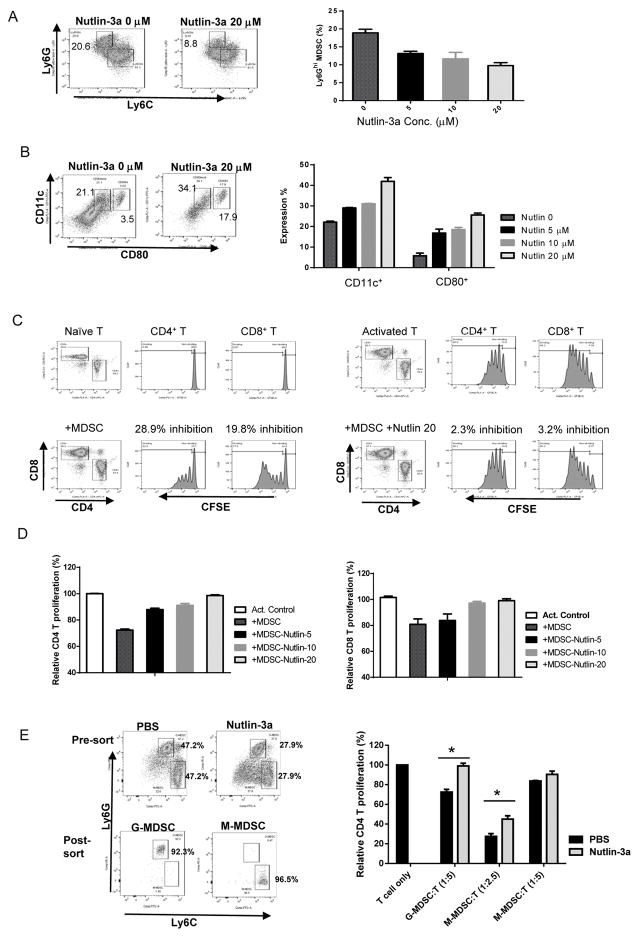
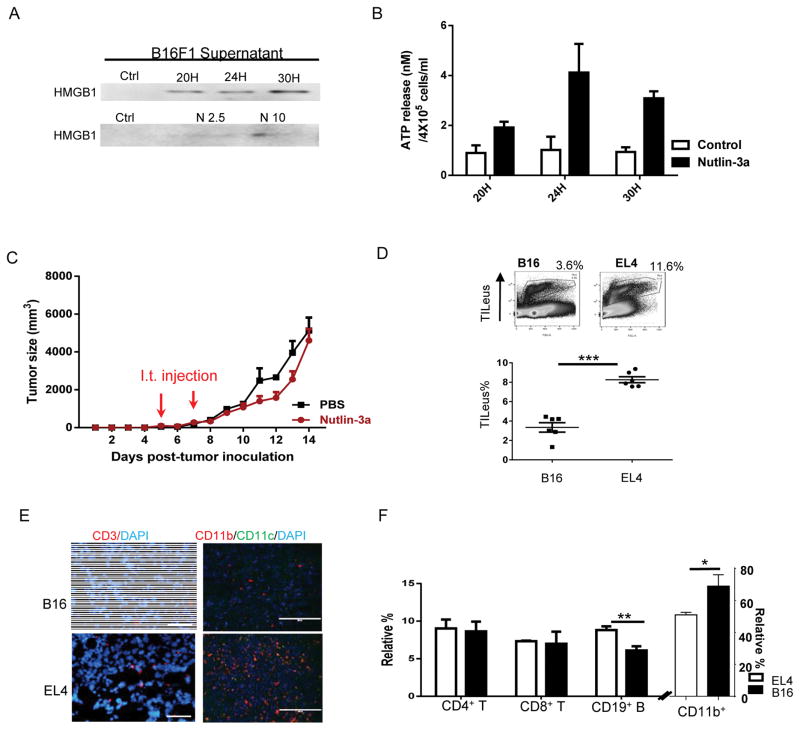
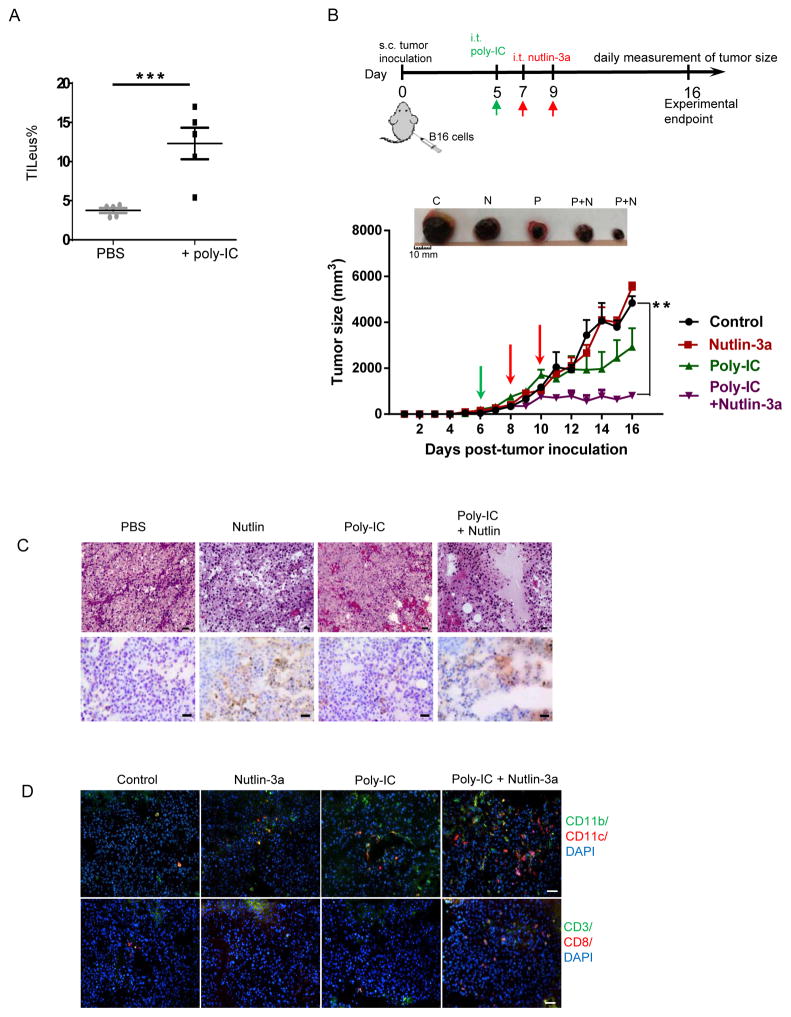
Mutations in tumor suppressor remain a vital mechanism of tumor escape from apoptosis and senescence. Emerging evidence suggests that dysfunction also fuels inflammation and supports tumor immune evasion, thereby serving as an immunological driver of tumorigenesis. Therefore, targeting in the tumor microenvironment (TME) also represents an immunologically desirable strategy for reversing immunosuppression and enhancing antitumor immunity. Using a pharmacological p53 activator nutlin-3a, we show that local p53 activation in TME comprising overt tumor-infiltrating leukocytes (TILeus) induces systemic antitumor immunity and tumor regression, but not in TME with scarce TILeus, such as B16 melanoma. Maneuvers that recruit leukocytes to TME, such as TLR3 ligand in B16 tumors, greatly enhanced nutlin-induced antitumor immunity and tumor control. Mechanistically, nutlin-3a-induced antitumor immunity was contingent on two nonredundant but immunologically synergistic p53-dependent processes: reversal of immunosuppression in the TME and induction of tumor immunogenic cell death, leading to activation and expansion of polyfunctional CD8 CTLs and tumor regression. Our study demonstrates that unlike conventional tumoricidal therapies, which rely on effective p53 targeting in each tumor cell and often associate with systemic toxicity, this immune-based strategy requires only limited local p53 activation to alter the immune landscape of TME and subsequently amplify immune response to systemic antitumor immunity. Hence, targeting the p53 pathway in TME can be exploited to reverse immunosuppression and augment therapeutic benefits beyond tumoricidal effects to harness tumor-specific, durable, and systemic antitumor immunity with minimal toxicity. .
肿瘤抑制因子的突变仍然是肿瘤逃避凋亡和衰老的重要机制。新出现的证据表明,其功能障碍还会引发炎症并支持肿瘤免疫逃逸,从而成为肿瘤发生的免疫驱动因素。因此,针对肿瘤微环境(TME)中的该因子进行靶向治疗,也代表了一种在免疫方面理想的策略,可用于逆转免疫抑制并增强抗肿瘤免疫力。我们使用一种药理学p53激活剂nutlin-3a表明,在包含明显肿瘤浸润白细胞(TILeus)的TME中进行局部p53激活可诱导全身抗肿瘤免疫和肿瘤消退,但在TILeus稀少的TME(如B16黑色素瘤)中则不然。将白细胞募集到TME的策略,如B16肿瘤中的TLR3配体,可大大增强nutlin诱导的抗肿瘤免疫力和肿瘤控制。从机制上讲,nutlin-3a诱导的抗肿瘤免疫取决于两个非冗余但在免疫上具有协同作用的p53依赖性过程:TME中免疫抑制的逆转和肿瘤免疫原性细胞死亡的诱导,导致多功能CD8 CTL的激活和扩增以及肿瘤消退。我们的研究表明,与传统的杀肿瘤疗法不同,传统疗法依赖于在每个肿瘤细胞中有效靶向p53且常常伴有全身毒性,这种基于免疫的策略仅需要有限的局部p53激活来改变TME的免疫格局,随后放大对全身抗肿瘤免疫的免疫反应。因此,靶向TME中的p53途径可用于逆转免疫抑制并增强治疗效果,超越杀肿瘤作用,以利用具有最小毒性的肿瘤特异性、持久和全身抗肿瘤免疫力。