Ahmad Zeeshan, Khan Shujaul Mulk, Abd Allah Elsayed Fathi, Alqarawi Abdulaziz Abdullah, Hashem Abeer
Department of Plant Sciences, Quaid-i-Azam University, Islamabad, Pakistan.
Department of Plant Production, Collage of Food & Agricultural Sciences, P.O. Box. 2460, Riyadh 11451, Saudi Arabia.
Saudi J Biol Sci. 2016 Nov;23(6):741-748. doi: 10.1016/j.sjbs.2016.07.001. Epub 2016 Jul 18.
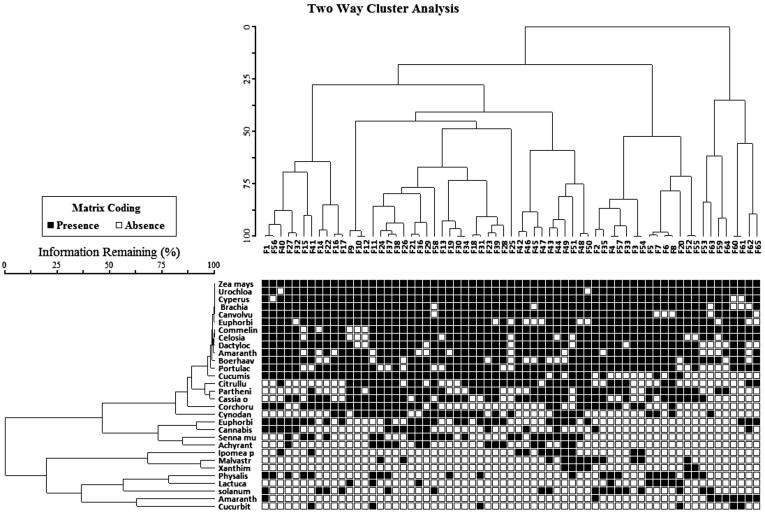
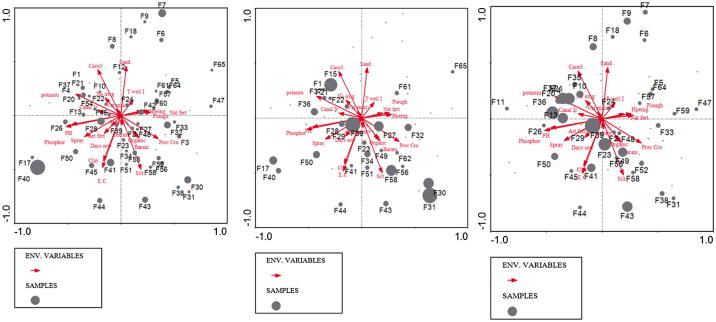
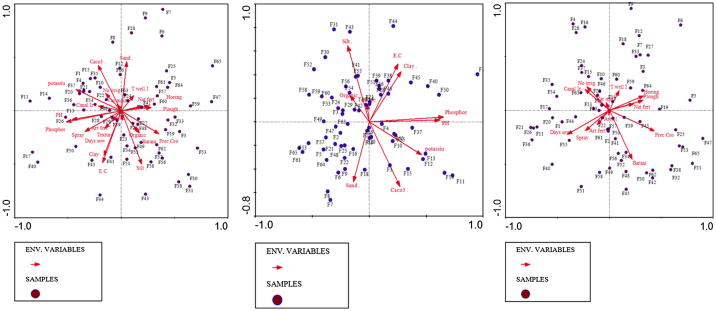
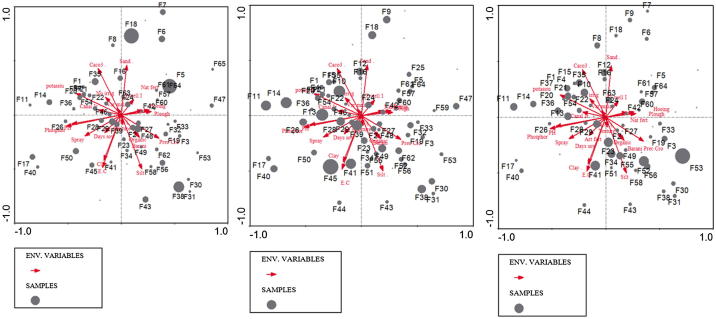
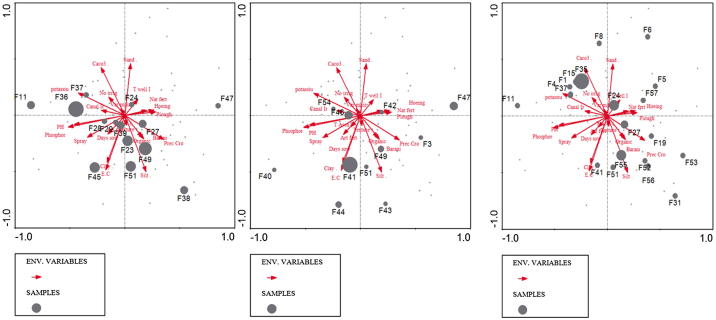
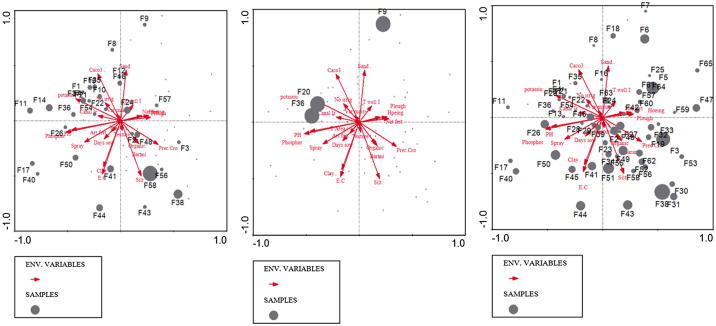
Weeds are unwanted plant species growing in ordinary environment. In nature there are a total of 8000 weed species out of which 250 are important for agriculture world. The present study was carried out on weed species composition and distribution pattern with special reference to edaphic factor and farming practices in maize crop of District Mardan during the months of August and September, 2014. Quadrates methods were used to assess weed species distribution in relation to edaphic factor and farming practices. Phytosociological attributes such as frequency, relative frequency, density, relative density and Importance Values were measured by placing 9 quadrates (1 × 1 m) randomly in each field. Initial results showed that the study area has 29 diverse weed species belonging to 27 genera and 15 families distributed in 585 quadrats. Presence and absence data sheet of 29 weed species and 65 fields were analyzed through PC-ORD version 5. Cluster and Two Way Cluster Analyses initiated four different weed communities with significant indicator species and with respect to underlying environmental variables using data attribute plots. Canonical Correspondence Analyses (CCA) of CANOCO software version 4.5 was used to assess the environmental gradients of weed species. It is concluded that among all the edaphic factors the strongest variables were higher concentration of potassium, organic matter and sandy nature of soil. CCA plots of both weed species and sampled fields based on questionnaire data concluded the farming practices such as application of fertilizers, irrigation and chemical spray were the main factors in determination of weed communities.
杂草是生长在普通环境中的有害植物物种。自然界中共有8000种杂草,其中250种对全球农业具有重要影响。本研究于2014年8月和9月在马尔丹地区的玉米作物中进行,特别参照土壤因素和耕作方式,对杂草种类组成和分布模式展开研究。采用样方方法评估杂草种类与土壤因素和耕作方式的分布关系。通过在每个田地随机设置9个样方(1×1米),测量植物社会学属性,如频度、相对频度、密度、相对密度和重要值。初步结果表明,研究区域有29种不同的杂草,分属于27个属和15个科,分布在585个样方中。通过PC-ORD 5版本分析了29种杂草和65块田地的存在与缺失数据表。聚类分析和双向聚类分析利用数据属性图,确定了四个不同的杂草群落,这些群落具有显著的指示物种,并与潜在的环境变量相关。使用CANOCO软件4.5版本的典范对应分析(CCA)评估杂草物种的环境梯度。得出的结论是,在所有土壤因素中,最强的变量是较高的钾浓度、有机质和土壤的沙质性质。基于问卷数据的杂草物种和采样田地的CCA图表明,施肥、灌溉和化学喷雾等耕作方式是决定杂草群落的主要因素。