Department of Biochemical Engineering, School of Chemical Engineering and Technology, Tianjin University, Tianjin 300072, P. R. China.
Key Laboratory of Systems Bioengineering of the Ministry of Education, Tianjin University, Tianjin 300072, P. R. China.
Sci Rep. 2016 Nov 22;6:37458. doi: 10.1038/srep37458.
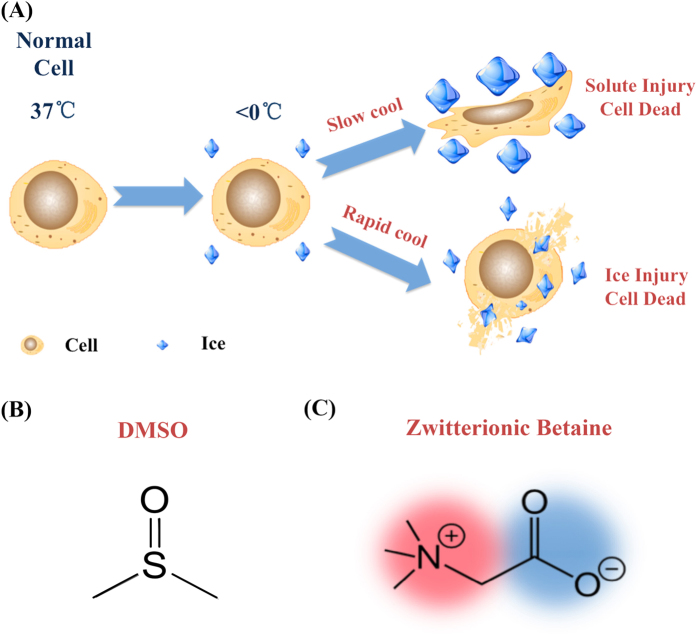
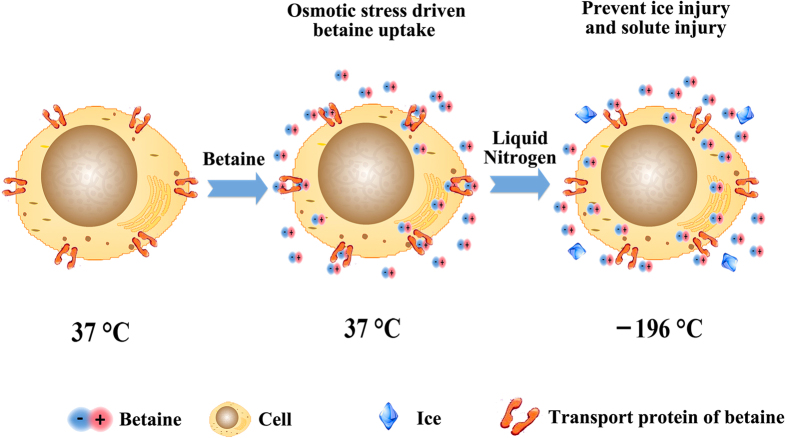
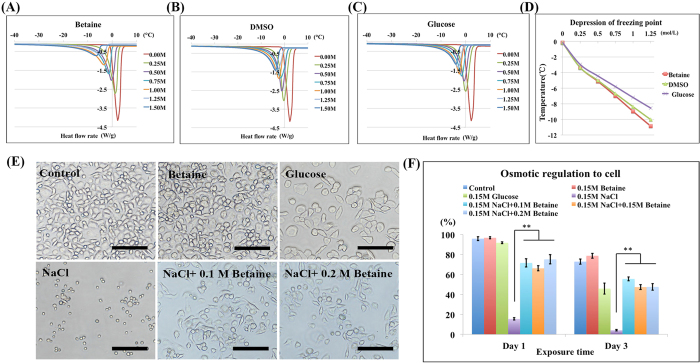
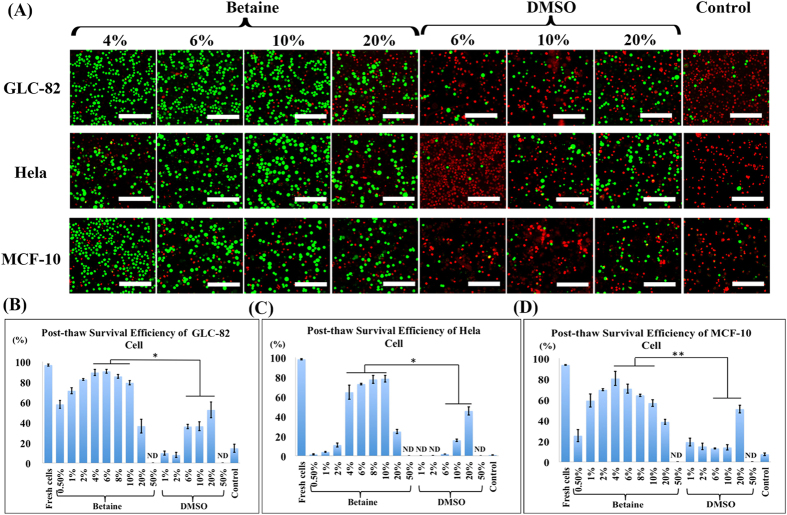
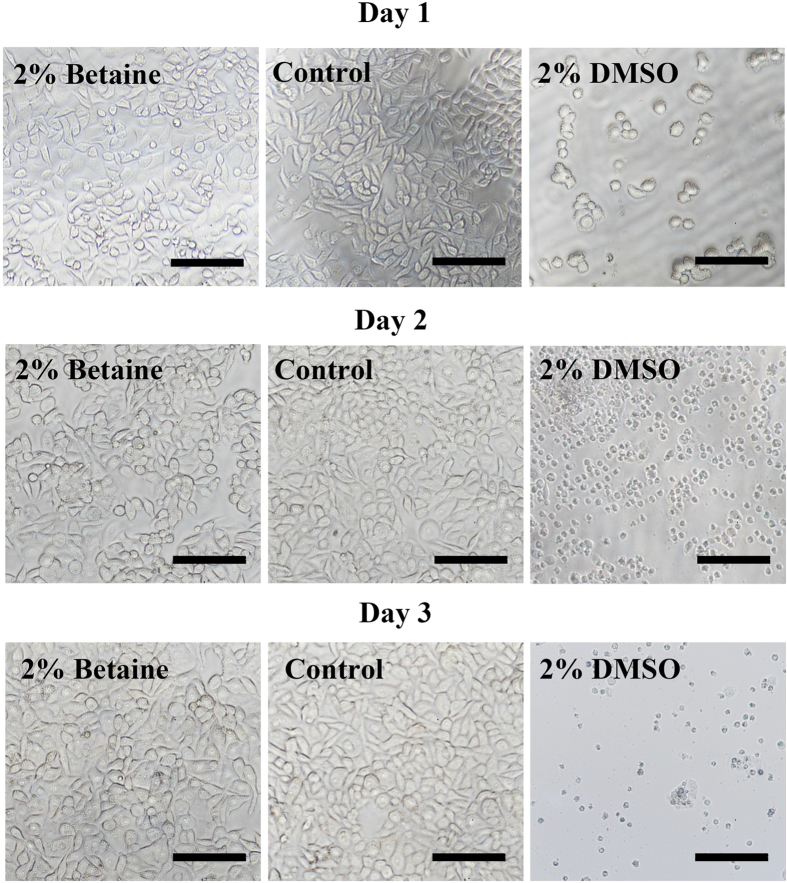
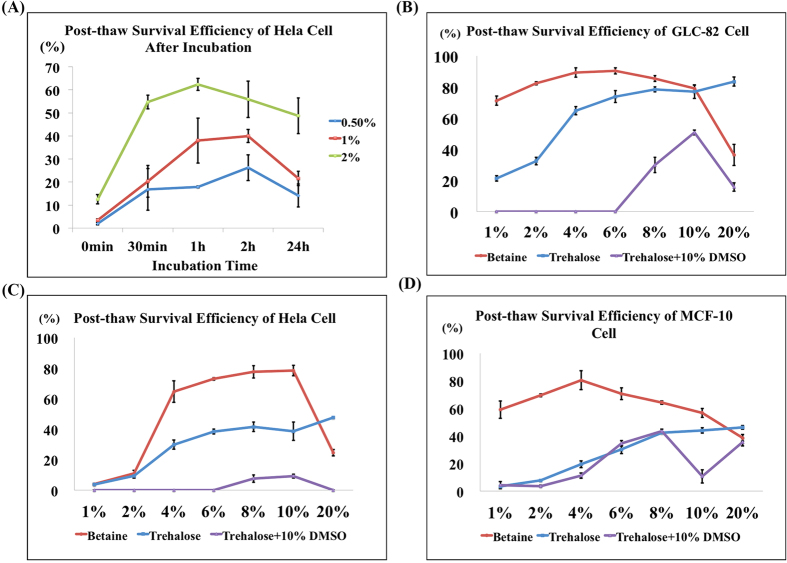
Cryoprotectants (CPAs) play a critical role in cryopreservation because they can resist the cell damage caused by the freezing process. Current state-of-the-art CPAs are mainly based on an organic solvent dimethyl sulfoxide (DMSO), and several DMSO-cryopreserved cell products have been brought to market. However, the intrinsic toxicity and complex freezing protocol of DMSO still remain as the bottleneck of the wide use for clinical applications. Herein, we reported that betaine, a natural zwitterionic molecule, could serve as a nontoxic and high efficient CPA. At optimum concentration of betaine, different cell types exhibited exceptional post-thaw survival efficiency with ultrarapid freezing protocol, which was straightforward, cost efficient but difficult to succeed using DMSO. Moreover, betaine showed negligible cytotoxicity even after long-term exposure of cells. Mechanistically, we hypothesized that betaine could be ultra-rapidly taken up by cells for intracellular protection during the freezing process. This technology unlocks the possibility of alternating the traditional toxic CPAs and is applicable to a variety of clinical applications.
冷冻保护剂(CPAs)在冷冻保存中起着关键作用,因为它们可以抵抗冷冻过程中对细胞造成的损伤。目前最先进的 CPAs 主要基于有机溶剂二甲基亚砜(DMSO),已有几种 DMSO 冷冻保存的细胞产品投放市场。然而,DMSO 的固有毒性和复杂的冷冻方案仍然是其广泛应用于临床的瓶颈。在这里,我们报道了甜菜碱,一种天然两性离子分子,可以作为一种无毒且高效的 CPA。在甜菜碱的最佳浓度下,不同的细胞类型在超快冷冻方案下表现出出色的冻后存活效率,这是一种简单、经济高效的方法,但使用 DMSO 很难成功。此外,即使细胞长期暴露于甜菜碱中,其细胞毒性也可以忽略不计。从机制上讲,我们假设甜菜碱可以在冷冻过程中被细胞快速摄取,从而在细胞内起到保护作用。这项技术为替代传统有毒 CPAs 提供了可能性,适用于多种临床应用。